1 Comment

This is a great perspective on our current elections and political process!

jeffreywalton's avatarJuicy Ecumenism - The Institute on Religion & Democracy's Blog

John Yates, rector of the Falls Church (Anglican) in Falls Church, Virginia shared some thoughts on the election in his parish weekly bulletin this past Sunday:

If you want to be in a church in which the pastor tells you how you should be voting in this coming election, you are surely in the wrong church, although there are and have been historically many such churches. Most of us have strong feelings about the issues and the candidates, and, quite rightly, we believe one aspect of Christian discipleship in America is following the political process closely and working and voting for the candidates we feel are best. Our right to elect our own leaders is a fearsome privilege for which our forebears died, and not to vote is irresponsible. But I have never felt that part of my responsibility is to publicly advocate a particular party or candidate.

Frankly, God…

View original post 252 more words

5 Comments

What about the third-party candidates?

I’ve heard a lot of talk, especially today-being election day, about having to vote “for the lesser of two evils” or determining to be heard by voting for a third-party candidate.

For one thing, I don’t  think that labeling anyone as an “evil” is appropriate talk for Christians, but I understand what they are saying and realize that it’s a familiar term to explain that they feel that they really don’t have a choice.

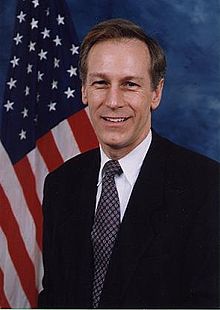
This third-party candidate thing really got me thinking, though.  My main argument against voting for a third-party candidate has always been that they could not possibly win, so they would just be taking votes away from one of the top two party candidates, usually the more conservative.  Though sometimes the more liberal party loses the votes as Ralph Nader did to Al Gore in Florida in the 2000 election.  This election, Virgil Goode is positioned to be the “spoiler” for Romney in Virginia, which is an important state for Republicans to win.

As I have listened to people’s chatter, however, I have begun to wonder if the theft of votes from one of the top two candidates is reason enough to not vote for a third-party candidate.  So I did some digging about what these third-party candidates actually believe, what they want to accomplish if they, by some twist of fate, are elected president. My digging however, was not very deep- I just referred to one source.  But I think that the site I used is general and fair enough, and they used comments and records of the candidates themselves, that I am confident in my facts.

Understand me here, that I’m looking at these candidates from a Christian perspective.  I’m certain that non-Christians will disagree with what I view as important.  For that matter, even some Christians will disagree with me, but this is my view.  Now let’s look at the four main third-party candidates to see what they believe:

Rocky Anderson

Rocky Anderson (Justice Party) wants to get the country back to its foundation in the Constitution and reduce corporate influence in politics.  These are good things, but Anderson also supports homosexual marriage.  Additionally, I question if he would help our allies or others who need our help militarily since he says he opposes being involved in what he calls “illegal wars.”  I’m not sure what he means by this, but I would be afraid to take a chance on him.  His denial of traditional/biblical marriage is the main issue about Anderson for Christians, though.

Virgil Goode

Virgil Goode (Constitution Party) believes that citizens of the U.S should be first in line for American jobs.  He is a hardliner against immigration which could be seen as good or bad by Christians.  God calls on His people to be kind and help the alien, the oppressed and the visitor in our land.  Goode has also been an advocate for the tobacco industry, which most Christians see as an industry which brings a great deal of harm.

Gary Johnson

Gary Johnson (Libertarian Party) is a fiscal conservative which could help with our nation’s economy.  He also supports a path for citizenship for illegal aliens who want to work.  But, similar to Anderson, he is a “noninterventionist” in foreign affairs, which could leave our allies and others in need of our military help hanging out there alone.  Primarily, though, he supports legalizing prostitution, homosexual marriage and online gambling.

Jill Stein

Jill Stein (Green Party) would seek renewable green-energy jobs, focus on environmental issues and help to get everyone who wants to work a job.  Most would agree that these are good things, though too much concern for the environment could put the poor people of developing countries at risk.  The biggest problems with Stein, though, is that she also wants to legalize homosexual marriage and maintain abortion rights.

Third-Party Not an Option

With just a brief look at these third party candidates, it is clear that none of them is a viable option for Christians to choose, at least for this election.  Primarily their support of homosexual marriage, abortion, tobacco use, gambling and prostitution place them outside the Biblical values that Christians are responsible to not just not promote, but also seek to eliminate.  These are moral, Biblical issues that have proven through history to be detrimental to individuals, families and societies.  They are issues that we should teach and persuade others to avoid, but also to seek to ensure they are not legislated as acceptable behaviors.

So I guess we’re back to choosing between “the lesser of two evils.”  I don’t believe that’s the case, though.  While Romney is Mormon, at least he is moral.  More than the  individual, however, the Republican Party is against those things that Christians generally are against, the issues we face today, as noted above (with the possible exception of tobacco use).  So for me anyway, my choice as a Christian is clear.

For more on why I believe we  should vote our Christian values, I encourage you to read my blog, “Is murder OK as long as my taxes are lower.”  But for a complete look at what the Republican and Democratic parties support, view their platforms for yourself.

2 Comments

The Mission of God for the People of God (A Sermon on Luke 4:14-21)

(This is a message I preached at Lebanon, Missouri Church of the Nazarene on October 21, 2012.  A small portion of this message previously appeared in this blog as “What is Good News to the Poor,” though this is now the complete message.  I have tweaked it a bit for better reading and added a few paragraphs for further clarification.)

Introduction

Jesus used much of the time He spent with His disciples both telling them and showing them why He came to Earth.  Beyond His salvific mission there is the broader Mission of God or Missio Dei that was first declared by God in Genesis and has continued throughout the Old and New Testaments and continues with His Church today.  The mission is that the nations or peoples of the world would be blessed.

This blessing ultimately is a restoration of the relationship between God and man that was lost in the Garden.  But the blessing, and thus the mission, goes beyond just having a personal relationship with God.  It includes a meeting of the simplest –and yet most profound—needs of the poorest and most oppressed people as well as those of the richest and most powerful.  This mission has a global initiative.  It includes our own communities, yes.  In the United States, however, even though the needs are great, they pale in comparison to the needs around the world.

As the Church has been called and commissioned to continue the Missio Dei; the Church, you and I, need to be familiar with all that it entails.  Our passage this morning goes a long way in helping us understand a little better what this mission is and what it means to us.

Introduction of the Text

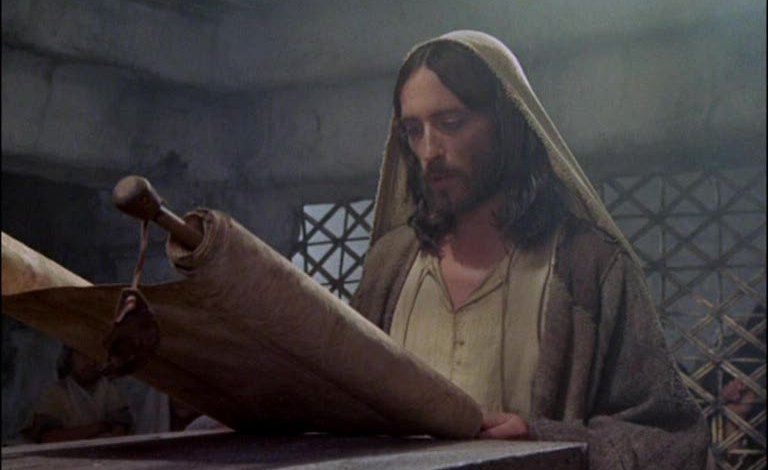
Not too long into His public ministry, Jesus returned to His home town of Nazareth.  Being the Sabbath day, he went to the Synagogue as any good Jewish man of His day would do.  Perhaps because he was there as a guest or maybe because word had spread all over Galilee about what He was preaching and doing, He was asked to read the days Scripture reading.

I’m not certain if the reading for that day was actually Isaiah 6:1-2 or if he scrolled through the scroll a bit to find it, but what He read was a powerful message.  Let me give you the entire Luke passage in context:

Jesus returned to Galilee in the power of the Spirit, and news about him spread through the whole countryside. He was teaching in their synagogues, and everyone praised him. He went to Nazareth, where he had been brought up, and on the Sabbath day he went into the synagogue, as was his custom. He stood up to read, and the scroll of the prophet Isaiah was handed to him. Unrolling it, he found the place where it is written: 

“The Spirit of the Lord is on me,
    because he has anointed me
    to proclaim good news to the poor.
He has sent me to proclaim freedom for the prisoners
    and recovery of sight for the blind,
to set the oppressed free,
to proclaim the year of the Lord’s favor.”

Then he rolled up the scroll, gave it back to the attendant and sat down. The eyes of everyone in the synagogue were fastened on him. He began by saying to them, “Today this scripture is fulfilled in your hearing” (Luke 4:14-21, NIV).

I remember when I was younger; I used to wonder why He sat down.  If he was going to preach, get behind the pulpit and preach!  Well my worldview was from a Western, Protestant standard.  In that religion in that time, the guest would read the passage then sit down to discuss it.

OK, fine but His introduction sure seems like it would have been off the wall.  Imagining myself as a Jewish man sitting in that synagogue in the 1st century, hearing that passage from Isaiah, and then the first line of His discussion, I think I would be scratching my head saying, “huh?”

But looking back from the 21st century, having read the rest of the story, it is clear to us that Jesus realized, and was trying to communicate to the Jewish men in that group, that He was that anointed one on a mission mentioned in Isaiah.

Our service this morning doesn’t allow me time to delve into the whole of the Missio Dei that runs through the Bible from nearly the beginning clear through to the end, but let me briefly say that God’s mission was to bless the nations, the peoples, of the world first through Israel. This continued through His new covenant people, His Church.  Jesus was announcing that He was continuing that mission.  I want to look more closely at what this mission is, but first let’s consider why it’s important for us to understand what Jesus’ mission was.

We see all through the Gospels and the first part of Acts, Jesus preparing the disciples to take on His ministry.  In John chapter 17 Jesus prays for Himself and His disciples.  In verse 18 He prays, “As you sent me into the world, I have sent them into the world.” Jesus sent His disciples into the world with the mission that the Father sent Jesus into the world with. His disciples have been sent.  Now the question for you today is, “are you His disciple?”

In John 14: 12 Jesus told His disciples, “whoever believes in me will do the works I have been doing, and they will do even greater things than these, because I am going to the Father.”  What works had He been doing?  Well for one, He had been doing what this text in Isaiah said He was anointed to do.  He then said His believers would be doing those works and more!  Another question for you today is, “Are you a believer?”

Finally in Matthew 28 and again in Acts 1 His disciples (that’s you and me, right?) were told to “go.”  To go be His witnesses, to go make disciples, to go baptize and teach them to obey.  We are called to go and continue His mission, the Missio Dei, the mission of God.

So when we speak of what Jesus was anointed to do, I believe that we can safely say that His mission is our mission, that we are a part of the Missio Dei.

Now on to Jesus’ mission as described in this passage.

I. The first aspect of the mission is to “proclaim good news to the poor.”  

I used to spiritualize this passage when I would preach it.  I would equate the “poor” with those who were spiritually poor because they didn’t know Jesus and our mission was to share with them the Gospel message so that they could experience the riches of God’s spiritual Kingdom.  I now think that was at least partially an incorrect interpretation.  Sure, we are supposed to share the Gospel with those who do not know God in a saving way, that is clear all through the New Testament.  But I don’t think that is what this particular passage is talking about, not completely.

You see, there are some 2000 verses in the Bible that talk about the poor.  Did you realize that?  The poor are all around us.  I think many of you, like I was, are a part of the remnant of a bifurcation that happened in the Church around the turn of the century. If I may, I would like to give you a little bit of a history lesson about that.

As you probably know, the Church of the Nazarene started in Los Angeles with Phineas F. Bresee; and the big thing that he was concerned about was reaching out to the poor.  It was sharing the Gospel, but it was also meeting the needs of the poor.

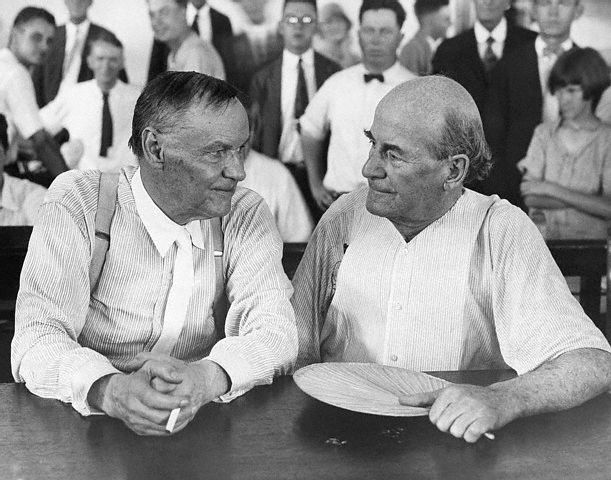
And that is what the Church was about.  From the early Church, we can see that.  It was about reaching the poor.  But as the church went on, and as things happened in our country, things in the Church began to change.  Maybe you remember or at least remember reading about the “Scopes Monkey Trials” in the twenties.  In Tennessee they passed a law that it was illegal to teach evolution in the schools (haven’t times changed!).  So it was illegal in Tennessee but this teacher taught evolution in his classroom anyway and he was brought to trial for it.  He was charged with teaching evolution.
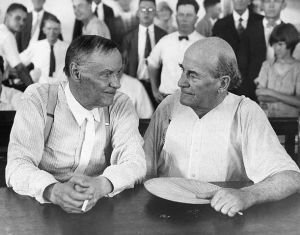
Clarence Darrow (left) and William Jennings Bryan (right) during the Scopes Trial in 1925

Clarence Darrow, a famous lawyer of the time was the defending attorney and William Jennings Bryan was the prosecuting attorney.  Bryan was a popular evangelist; he was what we might call the “Evangelical Right” today and Darrow would be on the other side.  This made news.  Probably the closest thing today that we could relate it to would be the O.J. Simpson trial.  Remember: every day, every time you turned on the news, they were talking about what was going on in the O.J. Simpson trial:  “If the glove doesn’t fit, you must acquit” and all of that.

This is the way it was for this trial, the Scopes Monkey Trial.  Scopes was the teacher’s name.  This was an American phenomena and it helped to solidify the separation between the Mainline Church and the Evangelical Church.  So the Evangelical Church saw anything having to do with this liberal theology as taboo.  One of the things that the “left” was active in was reaching out to the poor, it was “social justice,” it was “social action,” it was taking up the causes of the oppressed.  Since this was part of liberal theology, Evangelicalism went the other way and started to focus nearly exclusively on personal evangelism, on winning souls for Christ, on sharing only the Gospel of Jesus as it applies to personal salvation.

Now clearly, in many parts of the world, the missionaries didn’t make this separation and in fact, for the most part, around the world except in the United States, the Church didn’t have this “bifurcation.”  They realized that there was a need for sharing the Gospel message as well as the need for evangelism and often times missionaries, even from the United States, saw needs and they met the needs.  The Gospel was part of it, but the “meeting of the needs” was part of it, as well.

In the United States, though, there was this bifurcation, this separation, and it went on for decades until probably late eighties, early nineties.  Then people started reading the Scripture, Scriptures like our text today, and realizing that the Church is missing it and losing out on part of their ministry.  The Evangelical Church started to realize that there was more to the Gospel than just the Gospel.  Then the Church started coming back around.  The Church of the Nazarene has been a part of this return:  in the early eighties they established Nazarene Compassionate Ministries as a separate Department which “represented an intentional, organized effort to alleviate human suffering caused by global poverty” (NCMI website).  They also developed Nazarene Disaster Response, which is involved bringing relief to tragedies or disasters.  So we have come back around.   But this bifurcation has been so much a part of our thinking that anything having to do with “Social Justice” has been considered liberal and taboo. So, here we are today.

If you were poor, (and this is the first thing Jesus read, “To preach good news to the poor”); if you were poor, what would be “good news” to you?

Let me pause for a point of clarification here:  Jesus said to preach “good news.”  He does not say to preach the good news, it is not translated “Gospel” here, it is “good news,” to preach good news to the poor.

OK, so if you were poor, what would be good news to you?  I mean really poor, not just not having enough money to get a new car every two or three years, or not being able to take European vacations or Caribbean cruises every year.  Really poor.  The kind of poor where you don’t know where your next meal is coming from.  The kind of poor where you don’t know whether you will get a bed in the shelter or will have to sleep outside.  The kind of poor that means you have to suffer with that disease that is killing you without medical care.  I’m talking about the kind of poor where you don’t feel like you have any hope.  If you were that kind of poor, what would be good news to you?

Do you think some guy coming along and promising that someday in the future you can live in Heaven with God if you receive His son into your heart and life today, would that be good news? Now, that is good news for us, we are Christians.  We are in the Church.  We have got (clearly) plenty of food to eat, a roof over our head, a car to drive.

But if you don’t know where your next meal is coming from, something that is going to happen fifty, sixty, seventy years from now . . . is that good news?

Now again, I don’t want you to think that I’m one of those who say the Gospel is not all that important, we just need to take care of physical needs.  That is not what I’m saying.  The Gospel is our ultimate priority!  The salvation message is our ultimate priority!  But do not think though, that you can give someone a meal and that is your ticket to share the Gospel with him.  That just rings hollow.  If you are going to feed the poor, you need to feed the poor just because they’re hungry, not because you may have a chance to witness to them.

Thinking more about his good news, even if you said, “but look, this isn’t just about the future-you can have joy today, you can be happy today . . .” I don’t think that is good news, not the good news that they want to hear because they will still have to scrounge for food and look for a place to sleep and suffer with their health . . . but they could be happy!  Would that be good news?  I don’t think so.

I think that the good news the poor want to hear is news of how they can get food in their stomachs, a roof over their heads, a place to live, and medical care.  I think the good news that they want is a relief from their poor-ness.

“Isn’t that what welfare is for?” you ask.  ”Aren’t the soup kitchens and compassionate ministries there for them?”  “Isn’t there some ministry to do that?”  If all these things were good enough, we wouldn’t have many poor left, would we?  Remember what Jesus said: “He has anointed me to preach good news to the poor.”  He wasn’t anointed to point the poor in the direction of the nearest soup kitchen.  He wasn’t anointed to write a check. He wasn’t anointed to sit back and let someone else do it.  He was “anointed to preach good news to the poor”!

II. The second aspect of the mission is to “proclaim freedom for the prisoners.”  

How many of you have ever been in jail . . . let me rephrase that:  How many of you have ever visited a prison or a jail?  How many of you have spent time with prisoners?  I’ve been on both sides of the bars.  Mostly, I’ve gone in as a pastor to state prisons and county jails, as some of you have.  I have gone in to visit with prisoners and to minister to them and I can say that for a prisoner behind bars (unless they are counting down the very few days until their release) the good news for them is not something that is going to happen fifty or sixty years away.  Sure, it will help them through their incarceration and we can make a compelling case that if they give their life to Christ, it won’t be so bad, and Jesus will help them through it.  I’m not against that.  I hope you hear me, salvation is essential!  I’m not giving up on salvation.  But sometimes there needs to be more.

That prisoner in jail, in prison, what he wants is freedom!  Jesus was anointed to “proclaim freedom for the prisoners.”  Now that does not mean a big “jail-break!”  I don’t know that I can give many details on how to do this.  How do we bring freedom to the prisoner?  I’m not sure but that is what Jesus was anointed to do.  Maybe this one is more of a spiritual application, but I don’t think so.  I think that there is something more here.  We just have to discover what it is.

So we have the poor, we have the prisoners.

III. The next aspect of the Mission is to “proclaim recovery of sight to the blind.” 

Have any of you seen a blind person healed?  All though Scripture we see Jesus healing the blind.  Now that is not always the way God works. That is not always necessarily the way that we are going to work.  But imagine being blind, that is hard for us to do, I realize, but imagine being blind.  What is good news for you?  That you will be able to see.  Now it could be that healing is in your future as a blind person.  It is possible.  But maybe there is some other way to bring sight to the blind.

At one of the churches that my wife and I worked at many years ago, we somehow got an inroad into a blind residence in Cincinnati.  We would pick up some of the residents who would come to church.  There was one blind woman who came pretty regularly, though I do not remember her name.  She had this blind stuff down pretty well, though.  I don’t know if she was blind from birth or not but she could pull out her wallet and give you a five dollar bill and know that it was a five. She would arrange the bills a certain way and fold them a certain way.  She had that blind stuff down, but when there was a church dinner, it would get a little more difficult.  You have all of those selections, and then once you get it on your plate it gets more difficult.  I remember one dinner my wife got a plate for her and had to describe where everything was:  “OK, at 12:00 are the potatoes, at 3:00 are the green beans, and at 6:00 is the meat loaf.”

In a way, that was giving her sight but I don’t know it that is enough.  I’m not sure that is what this passage is referring to.  But there has to be a way of bringing sight to the blind.  Maybe it is physical healing; maybe we just don’t have the faith.  But that is part of the mission:  recovery of sight to the blind.

IV. The fourth aspect of the Missio Dei in this passage is to “set the oppressed free.” 

Pull out any newspaper, go to the “World” section and you can read about the oppressed around the world.  You can see how people are treated, you can even see in the laws that exist around the world that there is oppression.  People who are being held down, people who do not have an equal opportunity, people who because of maybe the color of their skin or their ethnic background, or their parents just don’t have the same opportunities.  So you go to one of them who does not feel like they have a future or hope and you give them “good news.”  What do you think that good news for them would be?  Again, I don’t think that it is something that is going to happen for them way down the road.  I think that good news for them is some way of being released from their oppression, being set free.  We need to help them, but what do we do?

V. Jesus continues with the fifth aspect of the mission, which is to “proclaim the year of the Lord’s Favor.” 

This phrase that is used here is referring to the “Year of Jubilee.”  In the nation of Israel, in Judaism, they had this every 50 years.  It is what they called “The Year of Jubilee,” when everything was renewed.  Those who had debt, it was cancelled.   Those who were sold into slavery were given their freedom.  Anyone who had to give up their property or had to sell their property, it reverted back to the original owner or their heirs.  This was a renewal of everything, a “making right” of everything, a getting back to the way things are supposed to be.

Jesus is talking about this renewal; He says that this is part of His mission, to “proclaim the year of the Lord’s favor.”  I think that of all the aspects of the mission in this passage, this one may be the aspect that offers hope for the future.  In the Kingdom of God, there is a sense of the “already” because Jesus said, the Kingdom is here.  There is the sense that as we become a believer, a follower of Jesus, that we become a part of His Kingdom and this Kingdom of God is active in the world.  So there is that “already” aspect of the Kingdom, but there is also the “not yet” aspect because it is not completely fulfilled.  If the Kingdom was fully come, we wouldn’t have poor among us, we wouldn’t have blind among us, we wouldn’t have full jails and prisons, there wouldn’t be the oppressed.  But the Kingdom of God is not fully here.

So the idea of this restoration, this renewal, this making everything right is a hope that we have for the future, hopefully the near future.  It is a hope for a “making everything right.”   But I think that even with that, it involves more than just the future, more than just the “not yet.”  There is an element of the “acceptable year of the Lord” that should be “already.”  That is the mission that Jesus, in this passage, was saying that He was on:  part of the Missio Dei, the Mission of God.

Now, remember what we said earlier that as His disciples, as believers, we are called and commissioned to continue the Missio Dei.  So what are we going to do with this?  What are we going to do with the poor, the prisoners, the blind, and the oppressed?  Well, Jesus said to take them the good news, proclaim freedom and recovery of sight, set the oppressed free.  Again, these are not just words that He is taking them, I hope you understand.  We are to take the good news, to proclaim freedom, the recovery of sight, the year of the Lord.  How are we going to do that?

Remember a few weeks back when Governor Mike Huckabee called on believers to eat at Chick-fil-a one particular day to show support for the restaurant owner’s stand on Biblical values? My wife and I and our kids did that.  We had to drive about an hour to get to our nearest Chick-fil-a, but we did it.  We waited in line for a while and finally got our chicken.  We felt good showing our support for this Christian business-owner.  I posted pictures on Facebook.  We did our part.

As I read different posts about this event over the next couple days, I read things (mainly from opponents to the owner’s statements) about how that was such a waste of time and money, how it didn’t really help a real cause, or even the poor. It hit me that while we did show support for something we believed in, the owner of Chick-fil-a probably didn’t need our money.  I think my goal was “I’ll show them!” instead of actually doing good.

That Friday as I was online ordering pizza for my family, I was invited to “share a slice of hope” and donate a dollar to World Hunger Relief.  I did it, and I felt good.  The next time I ordered from Pizza Hut I did it again.  Then the next time I gave 2 dollars!  So now I’ve given $4 for world hunger, but how has that helped the family downtown who just got evicted with nowhere to go?  How did that help that homeless vet who doesn’t know where his next meal is going to come from?  How did that 4 bucks really help anybody?

I’m not saying there is no value in that; I’m still going to do it.  But it is not enough.  It wasn’t a sacrifice for me.  It didn’t hurt a bit.  I need to do more.  I think you need to do more.

So what do we do?

VI. A further understanding of the Mission of God.

Matthew 25 goes into this mission a lot and I think will give us a better understanding of our text.  This is a bit of a lengthy passage, but I think that we ought to look at it here.  It gives us more of a clue as to our responsibility.

When the Son of Man comes in his glory, and all the angels with him, he will sit on his glorious throne. All the nations will be gathered before him, and he will separate the people one from another as a shepherd separates the sheep from the goats. He will put the sheep on his right and the goats on his left.

Then the King will say to those on his right, ‘Come, you who are blessed by my Father; take your inheritance, the kingdom prepared for you since the creation of the world. For I was hungry and you gave me something to eat, I was thirsty and you gave me something to drink, I was a stranger and you invited me in,I needed clothes and you clothed me, I was sick and you looked after me, I was in prison and you came to visit me.’

Then the righteous will answer him, ‘Lord, when did we see you hungry and feed you, or thirsty and give you something to drink? When did we see you a stranger and invite you in, or needing clothes and clothe you? When did we see you sick or in prison and go to visit you?’

The King will reply, ‘Truly I tell you, whatever you did for one of the least of these brothers and sisters of mine, you did for me.’

Then he will say to those on his left, ‘Depart from me, you who are cursed, into the eternal fire prepared for the devil and his angels. For I was hungry and you gave me nothing to eat, I was thirsty and you gave me nothing to drink,I was a stranger and you did not invite me in, I needed clothes and you did not clothe me, I was sick and in prison and you did not look after me.’

They also will answer, ‘Lord, when did we see you hungry or thirsty or a stranger or needing clothes or sick or in prison, and did not help you?’

He will reply, ‘Truly I tell you, whatever you did not do for one of the least of these, you did not do for me.’

Then they will go away to eternal punishment, but the righteous to eternal life (Matthew 25:31-46, NIV).

When we look at this passage we see that they were being judged, not according to how long they had been a Christian or even if they were Christians, though it is assumed they were, or at least thought they were.  They were not being judged according to how many times they went to church or how much their tithe was.  Not according to how many dollars they gave to “share a slice of hope.”  They were judged according to how well they accomplished the mission of God.  Whether or not they fed the hungry, clothed the naked, visited the prisoner, cared for the sick.  Those who didn’t were allowed to continue on their path to eternal punishment while those who did, to eternal life.  I think this gives us a glimpse of the seriousness of this mission of God.

Application

The significance of the Missio Dei should drive us on to be more a part of that mission, but what is our part?  What can we do?  There are a few things that all of us as believers should definitely consider:

First, we should all pray.  We should pray for the Mission of God around the world.  We should pray for those who have answered God’s call and are serving in particular ministries around the world, accomplishing the mission of God.  We should pray specifically, by name, for missionaries and ministers both in the United States seeking to live out today’s passage, as well as missionaries around the world who are doing the same.

Second, we can give financially.  I’m not talking about the buck or two that doesn’t hurt, but sacrificially giving to help the mission of God around the world.  In our church that means giving to the World Evangelism Fund that supports our missionaries that are in over 150 world areas.  It means giving to the Alabaster Offering which helps to build buildings in mission areas around the world.  It means sponsoring a child through Nazarene Compassionate Ministries (NCM) to help meet the needs of impoverished children around the world.  It means giving to NCM to help alleviate poverty around the world, as well as right here in the United States.  It means giving to Nazarene Disaster Response as they seek to help those who have experienced some tragedy or disaster.  It includes giving generously for deputation offerings when missionaries visit our church or our district.  The list really could go on and on.  The point is to give sacrificially as God directs you.

Third, we should all be willing to personally go if God calls us.  Yes, there are many needs right here in our community, in the places where we work and live.  But there is also great need for people to serve the cause of Christ around the world, both taking the Gospel message of salvation, as well as the good news to the poor, blind, imprisoned and oppressed.  There is a need for people to follow God’s call cross-culturally to help ensure God’s mission is accomplished to “the least of these.”  We all need to be willing to go and need to listen for God’s call.

Finally, now what are you going to do?  Where are you going to go?  I can’t tell you specifically what you are supposed to do.  But I do know who does know and it is in our text in Luke.

In Luke 4:14 we read, “Jesus returned to Galilee in the power of the Spirit.”  In verse 18 Jesus read from Isaiah, “The Spirit of the Lord is on me . . .” I think this is the key to finding the answer of “how?” of what we are supposed to do: the Holy Spirit.

We read in the Gospels how much the disciples bungled their ministry until after Acts 2. What happened in Acts 2?  Let’s go there:

When the day of Pentecost came, they were all together in one place. Suddenly a sound like the blowing of a violent wind came from heaven and filled the whole house where they were sitting. They saw what seemed to be tongues of fire that separated and came to rest on each of them. All of them were filled with the Holy Spirit and began to speak in other tongues as the Spirit enabled them. (Acts 2:1-4, NIV)

Do you see that, “All of them were filled with the Holy Spirit”! Then their ministry took off! Then they were able to preach, they were able to heal, they were able to continue the Missio Dei. We notice later in that chapter what else that infilling of the Holy Spirit did for them:

They devoted themselves to the apostles’ teaching and to fellowship, to the breaking of bread and to prayer.  Everyone was filled with awe at the many wonders and signs performed by the apostles. All the believers were together and had everything in common. They sold property and possessions to give to anyone who had need. Every day they continued to meet together in the temple courts. They broke bread in their homes and ate together with glad and sincere hearts, praising God and enjoying the favor of all the people. And the Lord added to their number daily those who were being saved (Acts 2:42-47, NIV)

Do you see what they did?  The apostles taught, they had fellowship, they broke bread and prayed.  They performed wonders and signs, they had everything in common, they sold property and possessions to give to anyone who had need.  They continued to meet together; they broke bread in their homes and ate together.  And they grew.

All that they did is great and it is what the Church should be doing, but I want to zero in on more than just what they did, and it’s not really written in the text but is clearly implied:

They knew what to do!  

This was all new to them.  For the last three years they always had Jesus to tell them what to do.  This whole “Christian Church” thing had never been done before, so they couldn’t read the stories of the pioneers who had gone before them. They were the pioneers!  They were on their own. It was sink or swim!

Now I Know that the Scripture record doesn’t give us every thought and detail but I believe that it gives us what we need to know.  And I don’t see a struggle here among the believers about what they should be doing.  They were filled with the Holy Spirit, and then the Holy Spirit guided them and helped them to know what to do.

We could go beyond the 2nd chapter of Acts into the rest of recorded Scripture and see them doing it over and over again:  preaching, healing, providing, continuing the Missio Dei!

Conclusion

So let’s get ourselves back to the 21st century.  We are told to take good news to the poor, to proclaim freedom to the prisoners, recovery of sight to the blind, to release the oppressed, to proclaim the year of the Lord’s favor.  How do we do it?  What do we do? Where do we go?  We let the Holy Spirit guide us.  More than His guidance though (or as a prerequisite of His guidance) we need His filling!

If you haven’t been filled with the Spirit, you are just a believer without power.  If the Spirit hasn’t filled you, you’re just a disciple who doesn’t know fully what to do for the poor. I want to encourage you today to seek the Holy Spirit!  Ask Him to fill you!  Open yourself up to Him!

As we come to Him beyond salvation for His filling, we need to first consecrate our all to Him.  We need to be willing to give to Him all that we are, all that we have, and all that the future holds:  our families, our lives, our careers, our riches.  We need to not just be willing to; we need to give those to Him.  Lay them on the altar, consecrating our all to Him—not holding anything back.  When we give Him our all and invite Him to fill us, that is when He fills us.  It may be instantaneous or it may take time, but He will fill you fully and that is when you can know how to accomplish the mission of God.  You won’t have to wonder, the Holy Spirit will guide you!

Leave a comment

Reflections on “Ambassadors of Hope: How Christians Can Respond to the World’s Toughest Problems”

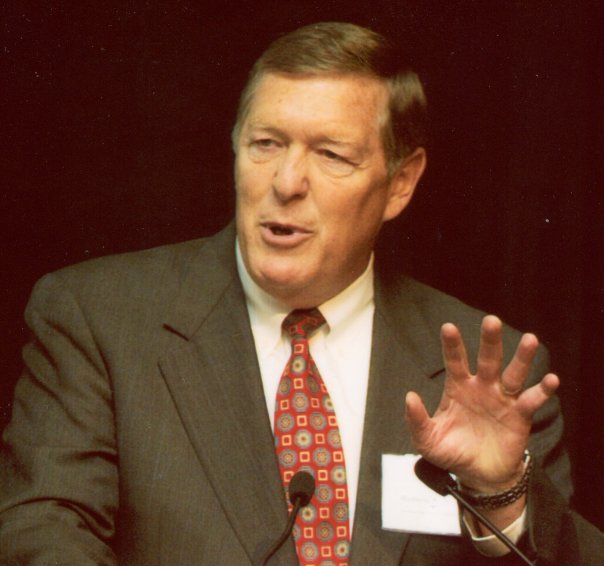
I first met Dr. Robert A. Seiple when he spoke to Army chaplains attending the Chaplain Captain’s Career Course at the U.S. Army Chaplain Center and School at Fort Jackson, South Carolina.  His experience and message in his book is much broader than that audience, though.  His book, Ambassadors of Hope, needs to be read by all of those who seek justice in the world.  It should be consulted by anyone seeking to alleviate the needs of the poor and oppressed.  It should be kept as a reference for missionaries and social workers.

Dr. Seiple brings a wealth of experience to this work.  He was president of Eastern College and Eastern Baptist Theological Seminary, president of World Vision and was appointed by President Bill Clinton as the first Ambassador-at-Large for International Religious Freedom.  He went on to found the Institute for Global Engagement.

In this book, Dr. Seiple approaches the topic of justice from a “big-picture” perspective.  His work with the State Department enabled him to wield the power of the United States in seeking to promote religious freedom in countries where it is limited, but through personal stories and specific admonitions, he brings both the responsibility and opportunity of individual work toward social justice to the hands of the reader.

He divides the book into three main sections: What We’re Facing, What We’re About and What We Do with an overarching theme of reconciliation.   He titles his ten chapters with the concepts that he believes bring about reconciliation in the world:  relevance, challenge, diversity, truth, mercy, grace, justice, peace, effectiveness and hope.  I will interact with the book organized by these ten themes.

Relevance  

Dr. Seiple emphasizes that we cannot just sit back in our comfortable churches and homes and pray for justice around the world.  He confesses, “I have come to realize that it is not enough for my faith to work in the comfortable confines of my church, my community and this powerful nation that has shielded my life from so much potential harm.  My faith has to work in the hard places.  My theology has to touch the ground where people are hurting”  (Seiple 2004, 15).

This is what all of us must come to realize if we are to be faithful to the Missio Dei.  If we are truly concerned for the oppressed of the world, if we believe that our theology teaches that we should help bring freedom to the oppressed, if our faith in God -our relationship with the Father- means anything to us, then we need to get our hands dirty.  We need to go to where the needs are, where people are hurting.

This is a message for the Church today.  It’s not enough to pray for the oppressed peoples of the world, or even our communities.  It’s not enough to write a check to support a food bank or to sponsor a child.  Sometimes we need to go.  Everyone can get involved in some way in their community or even the world to help ease the suffering of the poor and oppressed.  The Church, the people in the Church, need to seek God and his Holy Spirit to guide them, and then they need to obey and get involved.  If the Church wants to be relevant in the world, they need to be involved in the world, involved in relieving the plight of the suffering in the world.

Challenge

Dr. Seiple suggests that to be effective in the world, in making a difference in the world, we need to be both relevant and credible.  He contends, “It should be the passion and the absolute nonnegotiable bottom line that we will be both true to our task (we will do what we say we are going to do; thus we will be credible) and we will excel at what we do (there will be positive results that will impact a community, making our witness relevant)” (Seiple 2004, 28).  I think that by calling ourselves Christian, our task has been defined by Scripture so to be credible in the world the Church needs to seek to fulfill that task.

The ultimate task for the Christian is to share the Gospel message with those who have not heard it, but I believe that the nearly equal task for the Christian is to address the needs of the poor, oppressed and neglected in the world.  If we are to take our status as Christian seriously we need to take our task to go seriously as well.  And as Seiple suggests, if we are going to go, we need to excel at fulfilling the task we’ve been given.  As ambassadors of Christ, our effort should be executed with excellence since we are serving others as though we are serving Christ himself (Matthew 25) and since our labor should be as unto the Lord (Colossians 3:23).

Diversity

Dr. Seiple contends that we should treat all people with differing views or beliefs with dignity and respect.  If we are to engage those who need our help or those who are the “power-brokers” who can bring help, we need to allow them to be equals among us and feel as though we value them and their particular views.  Seiple feels so strongly about this that he maintains,

The issue of identity, and the very real question of whether we will respect someone whose identity is different from our own, has profound implications for our lives at many levels:  the relevance of our Christian witness, the ability of a country to demonstrate effective leadership in the world and, ultimately, the ease by which the unimaginable can become possible (Seiple 2004, 51).

If we are to accomplish our task, we need to recognize the differences that exist between us and allow those differences to be a source of engagement rather than a source of derision or even division.

Dr. Seiple borrows from John Paul Lederach when “he suggests three factors that are prominent in the creation of enemies:  separation, superiority and dehumanization” (Seiple 2004, 51).  While I cannot deal with these fully in this post, we need to be aware that these are dangers that we can all too easily fall into which prevent us from respecting and effectively engaging the very people that we need to reach and partner with.  Rather than this exclusion, we need to seek to embrace others by, “acknowledging that all are created in God’s image” (Seiple 2004, 64), “knowing others by name” (Seiple 2004, 65), and “becoming friends” (Seiple 2004, 69).  If we do these things, effective engagement and our desired reconciliation are sure to follow.

Truth

In his discussion on truth, Seiple pursues “truth-telling” as an engagement in confession and forgiveness.  He acknowledges that with some enemies you may not know what or how to speak truth to them but asserts, “I firmly believe that finding that point of commonality is nothing short of a profound moment of grace. . . one does not always tell the truth and one does not always find something in common with one’s enemy unless there is a nudge of the Spirit” (Seiple 2004, 76). As Christians, the guidance of the Holy Spirit needs to be paramount as we seek to build bridges with those we desire to serve.  To find that common ground on which to build a relationship, the rocks and weeds of offense need to be confessed.  We may need to acknowledge our lack of obedience, or even lack of disregard for the plight of the oppressed before we can move forward toward a relationship that enables reconciliation and freedom.

Mercy

Dr. Seiple’s idea of mercy becomes clear when he combines it with his concepts of grace, truth and forgiveness:

Truth keeps the process of reconciliation from becoming abstract.  What keeps forgiveness from doing the same? …’Truth without love is aggressive; love without truth is mere sentimentality.’  How much mercy do we apply to truth?  How much love is needed to generate forgiveness?  How strong a prompt of grace will be required to get us through the difficulties created in our past (Seiple 2004, 88).

If we are to see reconciliation, truth must be told, and forgiveness must be given.  We need to remember, “Mercy is a conscious choice made tangible in the act of forgiveness and prompted by grace . . . if reconciliation is the heart of the gospel, mercy is the heart of reconciliation” (Seiple 2004, 88).   We need to experience mercy -received and given- to move forward in the task before us.

Grace

If any concept is most related to our faith, it is grace.  “When grace is absent, our faith is diminished and our witness is unattractive” (Seiple 2004, 99).  Having received grace, we can place ourselves properly in the world as undeserved, the same as those whom we seek to serve.  If we correctly recognize that everything we have received is a result of grace -unmerited favor, then it is easier for us to remove the misconception that delays or hinders our work with the poor:  that they do not deserve our help.  Those who “have” are no better than those who “have not,” the “haves” have just been the recipients of grace while the “have nots” are yet to be given the opportunity to receive grace.  Christians, more than any non-faith based NGO or government, should be the harbingers of grace in the world.

It is grace that makes us different; that makes us attractive.  According to Seiple, “. . . the presence of grace makes our faith visible.  The world is drawn to it like a magnet.  Our gospel becomes real and irresistible, attractive to both the proud and the downtrodden.  It is the absolute best we have to offer, and it costs us nothing.  It cost God everything so that it could be freely offered to those who desperately need access to him” (Seiple 2004, 99). We need to live out our grace as we share it with the world in both the Gospel message preached, and the Gospel mission taken to the poor and oppressed as we work to lift them out of their poverty and oppression.  It is grace that empowers our message and ministry.

Justice

The idea of justice is often seen as being in the hands of the government, and often the world sees the United States as the “long arm of the law.”  Dr. Seiple states, “when we in the West examine our power and authority in the context of our culture, systems and traditions, we should feel the enormity of our responsibility.  Jesus said, ‘From everyone who has been given much, much will be demanded’ (Luke 12:48).  Indeed there is greater accountability for what we do and how we implement this component of justice.  Accountability is very much a part of the ‘doing’ of justice” (Seiple 2004, 112).  We should engage the governments that can help ensure justice to enable other acts of compassion to be performed around the world.  Many times, there is little that the Church can do until the State has made things right in the area of justice.

We cannot leave seeking justice to the government alone, however.  We need to remember “power and authority come from a credible witness, from trustworthy relationships, from proper motivation and from individuals who are demonstrably good” (Seiple 2004, 113-114).  This means that Christians need to be involved in the process.  While engaging governments, Christians need to also be engaging people, making relationships, building trust, and giving grace.

Peace

As justice and reconciliation are brought into a society, peace becomes possible.  Peace is something that requires both large-scale and individual engagement.  For the Christian, the greatest peace that can be brought to a people is that internal peace that only God can give.  However, to pave the wave for bringing the message of peace there needs to be the kind of peace that a government secures for its people; though admittedly, this is often hard to achieve.

Dr. Seiple offers four components to build peace, which I think are all self-explanatory:  1. “Respecting security” (Seiple 2004, 132), 2. “Taking the first unilateral step” (Seiple 2004, 136), 3. “Making an appropriate apology” (Seiple 2004, 137), and, 4. “Speaking about the future together” (Seiple 2004, 139).  These are steps that both governments and individuals should take to build peace together.

Effectiveness

Dr. Seiple agrees that the task before us is daunting, which could prevent us from taking the first step in helping those in need.  He laments,

There is a potentially huge stumbling block inherent in the exercise of global engagement that can prove to be downright paralyzing to those who are making their way out on that proverbial dance floor.  Simply put, our Jericho Road is a whole lot wider and longer, not to mention more complicated, than the one traveled by the Good Samaritan.  To call the obvious into focus, there is certainly more than a single victim on our road today.  Our Jericho Road is as wide as the information highway.  Our victims are as numerous as the bandwidth we can afford.  On a good day, we are humbled by the amount of hurt that exists in the twenty-first century.  On a bad day, we are paralyzed by the overwhelming needs (Seiple 2004, 154).

We need to be careful not to allow the seemingly unconquerable mountain before us to deter us from our task.  We cannot view “success” as the completion of the task throughout the world, but rather acknowledge our part in it.  Seiple offers the words of Mother Teresa to encourage us, “God has not called me to be successful, only obedient” (Seiple 2004, 155).  So we must be obedient.  God has made His mission known throughout the pages of the Bible.  He has called us to engage the world to take them the Gospel message as we meet their needs.  He has called us to be obedient.

Hope

God has given us hope.  He sent his son, Jesus, into the world to die on the cross that we might have eternal life.  We have the very real hope of abundant life today and for all of eternity because of what God did for us.  Seiple continues, “And now we are his agents of the same gift.  We are obliged to be appropriately engaged in his world.  We are ambassadors of a kingdom whose constitutional foundation is reconciliation; we are his ambassadors of hope” (Seiple 2004, 201).  We have the message that brings spiritual hope to people, and we have the means to bring tangible hope, as well.  It is what we are called and sent to do, both in our communities and around the world.  It is our responsibility and extreme privilege to participate in the Missio Dei.

__________

In addition to Ambassadors of Hope (Robert A. Seiple, Ambassadors of Hope, How Christians can Respond to the World’s Toughest Problems [Downers Grove, IL:  InterVarsity Press, 2004]), Dr. Seiple has also authored A Missing Peace, Vietnam: Finally Healing the Pain with Gregg Lewis and One Life at a Time.


Leave a comment

Travelogue: Martin Luther “Pilgrimage”

Front of Luther’s Birth house in Eisleben, Germany

In recognition of Reformation Day, I thought that it would be good to share a little from my Martin Luther “pilgrimage” I took with my two sons while we were in Germany.  This was a great experience for me (hopefully for my sons, too!).  Not just because of the content of the trip but because of the participants.  It was one of those “just us guys” things that we were able to do in an exciting location.

It would have been nice to take in each of the sites in order of Luther’s life, but that would have been too many miles so we took the most economical route.  For the purpose of this Travelogue, however, I’m going to go in chronological order.

Courtyard view of Luther’s birth house

Martin Luther was born in Eisleben, Germany 10 November 1483.  The house where he was born burned down in a fire but was faithfully and lovingly restored to the exact specifications of the original.  We toured the house to see how it looked in the 15th century when Luther was born there.  Part of the house also houses a really neat museum about Martin Luther and his family history.

This is the door where Luther likely would have entered the Monastery of the Hermits of  St. Augustine in Erfurt, leaving behind his former life for one in the service of God

This town of Eisleben is alive as a significant place in Lutheran history; in fact, it’s known as “Lutherstadt Eisleben” (Luther-City Eisleben) and hosts visitors from all over the world.

After nearly losing his life in a storm then committing it to God’s service, Martin Luther went to the Monastery of the Hermits St. Augustine in Erfurt.  It was here where Luther began studying to be a priest in the Roman Catholic Church.

By agreement after the successful Reformation, this monastery remained Roman Catholic until the passing of the last monk who was currently a part of the order, after which it was turned over to the Lutheran Church.  The Lutherans now run it as a significant site in their history.  Part of

The likely “cell” at the monastery where Luther spent much of his time

the campus is now used for conferences and study as well as a guest house.  My sons and I were able to stay the night here, right down the hall from where Luther spent so much time!

It was in Erfurt where Luther celebrated his first Mass, which didn’t go so well (you’ll remember if you’ve seen the recent movie “Luther”).  Also, at the Erfurt Cathedral, Luther was ordained as a Roman Catholic priest on 4 April 1507.

In 1511, Luther was sent to Wittenberg where he continued to study God’s Word and taught in the university.  He often preached at the “City Church” in Wittenberg, walking distance from the Castle Church where he later would nail

The Erfurt Cathedral where Martin Luther was ordained a priest

his 95 Theses to the church door, where other notices and inquiries were posted.  My boys and I worshiped at the Castle Church the Sunday that we were there and after the service exited through that famous doorway.

Luther lived for some thirty-five years in the Monastery of the Hermits of St. Augustine in Wittenberg which became a

Wittenburg Castle Church where Luther nailed his 95 Theses to the door

Protestant vicarage where Luther and his wife, Katharina von Bora (who he married in 1525) lived.  One of the main rooms of their living quarters has been preserved just as it was when Luther’s family lived there.

While we didn’t go there on this trip, my older son and I did visit Worms on another trip that we took.  Worms, as you may remember, played a prominent role in Luther’s

Sts. Peter & Paul Cathedral in Worms

life.  It was here, when defending his position, that he boldly declared, “Here I stand!”  Sts. Peter & Paul Cathedral would have loomed large over the city while Luther made his famous defense.

By 1521, Luther was hiding for his life at the Wartburg Castle which is said to have been built in 1067 by Louis the Leaper, ancestor of the landgraves of Thuringia.  Luther lived here from 4 May 1521 until March 1522.  It was here that he translated the New Testament from the original Greek into German.

In 1546, Luther returned to the town of his birth,

Wartburg Castle in Eisenbach where Luther hid in 1521/2 and translated the New Testament into German

Eisleben, to settle a dispute.  While here he fell very ill and eventually died on 18 February 1546.  The house where he was staying was that of the town’s clerk and has been preserved as a memorial.  Luther’s final resting place, however, is in the Wittenberg Schlosskirche (Wittenberg Castle Church) along with that of Phillip Melanchthon, a contemporary of Luther’s.

Me by the famous “Wittenberg Door” (though the original doors were burned in a fire caused by an attack during the 30-years War, the door opening would be original!)

If you are ever in Germany, I would highly recommend visiting any of these sites, though I think that if you had to choose one, Wittenberg would probably be the best. Wittenberg contains the famous Castle Church where Luther nailed his 95 Theses, the City Church where he often preached, the Monastery of the Hermits of St. Augustine where he and his family lived for about 35 years, and also the home of Phillip Melanchthon another important Lutheran figure.

Altar at the Monestary in Erfurt which likely pre-dates Luther so was probably used by Luther when studying to be a priest

If you can choose two sites, Erfurt would be my second choice.  Erfurt is home to the Monastery of St. Augustine where Luther became a Catholic priest, as well as the Cathedral where he was ordained.  The chapel at the monastery has an ancient altar which has a compartment in it for “relics” dating it to its Roman Catholic origins.  According to our tour guide, this causes them to believe that it is likely the altar that

The High Altar at the Erfurt Cathedral where Luther was ordained a priest

was present when Luther would have celebrated his first Mass.

Any site is meaningful, however, and when allowed to dwell on its significance it nearly transports you to a time in Church history when God spoke clearly to faithful men and women like Martin Luther to bring about a change in the Church that would allow His message to move forward for generations to come.

The influence of the German Reformation was felt around the world and would eventually have an impact on the English Reformation which culminated in 1536 when Parliament passed the “Act Against the Pope’s Authority” which severed their last remaining ties to Rome.  This set the stage for the Church of England to become what it was when John Wesley became an Anglican priest.  But that’s a story for another Travelogue . . .

3 Comments

The Day A Prayer Saved My Son’s Life

Little did I know how close my son would come to dying that day.  I often wonder what my older children that have moved out are up to.  Like any parent, I worry about what messes they may get themselves into and how their lack of life experiences could allow pain to come into their lives.  I know that I can’t be there for them all the time, which is why I am glad that God is, and that He urges us to pray when we need to.

It was a Sunday morning a few weeks ago.  It started like any other Sunday morning.  We arrived just in time for Sunday School with the breakfast snack my wife often makes for our class.  After Sunday School we visited with others and caught up on some of the events of the week while waiting for the worship service to begin.  My wife was in the choir so I was alone with our two daughters (the two still at home) in the pew.  I was paying a bit more attention than I normally would since the pastor had asked me to help distribute the elements for the Lord’s Supper toward the end of the service.

Soon after the service began though, my mind strangely wandered to Frank Peretti’s book, This Present Darkness which was a story that dramatically portrayed the supernatural battles that take place in our world and the power of prayer to help defeat Satan’s attacks on God’s children.  I was remembering one of the scenes where one of the characters was in a van driving (or being driven) along a dangerous mountain road. Demons were on one side trying to push the van over the edge while angels were on the other side trying to hold it on the road.  The angels seemed to gain or lose their power as a direct result of how much believers were praying in those moments for that person in the van (if I remember the story correctly, it’s been years since I listed to an audio version!).

Anyway, this memory of the spiritual fight in Peretti’s book led me to think about my three older children who are out on their own.  My heart began to sink deep in my chest as I got the very real impression that one of them was in some kind of trouble.  I felt very strongly that God was urging me, no-driving me to pray for them as though my prayer in that moment would save them from some danger or worse, some evil.

I had never before felt such a strong need to pray.

We were in the middle of the service and the pastor was well into his message.  I didn’t want to disrupt the service so prayed where I was in the pew.  I’m not sure if others noticed the tears in my eyes as I prayed, or not, but that wasn’t what was on my mind.  All that I could think of was my children and how they needed me to pray for them.

The pastor’s preaching, while usually something that I want to pay attention to, was just distracting me from my task at hand on this day.  I considered slipping out to find a quiet room to pray in but remembered that the pastor was counting on my help with the Lord’s Supper.  So I just continued to pray where I was.

I pleaded for my children’s safety.  I begged for God to send angels to protect them.  I prayed in Jesus’ name that the Holy Spirit would flood wherever they were with His presence. I asked that God would send Christians to them that could help them where they are. I really didn’t know what I was praying for so I just prayed for everything that I could think of for those three children.

I prayed hard, really hard.

Eventually, the pastor finished his message and we were called forward to assist with Communion, though my heart and mind wasn’t in it.  While trying to still focus on the sacrament, I continued to pray for my kids.  Once everyone had received the elements and the pastor led us in partaking of them, the spiritual presence of God in those moments surprisingly took on greater significance to me as I continued to intercede for my family.

As soon as the worship service was over, I pulled out my phone and began to text my kids and asked them simply, “R U OK?”  My third child, didn’t reply for a while, but my second texted me back that she was fine, as did my oldest.  The other who I hadn’t heard from finally texted me back as well with a positive reply.  I was almost disappointed!  I really expected one of them to confess that they were in some spiritual struggle, or had been in a church service and heard God speak to them, or something else dramatic.

Their replies made me wonder why I felt so much like I had to pray.

I know that we often don’t know the impact or results of our prayers.  I know that God’s hand of safety often protects us from things that we weren’t even aware of being a danger.  I know that my prayers weren’t for nothing, that there was something going on that needed my prayer, so I was satisfied that I did what I needed to do.  What God told me to do.

All three of my kids eventually asked me why I had asked such a curious question.  I explained to them how I had felt drawn to pray for them and the urgency that it seemed I was involved in.  Then my oldest son replied, “I was riding in someone’s car earlier and they almost hit a bus.  Thanks for the prayers.”  So maybe there was something more!

I later got more of the story from my son who lives in Akron, Ohio.  He said he and two of his friends “were on [their] way back from the grocery store. [His friend] was driving. He was easily distracted, and didn’t notice the bus stopping in front of him. At the last second, he was able to swerve into the other lane, which usually wouldn’t have been any better, because [they] were driving through a busy part of town. We slid right between two cars and didn’t die.”

When you tangle with a bus and other motor vehicles, it often doesn’t turn out well, especially downtown when there’s a lot of traffic.  It seems that my son believes it was a near miss, that there really should have been an accident and that it likely would have been serious.

I don’t know if my son narrowly escaping an accident was the reason God urged me to pray or not, but I’m satisfied that whatever the reason, God was empowered to act through my prayers.  I’m thankful that I heard God’s call to prayer and that I didn’t allow the distractions around me (though not bad things in and of themselves) to deter me from my mission to pray.

Since that morning, I pray more often for all of my children than I used to. My time in prayer for my children seems to carry more significance to me now.  I hope though, that if they need me to pray more intensely for them again, that I will hear God’s call and will not hesitate to get right to my knees because I may never know what dangers they face.

2 Comments

The Night a Prayer Saved My Life

I remain amazed at how many things went through my mind while the two handguns were pointing at my head.  One of those things was, “why didn’t I just keep the car?”

My wife and I moved to Colorado Springs in 1992 to attend Nazarene Bible College.  We felt that God had called us to the ministry and further called us to NBC to prepare.  Like many of the students there, we left pretty good paying jobs and uprooted our lives and families to follow God’s call.  There were times while at NBC when I had to sell coins that I had been saving since childhood just so we could move up from having to wonder what we were going to eat to being able to have beans and cornbread.  Our “riches to rags” story isn’t as dramatic as some others who attended NBC though, but we wouldn’t trade it for anything.  It was a great time that helped to prepare us for the years ahead, both educationally and experientially.

One particular night played into those experiences that helped to develop us.

The neighborhood we lived in wasn’t a bad one.  It was predominately a lower-middle-class community with small, basic ranch houses that closely resembled each other.  The nice thing about our house was that it was just about a mile and a half from where I had found work at Christian Booksellers Association.  My job at CBA was mainly to process orders from member bookstores, package them and prep them for shipping.  Since I was attending NBC, my supervisor worked with me to allow me to occasionally attend day classes then make up my work hours in the evening.  This was one of those nights.  My wife worked at the daycare at NBC and I had a class this particular evening as well as a day class so we left the school kind of late. I decided not to take the time to take my wife home then drive back to work, so I had her drop me off and I would just walk the mile and a half home.

Being alone in the building, I wasn’t concerned with what I was wearing, so I planned for my walk home by just wearing a t-shirt and running shorts.  No pockets, no money, no wallet, just my keys.  I worked a couple of hours or so, long enough to process the orders from the day that were left for me.  I finished about midnight then made sure the doors were locked and started on my way home. It was a dark, moonless night but I thought that the occasional streetlight would be enough to illuminate my way home.

I was just about three or four blocks into my walk home when I heard rustling in the bushes behind me.  At first I didn’t see anything or anyone, but I knew I wasn’t alone when I heard something like “don’t turn around!”  Normal reaction caused me to turn to where the voice was coming from and I saw two men with handguns pointed right at me.  The stench of alcohol flooded my sense of smell as the one closest to me told me to turn back around. The next thing I heard was him yelling, “give me your money, now!”  It was all surreal.  It seemed like everything was going in slow motion.  I thought about how I wished that I had just driven to work. I thought about how I might not get out of this situation safely. I thought about what my death would mean to my family. I wondered what I would do if they took my keys and made me tell them where I lived . . . or they’d shoot me, how could I protect my family?

I wish that I could say that I spoke to my assailants about God; about how whatever they were facing, God could help them; how Jesus loved them and wanted to have a relationship with them.  But I can’t say that I did that.  Their well-being wasn’t on my mind; I was just trying to figure out how to get out of the situation.

“Give me your money!” I was told again.  “I’m wearing shorts and a t-shirt, where would I have money?”  I either said or thought, I don’t know if the words actually came out or not. I went on to say, “I don’t have anything but my keys.”  My keys were tucked into the waist band of my shorts and when I pulled them out they dropped to the ground as I raised my arms to show I had nothing else.

I knew this isn’t what they wanted to hear and I could still see in my peripheral vision the muzzles of their handguns pointing right at my head. The one doing the talking seemed to be getting frustrated. Smelling the alcohol, I worried that they were drunk so may not have much control over their trigger fingers.  My muscles tightened as I cringed and prepared myself for the impact of the bullets penetrating my skull.  The seconds seemed like minutes as I waited for the shots to be fired.

Just then, as though they were scared off by something, he yelled at me to get out of there, to go!  I grabbed my keys that I had dropped and ran across the street.  I looked back and couldn’t see them but I kept running for another block or two.

I still had about a mile to go so was able to calm down quite a bit before I got home and found my wife asleep as I expected.  I slid into bed and soon drifted off to sleep as I thought about what had happened that night and even more about what could have happened.  The next morning, I told my wife my experience and amazed, she related to me what had happened to her that night:  Before she went to bed, she felt prompted to pray for me.  She didn’t know why she had that feeling, but she prayed.

Scripture is clear that Christians are to pray.  We are to be persistent in prayer.  We are to pray without ceasing. We are to pray in Jesus’ name.  We are even promised, “. . . the Spirit helps us in our weakness. We do not know what we ought to pray for, but the Spirit himself intercedes for us through wordless groans. And he who searches our hearts knows the mind of the Spirit, because the Spirit intercedes for God’s people in accordance with the will of God” (Romans 8:26-27, NIV).

I have no doubt that my wife prays for me regularly, but that night was different.  She had already prayed. She was ready for bed. But she prayed again.  She prayed for me and my life was saved.

5 Comments

What is “good news” to the poor?

Not too long into His public ministry, Jesus returned to His home town of Nazareth.  Being the Sabbath day, he went to the Synagogue as any good Jew of His day would do.  Perhaps because he was there as a guest or maybe because word had spread all over Galilee about what He was preaching and doing, He was asked to read the days Scripture reading.

I’m not certain if the reading for that day was actually Isaiah 6:1-2 or if he scrolled through the scroll a bit to find it, but what He read was a powerful message.  Let me give you the entire Luke passage in context:

Jesus returned to Galilee in the power of the Spirit, and news about him spread through the whole countryside. He was teaching in their synagogues, and everyone praised him. He went to Nazareth, where he had been brought up, and on the Sabbath day he went into the synagogue, as was his custom. He stood up to read, and the scroll of the prophet Isaiah was handed to him. Unrolling it, he found the place where it is written:

“The Spirit of the Lord is on me,
    because he has anointed me
    to proclaim good news to the poor.
He has sent me to proclaim freedom for the prisoners
    and recovery of sight for the blind,
to set the oppressed free,
to proclaim the year of the Lord’s favor.”

Then he rolled up the scroll, gave it back to the attendant and sat down. The eyes of everyone in the synagogue were fastened on him. He began by saying to them, “Today this scripture is fulfilled in your hearing” (Luke 4:14-21, NIV).

I remember when I was younger, I used to wonder why He sat down.  If he was going to preach, get behind the pulpit and preach!  Well my worldview was from a Western, Protestant standard.  In that faith in that time, the guest would read the passage then sit down to discuss it.

OK, fine but His introduction sure seems like it would have been off the wall.  Imagining myself as a Jewish man sitting in that synagogue in the 1st century, hearing that passage from Isaiah, I think I would be scratching my head saying, “huh?”

But looking back from the 21st century, having read the rest of the story, it’s clear to me that He realized, and was trying to communicate to the Jewish men in that group, that He was that anointed one on a mission.

This article doesn’t allow the time or space to delve into the Missio Dei that runs through the Bible from nearly the beginning clear through to the end, but let me briefly say that God’s mission was to bless the nations, the peoples, of the world first through Israel. This continued through His new covenant people, His Church.  Jesus was announcing that He was continuing that mission.  I want to look more closely at what this mission is, but first let’s consider why it’s important for us to understand what Jesus’ mission was.

We see all through the Gospels and the first part of Acts, Jesus preparing the disciples to take on His ministry.  In John 17 Jesus prays for Himself and His disciples.  In verse 18 He prays, “As you sent me into the world, I have sent them into the world.”  Jesus sent His disciples into the world with the mission that the Father sent Jesus into the world with. His disciples have been sent; are you His disciple?

In John 14: 12 Jesus told His disciples, “whoever believes in me will do the works I have been doing, and they will do even greater things than these, because I am going to the Father.”  What works had He been doing?  Well for one, He had been doing what the text in Isaiah said He was anointed to do.  And He said His believers would be doing those works and more!  Are you a believer?

Finally in Matthew 28 and Acts 1 His disciples (you and me, right?) were told to “go.”  To go be His witnesses, to go make disciples, to go baptize and teach them to obey.  We are called to go and continue His mission, the Missio Dei.

So when we speak of what Jesus was anointed to do, I believe that we can safely say that His mission is our mission.  That we are a part of the Missio Dei.

Now on to Jesus’ mission as described in this passage:

The first aspect of the mission is to preach good news to the poor.  I used to spiritualize this passage when I’d preach it.  I would equate the “poor” with those who were spiritually poor because they didn’t know Jesus and that our mission was to share with them the Gospel message so that they could experience the riches of God’s spiritual Kingdom.  I now think that that was an incorrect interpretation.  Sure, we are supposed to share the Gospel with those who don’t know God in a saving way, that is all through the New Testament.  But I don’t think that is what this particular passage is talking about.

If you were poor, what would be “good news” to you?  I mean really poor, not just not having enough money to get a new car every couple of years, or not able to take European vacations or Caribbean cruises every year.  But really poor.  The kind of poor where you didn’t know where your next meal was coming from.  The kind of poor where you didn’t know whether you’d get a bed in the shelter or would have to sleep outside.  The kind of poor that meant you had to suffer with that disease that is killing you without medical care.  I’m talking about the kind of poor where you don’t feel like you have any hope.  If you were that kind of poor, what would be good news to you?

Do you think some guy coming along and promising that someday in the future you can live in Heaven with God if you receive His son into your heart and life today- would be the good news that they’re wanting to hear?  Even if he promised that you would have joy today and be happy today, but still would have to scrounge for food and look for a place to sleep and suffer with your health . . . but you could be happy!  Would that be good news?  I don’t think so.

I think that the good news the poor want to hear is news of how they can get food in their stomachs, a roof over their heads, a place to live, medical care.  I think the good news that they want is a relief from their poor-ness.

“Isn’t that what welfare is for?” you ask.  “Aren’t the soup kitchens and compassionate ministries there for them? Isn’t there some ministry to do that?  If all these things were good enough, we wouldn’t have many poor left, would we?  Remember what Jesus said: “He has anointed me to preach good news to the poor.”  He wasn’t anointed to point the poor in the right direction.  He wasn’t appointed to write a check.  He wasn’t appointed to sit back and let someone else do it.  He was “appointed to preach good news to the poor”!

Now, remember what we said earlier that as His disciples, as believers, we are called and commissioned to continue the Missio Dei.  So what are we going to do with this?  What are we going to do with the poor?  Well, Jesus said to take them the good news.  How are we going to do that?

Remember a few weeks back when Governor Huckabee called on believers to eat at Chick-fil-a one particular day to show support for the owner’s stand on Biblical values? My wife and I and our kids did that.  We had to drive about an hour to get to our nearest Chick-fil-a, but we did it.  We waited in line for a while and finally got our chicken.  We felt good showing our support for this Christian business-owner.  I posted pictures on Facebook.

As I read posts about this event over the next couple days, I read things (from opponents) about how that was such a waste, how it didn’t really help a cause, or even the poor. It hit me that while we did show support, the owner of Chick-fil-a probably didn’t need our money.  I think my goal was “to show them!” instead of actually doing good. That Friday as I was online ordering pizza for the family, I was invited to “share a slice of hope” and donate a dollar to World Hunger Relief.  I did it.  The next time I ordered from Pizza Hut I did it again.  The next time I gave 2 dollars!  So now I’ve given $4 for world hunger, but how has that helped the family downtown who just got evicted with nowhere to go?  How did that help that homeless vet who was hungry?  How did 4 bucks really help anybody?

I’m not saying there’s no value in that, I’m still going to do it.  But it’s not enough.  It wasn’t a sacrifice for me.  It didn’t hurt a bit.  I need to do more.  You need to do more.

So what do we do?

I don’t know what you are supposed to do.  But I do know who does know and it’s in our passage in Luke.

In Luke 4:14 we read, “Jesus returned to Galilee in the power of the Spirit.”  In verse 18 Jesus read from Isaiah, “The Spirit of the Lord is on me . . .”  I think this is the key to finding the answer: the Holy Spirit.

We read in the Gospels how much the disciples bungled their ministry until after Acts 2. What happened in Acts 2?  Let’s go there:

When the day of Pentecost came, they were all together in one place. Suddenly a sound like the blowing of a violent wind came from heaven and filled the whole house where they were sitting. They saw what seemed to be tongues of fire that separated and came to rest on each of them. All of them were filled with the Holy Spirit and began to speak in other tongues as the Spirit enabled them. (Acts 2:1-4, NIV)

Did you see that, “All of them were filled with the Holy Spirit”! Then their ministry took off! Then they were able to preach, they were able to heal, they were able to continue the Missio Dei.  We notice later in that chapter what that infilling of the Holy Spirit did for them:

They devoted themselves to the apostles’ teaching and to fellowship, to the breaking of bread and to prayer.  Everyone was filled with awe at the many wonders and signs performed by the apostles. All the believers were together and had everything in common. They sold property and possessions to give to anyone who had need. Every day they continued to meet together in the temple courts. They broke bread in their homes and ate together with glad and sincere hearts, praising God and enjoying the favor of all the people. And the Lord added to their number daily those who were being saved (Acts 2:42-47, NIV)

Do you see what they did?  The apostles taught, they had fellowship, they broke bread and prayed.  They performed wonders and signs, they had everything in common, they sold property and possessions to give to anyone who had need.  They continued to meet together, they broke bread in their homes and ate together.  And they grew.

All that is great but I want to zero in on more than just what they did, and it’s not really written in the text but is clearly implied:  They knew what to do!  This was all new to them.  For the last three years they always had Jesus to tell them what to do.  This whole “Church” thing had never been done before, so they couldn’t read the stories of the pioneers who had gone before them.  They were the pioneers!  They were on their own. It was sink or swim!

Now I Know that the Scripture record doesn’t give us every thought and detail but I believe that it gives us what we need to know.  And I don’t see the struggle here.  They were filled with the Holy Spirit, then the Holy Spirit guided them and helped them to know what to do.

We could go beyond the 2nd chapter of Acts into the rest of recorded Scripture and see them doing it over and over:  preaching, healing, providing, continuing the Missio Dei!

So let’s get ourselves back to the 21st century.  We’re told to take good news to the poor.  The good news that the poor needs is to be less poor.  What do we do?  We let the Holy Spirit guide us.  More than His guidance though (or as a prerequisite of His guidance) we need His filling!

If you haven’t been filled with the Spirit, you’re just a believer without power.  If the Spirit hasn’t filled you, you’re just a disciple who doesn’t know fully what to do for the poor. I want to encourage you today, seek the Holy Spirit!  Ask Him to fill you!  Open yourself up to Him!

Then you can know what you are to do, how to “preach good news to the poor.”

Leave a comment

Back when Dale died in Afghanistan, I determined to not forget, or let him be forgotten. So I re-post this prayer as a reminder.

Daryl Densford's avatarHere I Sit

FT. JACKSON, SC (3 Sep 10) – Recently, the Chaplain Corps lost one of its finest chaplains, Chaplain (CPT) Dale Goetz, in Afghanistan.  We received the news here at the Chaplain School while attending the Chaplain Captain’s Career Course.  Since many of us knew Dale, and the rest of us felt the camaraderie of a “Brother in Arms,” we felt it appropriate to have a Memorial Service for him.  My part was to pray the benediction.  As I prepared the prayer, I felt very impressed that Dale needed to be remembered.  His sacrifice needed to be remembered.  As I post it here, I pray it again . . .

Our most Gracious God and Father,

100_3560We thank you for your presence and love which helps us to endure through difficult times.  We thank you for moments like these when we don’t have to be alone but can gather among brothers and…

View original post 342 more words

1 Comment

Abortion: Is it the worse sin?

Human embryo at 6 weeks

Abortion is sin.  There is no doubt about it.  Just a few days after conception, the baby’s heart is pumping blood through its body. You can see fingers and toes forming, you can hear the heart beat.  Yet, these babies are considered just a “mass of flesh” by the abortionists.

“Scripture seems to teach that the unborn fetus is an individual person.  Isaiah says, ‘The Lord called me from the womb’ (49:1, RSV).  Paul says that God ‘set me apart before I was born, and had called me through his grace’ (Gal. 1:15, RSV).  John the Baptist was ‘filled with the Holy Spirit, even from his mother’s womb’ (Luke 1:15, RSV). And a psalm writer called himself a ‘me’, a self, when he wrote that ‘in sin did my mother conceive me’ (Ps. 51:5, RSV).  Also, in Ps. 139:13 we read, ‘Thou didst knit me together in my mother’s womb’ (RSV).  And in Jeremiah, Yahweh says to the prophet, ‘Before I formed you in the womb I knew you, and before you were born I consecrated you’ I appointed you a prophet to the nations’ (1:5, RSV)” (Beacon Dictionary of Theology).

God views the human fetus as a person -a whole person- one He can know and fill with the Holy Spirit.  To discard this person, this living, real person, is murder in most circumstances.  Abortion is the killing of unborn babies!

So, abortion is wrong.  We preach it, protest against it, write about it, send letters to politicians to encourage them to outlaw it, even vote for candidates who are against it, but as wrong as abortion is, which is worse:  a murder that allows that baby to avoid the trials of this life (and possibly a very difficult family situation) and go straight into the loving arms of his or her Savior, or legislating misery on that single, teenage, mother-to-be without the offer of help?

It’s fine to stand up against wrong, we should!  But along with that, we should provide the help and support that un-wed mothers need.

To whom is she going to turn?  Her parents may throw her out; her boyfriend may dump her; her girlfriends may be just as confused as she is.  Where does she go?

We can not take away what that woman feels to be her only solution without providing a better one.  We know that God can help her along the way.  We realize that if she can’t yet care for a child, there are many couples unable to have children that would be willing to adopt and give that child a good home.  We know that there is help available for her, but does she?  If the church doesn’t provide this help, who will?  We certainly can not expect the government, who legalized this form of murder to help her.  We, the church, must be willing to give of ourselves to meet the special needs of these people. We MUST be there  for them.  We must let the love of Christ show through us to them.

What Are the Needs?

1) EMOTIONAL SUPPORT.  This young mother is facing big changes in her life.  She is facing many decisions. She stands before many questions that seem unanswerable.  There must be somebody to whom she can turn. Someone with whom she can relate. Someone who knows God’s Word and His promises for her. Someone who can guide her into a real experience with a loving, caring and providing Savior.

2) FINANCIAL SUPPORT.  This young mother is facing many expenses in the future. She will need several visits to the doctor before the birth, and many more for the baby after. She will need proper food so the baby will develop properly, both in the womb, and after delivery. She will need different clothes, both for her as her pregnancy advances, and for the baby.

Many times the mother’s parents are unwilling, or unable, to help financially.  The church should be a source both of finances (or materials), and guidance to other agencies who can help.

3) FRIENDSHIP.  This young mother may be facing the loss of love from her family and friends.  She may feel rejected, deserted, unloved.  She needs friends to whom she can turn; ones who will not judge her; people to just be with, talk with, laugh with.  We need to be there for her.

By being her friend, we are not condoning the sin that produced the pregnancy [if it was the result of sin], She must realize that what she did was wrong, but she must know, also, that God does forgive, and that the door of the church is not shut on her because of her past sins. Jesus was a friend to sinners-that is how He won them.  We must be willing to be that friend as well.

How can these needs be met?

The church, with its limited resources (as we see it; UNlimited as God sees it), must develop a plan to meet these needs as efficiently and economically as possible.

There needs to be a place available, most any hour of the day, for walk-in counseling, fellowship with friends, a place to get needed food, clothing, etc., and many times a place to stay.  This place must be staffed 24 hours a day with trained counselors; friends; someone to sort through and distribute donated food and clothing; someone to prepare meals, and temporary living arrangements.  It must be in our community, where it can be easily accessed by those to whom we are responsible to minister.

One way that churches can help is to run a facility of their own:

1) Look into the purchase, rental or building of a large house that would have several rooms for living quarters, fellowship, counseling, food and clothes closets, and dining.

2) Members and friends of the church actively participate in the procuring of food and clothing.

3) Members and friends of the church, when led by God, give of their time to work unselfishly in this ministry.

4) The church as a whole, and each member as an individual, pray earnestly that many in the community will be reached, helped and saved through this ministry.

Another way that churches can be involved is to financially, materially and physically support their local Christian Crisis Pregnancy Centers, Pregnancy Resource Centers or un-wed mother’s homes.  (These weren’t very common in 1989 when I first wrote this article!)

We can legislate morality all we want, but until we do something to help everyone who it affects, we are just as guilty as those who physically kill the unborn babies of our country.

Will You Help?

Has this article spoken to you?  Do you feel God leading you into a ministry of this type? Are you willing to do whatever you can to see that these people are helped by your church?  Are you willing to do your part?  If you are, immediately contact one of the pastors or elders of your church, time is running out on many yet-unborn children!

(Adapted from a self-published article written by the author in 1989)