Leave a comment

From Wilderness to Happiness

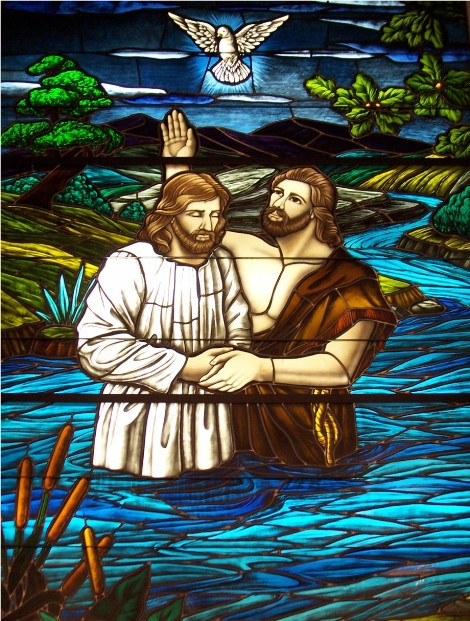
Baptism of JesusFor the Christian Church, the Gospel reading for this past Sunday, the first Sunday in Lent, was Mark 1:9-15. In it, we see Jesus being baptized by John in the Jordan River inaugurating Jesus’ public ministry. I find a few things which are fascinating about this story.

First, as Jesus was coming out of the water, God the Father makes himself known when he declares about Jesus, “You are my Son, the Beloved; with you I am well pleased” (11). Wow! What an experience, to have God, creator and sustainer of the Universe, to say that he is well pleased with you! This would certainly be a high point in a person’s life.

Second, Jesus was led from this high point into the wilderness “with the wild beasts” where he was “tempted by Satan” (12-13). Again, Wow! To go from the high point of God declaring he is pleased with you to a low point of the wilderness with Satan biting at your heels.

But we know from other passages that Jesus emerged victorious from his low-point wilderness experience, better equipped, more empowered, and ready to engage society. He proclaims to those gathered around him what I believe his high and low experiences have emphasized: we must repent of our ways that are contrary to the known will of God and believe that Jesus came to provide salvation to the world and a path to eternal life.

What great news! To know that we don’t have to live in the “wilderness” of life. We don’t have to allow our “low points” to define us. Rather, we can emerge from the wilderness victoriously. Not because of anything we can do on our own, but because of what Jesus has done for us.

If you follow the Christian religion and perhaps are in the midst of a Lenten journey, I encourage you to take time to remember where you have come from, where you struggle and where you need to be; then turn it over to the Jesus who leads us out of the wilderness into the Light until one day we’ll hear the words of God’s pleasure for us, “well done, good and faithful servant! …Come and share your master’s happiness!” (Mt. 25:21).

.

.

.

.

Originally published as “A Lenten Journey,” 26 February 2015 in The Fort Leonard Wood Guidon. Digital version can be found here. All of my Guidon articles can be found here if you’re interested!

.

.

Photo Credit: from http://www.fbc-hamburg.com/baptism_of_jesus.html . Lighted stained glass window that sits above and behind the baptistry at First Baptist Church in Hamburg, Arkansas.

.

.


1 Comment

Make Space for God During Lent

This article was written by a chaplain-friend of mine here at Fort Leonard Wood for publication in the post newspaper. In it, he offers a great explanation of the Christian season of Lent and encouragement for us to take advantage of this opportunity to improve on our relationship to God. A Special “thank you!” to Chaplain Gonzalez for allowing me to repost it here.

.

Make Space for God During Lent

By Chap. (Capt.) Guido Gonzalez Jr.

.

[Last Wednesday] began the season of Lent.

Lent is a season in the church year that begins on Ash Wednesday and extends for 40 days until Easter. Although often associated with Roman Catholicism, Lent is actually part of the common Christian faith shared by Roman Catholics, Eastern Orthodox and Protestant believers.

Lent symbolizes the 40 days Jesus spent in the desert facing the temptations of Satan (Matthew 4:11). Like Jesus, during the 40 days of Lent, we as believers make time to pray more reflectively and focus on our relationship with God so his will may be done in us.

Through Christ, in the power of the spirit, looking to the Father, we too are encouraged and made able to face our own temptations and shortcomings so that we can grow into the men and women of God, we are called to become.

Lent is a time to look inward, to ask of the Lord, “to search me and see if there is any wicked way in me, and lead me to the life everlasting.”

Consequently, focused confession has marked the season of Lent from the beginning. As we confess and repent from sin, we make space for God’s cleansing and renewing grace. In James 5:16, God teaches his people “confess your sins to each other and pray for each other so that you may be healed.”

Obviously, we do not have to wait until Lent to take stock of where we are in our relationship with God. However, Lent is a seasonal reminder to do just that. Along with confession, fasting has historically marked the season of Lent. We fast to make room for prayer and reflection, fasting can be from food but also any activity. Let me encourage you to make a new space for God during this season of Lent. Let him speak to you and guide you in the days ahead, in the name of the Father, Son, and Holy Spirit. Amen.

Chaplain (CPT) Guido Gonzalez

Chaplain (CPT) Guido Gonzalez

.

 (Editor’s note: Gonzalez is the 795th Military Police Battalion chaplain.)

This article first appeared in The Guidon, Thursday, February 19, 2015. It can be seen online at The Guidon website. Reposted here with permission of the author.

.

.

1 Comment

A Boys Little Nickel

Just as I was thinking the service at chapel this morning didn’t offer much beyond the normal fare (no commentary on the preacher!), I was walking down the hallway to make my way outside to my car when I noticed a young boy, no older than 7 or 8, slowly and suspiciously slithering down the hallway toward the offering counting room. Remembering how devious I was at his age, I slowed my pace so I could watch what he was up to.

As he got to the counting room door, which had a slim window in it, he stopped for just a moment then took one deliberate step past the door as he carefully looked inside at the counters as he did. He then turned around, apparently preparing to duplicate his last maneuver for a reason I still wasn’t sure of. Just as he turned, however, he noticed me -by now nearly caught up to him- and looked up with an expression which revealed both his surprise and embarrassment at being “caught in the act.”

I half expected him to turn and run but instead he held out his hand and asked if I could give the little nickel he held out to the counters.

I asked if it was offering, to which he answered in the affirmative. I then asked him if he had found it, assuming he came across it on the floor of the sanctuary and fearing eternal damnation if he kept it, wanted to be sure his record was clean by putting it in the offering. I was surprised, then, when he said that it was in his pocket and he forgot to put it in the offering plate when it went by.

My heart melted.

I went from seeing this little boy as a source of amusement as he played out some curious scenario to seeing him as an example for many who would not make such an extraordinary effort for such a small amount. I answered, “sure” and took his nickel into the counting room and, so he could hear me, told them, “this young man had offering that didn’t make it into the plate, can you still take it?” which they did and the boy seemed relieved.

I felt good that I could help this little guy get his nickel into the offering and thought about when Jesus was watching worshipers put their offerings in the temple treasury:

As Jesus looked up, he saw the rich putting their gifts into the temple treasury.  He also saw a poor widow put in two very small copper coins. “Truly I tell you,” he said, “this poor widow has put in more than all the others.  All these people gave their gifts out of their wealth; but she out of her poverty put in all she had to live on (Luke 21:1-4, NIV).

I don’t know if this young giver gave out of his wealth or poverty, but if his childhood is anything like mine was, that nickle could have gone toward buying a lot of things other than a pat on the back at church. I hoped that nobody would look down on him because of the small amount he gave (had anyone seen him). I’m pretty sure those in the chapel community would recognize the greatness of this boys offering and encourage him for his sacrifice, so I relegated this biblical lesson to others who might boast of their giving .

offering_plateBut this boy’s commitment to seeing that his nickel made it into the offering stayed on my mind as I finished the walk to my car while another, more personal, lesson hit me. I was abruptly reminded of how just three weeks before, I neglected to put my tithe in the offering at church the first Sunday after payday, having run out of checks and not taking the time to go to the ATM. Then another Sunday went by with the same excuse! I was brought to shame by this child, who faced obvious fear to approach the counting room alone to make sure his nickel he brought for God made it where it belonged while I couldn’t even take an extra 10 minutes to go to an ATM to be sure my offering got in on time.

I’m pretty sure that little boy will receive a greater reward for the nickel he put in the Sunday he brought it  than I will for my much larger offering it took me three weeks to finally give…and he deserves it!

.

.

Photo credit: http://bitsandpieces-sonja.blogspot.com/2010/11/dad-preached-we-went-along-for-ride4.html

.

.

1 Comment

The Islamic States of America?

President Barack ObamaIn a speech on Wednesday (18 February 2015) to those gathered for “The Summit on Countering Violent Extremism,” President Obama worked hard to separate Islamic Extremists from “true” Islam. He refuses to refer to terrorist carrying out their violent acts in the name of Islam or Allah as “Islamic” (as they refer to themselves) but, as evidenced by the title of the summit, calls them “violent extremists.” The President seemed to bend over backwards to try to prove the peaceful nature and positive contributions of Islam to the World, including the United States, even asserting that “Islam has been woven into the fabric of our country since its founding.”(1) While not going nearly as far, the President’s statement reminds me of what the one-time U.S. Department of Homeland Security’s Homeland Security Advisory Council “Senior Fellow,” Mohamed Elibiary, tweeted in October 2013,  that the United States is “an Islamic country with an Islamically compliant constitution”(2)…but I digress.

Now, I’m not a (professional) historian but I enjoy history and am bothered when it is not retold accurately. Recently I have read and listened to a lot of books, most on U.S. history.  Reflecting on the President’s statement, I’m having trouble recalling any reference to how “Islam has been woven into the fabric of our country since its founding” as he claims. Certainly later years can show evidence of some contributions of Muslim-Americans, but from its founding?

LT Stephen Decatur in the Barbary WarsWhat I do remember from the early years of the United States is how Muslims, including the Islamic states, sold other Muslims into slavery to the American colonies; raided early American shipping; killed and enslaved Americans then required exorbitant ransoms for their release; demanded payments for safe passage near their coasts, even in international shipping lanes, or would confiscate United States shipping products. All of this before and within the first 50 years of the founding of the U.S.! In fact, the Barbary Wars were in response to Muslim aggression against U.S. sovereignty and its citizens and added the line “…to the shores of Tripoli” to the Marine Corps hymn (OORAH!).

I’m not sure what the President was talking about when he made that statement. I wonder if he (or anybody) will ever explain what weaving he was referring to, how “Islam has been woven into the fabric of our country…”

Some may ask, “does it really matter?” I think it does. Trying to rewrite our nations history to give credibility to a faith group, while possibly admirable, is misguided. One of the founding principles of our nation was freedom of religion-any religion-and this continues to be officially observed today though as with anything, there are individuals or groups who may oppose other groups (which speaks to another of our freedoms-freedom of speech), but freedom of religion continues to be the Constitutional law of the land. Therefore, we don’t need to create or change history to try to convince people we like them or accept them or don’t equate them with the extremists members of their faith group.

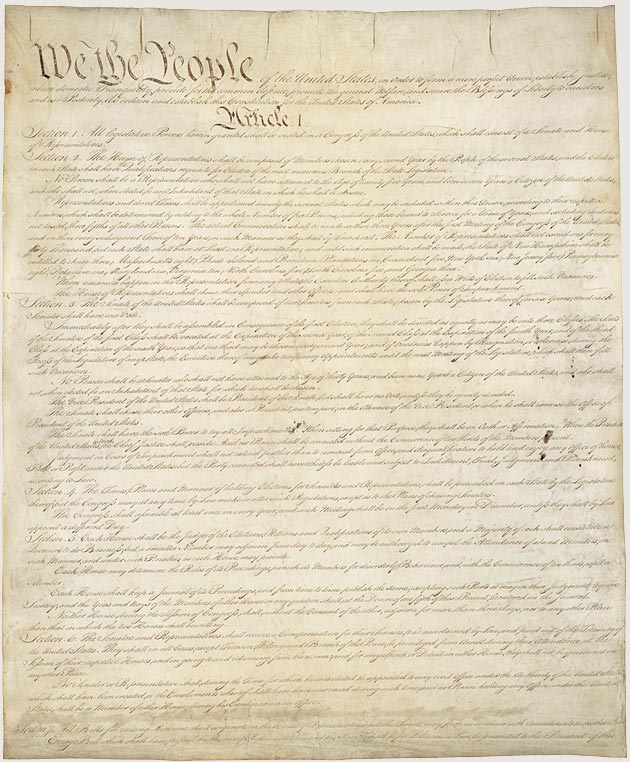
U.S. ConstitutionI am most certainly not suggesting that we should hold modern, law-abiding Muslims accountable for what 17th, 18th and 19th century Muslims did against us and others, or even what today’s Islamic Extremists are doing in violation of international law and common decency. Members of Islam should have the freedom to practice their faith in our country or any other, as long as that practice doesn’t do harm to others or insist on transplanting established laws and constitutions with an Islamic-based system of laws (Sharia)  which would remove the religious freedom of non-Islamic faith groups.

What I am suggesting is that the United States Constitution already establishes sufficient protections for Muslims in the United States without the President having to “sell” the American people on Muslims’ value or worth by inserting them into a history where they were absent, or rather were present but violently against us.

Will we ever get an answer to what the President was talking about? Probably not, but if someone has discovered some hidden source document that shows new Islamic threads in our founding fabric, let’s see it and learn from it. But if not, let’s expose it.

.

.

(1)  This particular claim of the President’s is at about 26:40 in this White House video of the President speaking at “The Summit on Countering Violent Extremism.”

(2) http://freebeacon.com/national-security/dhs-adviser-tweets-america-an-islamic-country/

.

Photo Credits:

President Obama: http://www.whitehouse.gov/administration/president-obama

LT. Stephen Decatur in the Barbary Wars: http://clements.umich.edu/exhibits/online/barbary/barbary-first-war.php

Constitution: http://www.archives.gov/exhibits/charters/constitution.html

.

.

.

1 Comment

Spiritual Disciplines & John Wesley

I’m not an expert on Spiritual Disciplines and have to admit that I don’t practice many of them for very long, though I have periods in my life when I go to some of them for spiritual growth, renewal or to get through difficult seasons of life. However, this is the second post in as many weeks when I have dared to explore them further. In my first post, I took a brief look at Richard Foster’s book, Celebration of Discipline, comparing it to what Scripture says about each of the disciplines Foster recommends.

John Wesley

Wax statue of John Wesley located at the Old Rectory in Epworth, England, where Wesley lived as a child while his father (Samuel) pastored there.

In this post, I want to look back beyond the modern popularity of the disciplines, into the roots of my own theological heritage, to discover what John Wesley (1703-1791) had to say about Spiritual Disciplines. As a man living above the fray and seeking a wholly holy life, Wesley wasn’t creating new fads to busy or burden his followers but rather trying to rediscover biblical practices as an aid to sanctified living. “…Wesley said on multiple occasions that God had raised up the people called Methodists to revive primitive Christianity.”(1)

As with my previous post about Celebration of Discipline, time and space prevent an exhaustive examination of this topic, but hopefully a brief survey will bring some understanding to the use of Spiritual Disciplines in the life of the believer seeking to grow in their relationship with God and become more Christlike. It is important to remember, however, that practicing the disciplines (or any rite or sacrament for that matter) isn’t what makes us holy, spiritual or Christlike, but rather are means to becoming so. In other words, Spiritual Disciplines aren’t the ends in themselves but are means to the end. When you consider Spiritual Disciplines or their practical result, Spiritual Formation,  “think of apostle Paul who said that those who gaze upon Christ ‘are being changed into his likeness’ (2 Corinthians 3:18, RSV) [and … Paul[‘s prayer] that ‘Christ be formed in you’ (Galatians 4:19, RSV).” (2) Remember, it is God who does the work in us, the disciplines just help us to submit to him so that he can.

Let me say at the outset that Wesley, to my knowledge, never used the term Spiritual Disciplines or encouraged their use exactly the way modern proponents do but, nevertheless, he still recommends their practice-drawing from Scripture as he does so.  “The early Wesleyans were so regular in practicing [what we now call] the spiritual disciplines that they were called ‘methodists.’ The spiritual disciplines are simply the practices that Christians, through the centuries, have found useful in the pursuit of spiritual formation, which is the pursuit of Christlikeness.” (2)

Wesley lists many practices as “means of grace” which, while not earning our salvation or working to keep it, does help to keep us on track and helps us to grow in grace as we journey toward Christian Perfection-not sitting around waiting for God to “grace” us but rather seeking after God for his grace.(3) Essentially, these Means of Grace that Wesley speaks of are many of the Spiritual Disciplines being practiced today. In fact, in his book, The Presence of God in the Christian Life, Howard H. Knight III contends that Wesley’s “means of grace together form an interrelated pattern that enables a growing relationship with God”(4) which is what the Spiritual Disciplines also attempt to do. In fact, some would argue that “neglect of such practices impedes spiritual health and hinders growth in discipleship.”(5)

In Wesley’s sermon, The Scripture Way of Salvation, he sets out those practices essential to “sanctification”

First, all works of piety; such as public prayer, family prayer, and praying in our closet; receiving the supper of the Lord; searching the Scriptures, by hearing, reading, meditating; and using such a measure of fasting or abstinence as our bodily health allows.

Secondly, all works of mercy; whether they relate to the bodies or souls of men; such as feeding the hungry, clothing the naked, entertaining the stranger, visiting those that are in prison, or sick, or variously afflicted; such as the endeavouring to instruct the ignorant, to awaken the stupid sinner, to quicken the lukewarm, to confirm the wavering, to comfort the feeble-minded, to succour the tempted, or contribute in any manner to the saving of souls from death. This is the repentance, and these the ‘fruits meet for repentance,’ which are necessary to full sanctification. This is the way wherein God hath appointed his children to wait for complete salvation. (6)

John Wesley's Desk

John Wesley’s Desk in his home by Wesley Chapel in London where (I would imagine) he did much of his writing

Wesley was a prolific writer, so there are many other places in his Sermons, Journal and Letters where we can find more about these Means of Grace or Spiritual Disciplines but from this passage alone we find Wesley encouraging the use of half of Foster’s Spiritual Disciplines: Meditation, prayer, fasting, study (“searching the Scriptures”), service (“works of mercy”) and worship (“public prayer” and “receiving the supper of the Lord”). The six of Foster’s disciplines left for “mining” the rest of Wesley’s Works are: Simplicity, solitude, submission, confession, guidance and celebration. Let’s take each of them up briefly:

1. Meditation. Listed as an essential for holiness, meditation made Wesley’s list of necessary disciplines. “Many Christians today have been robbed of the practice of Christian meditation due to the popularity of Zen, yoga and transcendental meditation, etc. In the Wesleyan tradition, meditation has nothing to do with such Eastern forms. It certainly has nothing to do with emptying the mind to let it be filled with whatever chaos blows into it…For Wesley, meditation had a strong rational flavor and was more associated with reading than prayer.” In a letter to Miss March, Wesley “instructed, ‘We learn to think by reading and meditating on what we have read.'” (2)

As big as Wesley was on writing out rules of piety, he didn’t in the case of meditation but did refer to Richard Baxter’s method of meditation, the steps of which were: “information, examination, dehortation (warn, admonish, urge), consolation, and exhortation.” (2).

2. Prayer. Another of the essentials for a holy life, Wesley says this practice should include “public prayer, family prayer, and praying in our closet.” (6) His letters bring out more direction for prayer: “Tell Him simply all you fear, all you feel, all you want…Pour out your soul and freely talk to God…Pray just as you are led…in all simplicity.” (2) Beyond these prayers which are more extemporaneous, Wesley “taught his people to use…written prayers from the Bible and The Book of Common Prayer. Wesley wrote prayers for worship, for daily devotions, for families, and prayers for children.” (2)

3. Fasting. Again, Wesley declares fasting as essential for full sanctification, “using such a measure of fasting or abstinence as our bodily health allows.”(6) Tracy quotes Wesley, “When you seek God with fasting added to prayer, you cannot seek His face in vain…” (2)

Wesley's Library

What remains (or what has been recovered) of John Wesley’s library located in his home beside Wesley Chapel in London

4. Study. “Searching the Scriptures, by hearing, reading, meditating” is Wesley’s advice.(6) but he goes on in letters “to preacher John Temnath…’Whether you like it or not, read and pray daily…else you will be a trifler all your days, and a …superficial preacher.’ Mrs. Woodhouse is to ‘stir up the gift of God…by reading, by meditation, and…by private prayer.’ Mrs. Gair is to ‘contrive…opportunites for…reading and meditation.’ Martha Chapman is advised, ‘Read a little, pray, and meditate much.” (2)

5. Service. Above, Wesley gives many examples of “works of mercy” which should be practiced as part of our Christian experience. Elsewhere he agrees with the author of James when he states, “We do not…acknowledge him to have one grain of faith who is not continually doing good, who is not willing to ‘spend and be spent in doing all good, as he has opportunity, to all men.'”(2) In fact, according to Tracy, “this theme comes up hundreds of times in Wesley’s writings. Christian service, in the Wesleyan tradition, is an integral part of spiritual formation.” (2)

6. Worship. In “The Scripture Way of Salvation” which has shown Wesley’s support of these first six Spiritual Disciplines, Wesley urges public prayer and receiving the Lord’s Supper-both elements of worship. In other places he requires weekly observance of the Lord’s Supper. Both John and Charles Wesley focused on worship as an opportunity for spiritual growth of believers. The hundreds of hymns they wrote show the emphasis they put on worship -and correct theology in hymnody; and Wesley’s instructions and liturgies for worship seek to ensure meaningful and spirit-filled worship services.

7. Simplicity. Wesley has at least one entire sermon dedicated to the practice of simplicity which makes clear the need and importance of practicing this discipline in our lives. In “The Witness of Our Own Spirit,” Wesley, drawing from the words of Jesus, says:

‘We have had our’ whole ‘conversation,’ in such a world, ‘in simplicity and godly sincerity.’ First, in simplicity: This is what our Lord recommends, under the name of a ‘single eye.’ ‘The light of the body,’ saith he, ‘is the eye. If therefore thine eye be single, the whole body shall be full of light.’ The meaning whereof is this: What the eye is to the body, that the intention is to all the words and actions: If therefore this eye of thy soul be single, all thy actions and conversation shall be “full of light,” of the light of heaven, of love, and peace, and joy in the Holy Ghost.

We are then simple of heart, when the eye of our mind is singly fixed on God; when in all things we aim at God alone, as our God, our portion, our strength, our happiness, our exceeding great reward, our all, in time and eternity. This is simplicity; when a steady view, a single intention of promoting his glory, of doing and suffering his blessed will, runs through our whole soul, fills all our heart, and is the constant spring of all our thoughts, desires, and purposes. (7)

According to Sharon Delgado, “for John Wesley, simplicity was one aspect of ‘holiness of heart and life.’ He centered his life in prayer, wore plain clothes, ate simply, and fasted twice a week. Mr. Wesley earned considerable sums from his writings, but throughout his life he lived on 28 pounds per year, just as he had in his student days. He distributed the rest to the poor, and urged others to do the same.”(8)

8. Solitude. We find Wesley addressing the discipline of solitude in his sermon, “Upon Our Lord’s Sermon On The Mount: Discourse Four.” While he is quick to warn that our solitude or “retirement” from the world should not be over-done, since  “this would be to destroy, not advance, true religion” he nevertheless urges the practice of solitude in the lives of believers:

Not that we can in any wise condemn the intermixing solitude or retirement with society. This is not only allowable but expedient; nay, it is necessary, as daily experience shows, for everyone that either already is, or desires to be, a real Christian. It can hardly be, that we should spend one entire day in a continued intercourse with men, without suffering loss in our soul, and in some measure grieving the Holy Spirit of God. We have need daily to retire from the world, at least morning and evening, to converse with God, to commune more freely with our Father which is in secret. Nor indeed can a man of experience condemn even longer seasons of religious retirement, so they do not imply any neglect of the worldly employ wherein the providence of God has placed us. (9)

9. Submission.

In his sermon “On Obedience to Pastors,” discussing Hebrews 13:17, and the limits or extent of submitting to our religious leaders, Wesley decides in those areas that are not specifically “enjoined of God” or “forbidden by him” that we are to submit to the godly counsel of our spiritual leaders, if we are to be “a Christian…and lay hold on eternal life”:

You that read this, do you apply it to yourself. Do you examine yourself thereby? Do not you stop your own growth in grace, if not by willful disobedience to this command; yet by a careless inattention to it, by not considering it, as the importance of it deserves If so, you defraud yourself of many blessings which you might enjoy. Or, are you of a better mind; of a more excellent spirit Is it your fixed resolution and your constant endeavour ‘to obey them that have the rule over you in the Lord;’ to submit yourself as cheerfully to your spiritual as to your natural parents. Do you ask, ‘Wherein should I submit to them?’ The answer has been given already: Not in things enjoined of God; not in things forbidden by him; but in things indifferent: In all that are not determined, one way or the other, by the oracles of God. It is true, this cannot be done, in some instances without a considerable degree of self-denial, when they advise you to refrain from something that is agreeable to flesh and blood. And it cannot be obeyed in other instances without taking up your cross; without suffering some pain or inconvenience that is not agreeable to flesh and blood. For that solemn declaration of our Lord has place here, as well as on a thousand other occasions: ‘Except a man deny himself, and take up his cross daily, he cannot be my disciple.’ But this will not affright you, if you resolve to be not only almost, but altogether, a Christian; if you determine to fight the good fight of faith, and lay hold on eternal life. (10)

Going beyond our earthly submission to the spiritual leaders God has placed over us, perhaps one of the best prayers of submission to God is found in Wesley’s Covenant Service, which, as Wesley saw it, was “one means of ‘increasing serious religion’ [through] the joining of believers in a covenant ‘to serve God with all our heart and with all our soul.'” This prayer of submission says, in part:

Make me what Thou wilt, Lord, and set me where Thou wilt. . . Lord, put me to what Thou wilt; rank me with whom Thou wilt. Put me to doing; put me to suffering. Let me be employed for Thee, or laid aside for Thee, exalted for Thee, or trodden under foot for Thee. Let me be full; let me be empty. Let me have all things; let me have nothing. I freely and heartily resign all to Thy pleasure and disposal…O eternal Jehovah, the Lord God Omnipotent, Father, Son, and Holy Ghost, Thou art now become my Covenant-Friend, and I, through Thy infinite grace, am become Thy Covenant-Servant. And the Covenant which I have made on earth, let it be ratified in heaven. Amen. (11)

His other writings, especially with his desire to grow in grace and seek full salvation or entire sanctification, suggest living a life which applies this prayer of submission daily.

10. Confession. One of the keys to Wesley’s success with the Methodist movement was the “Class Meeting,” “Societies,”  “Bands” or in today’s lingo, “accountability groups” that each Methodist was encouraged to be a member of. In his “Rules for the Bands-Societies” Wesley states, “The design of our meeting is, to obey the command of God, ‘Confess your faults one to another, and pray one for another, that ye may be healed'” with the expressed task ” To speak each of us in order, freely and plainly, the true state of our souls, with the faults we have committed in thought, word, or deed, and the temptations we have felt, since our last meeting.”(12) Wesley also include confession in the Covenant Service liturgy discussed under submission.

Foundry Pulpit

John & Charles Wesley’s pulpit from the Foundry Chapel, now located in the museum at Wesley Chapel in London

11. Guidance. Richard Foster says of this discipline: “Guidance is the most radical of the Disciplines because it goes to the heart of this matter of walking with God. Guidance means the glorious life of hearing God’s voice and obeying His word.” (13)

In exploring John Wesley as a “Spiritual Director,” Wesley Tracy suggests that “spiritual direction, or more accurately, spiritual guidance, was an essential element in the success of the eighteenth century Methodist revolution. Much of the spiritual guidance occurred in the arenas of the classes and bands. Mutuality was its keynote.” Tracy goes on to show how Wesley, himself, was a very active spiritual guide, providing guidance particularly through his extensive letter-writing. (14)

Tracy’s suggestion is confirmed in the book “Traditions of Spiritual Guidance,” which states that Wesley had a “system” of spiritual direction which at its center were the “Classes,” “Bands” or “Societies.” Shoring up these “accountability groups” were “spiritual reading,” the “inward witness” or “experience,” and going on to “perfection.” In 1744, Wesley systematized even more the practice of guidance by adding that Methodists are:

1. To be at church and at the Lord’s table every week and at every public meeting of the Bands.

2. To attend the ministry of the word every morning, unless distance, business, or sickness prevent.

3. To use private prayer every day; and family prayer, if you are head of a family.

4. To read the Scriptures and meditate therein, at every vacant hour.

5. To observe, as days of fasting or abstinence, all Fridays in the year. (15)

All of these things are to enable the practitioner to hear God’s voice, to find his will and be led by his guidance.

12. Celebration. Foster’s discipline of celebration is a difficult one to find specifically in Wesley’s writings. Certainly the passing of time and shifting of word usage and definitions add to this difficulty. I believe, however, that the spirit of Wesley’s work indicates a celebration in the disciplines we practice as a means to a mature spiritual life. I believe he would find in our celebration of the Table the discipline of celebration. As also in our corporate and personal worship. In fact, I think Wesley would see a celebration -or rejoicing- in every practice, every Spiritual Discipline, which exercises our faith and ushers us nearer to Christlikeness.

Summary

While unable to cite every reference of Wesley’s to the Spiritual Disciplines we have considered, enough has been found to show Wesley’s apparent dependence on the disciplines for his own spiritual well-being. We have also seen how Wesley strongly urged -even required in some cases- the practice of Spiritual Disciplines to demonstrate the believers’ faith, experience the grace of God, and grow in grace into full sanctification.

We have seen that the Spiritual Disciplines are not new inventions with ulterior motives, but are biblical exercises taught and practiced by the Church through the ages and reemphasized by Wesley for his day, just as Foster, Willard and others have raised them up again for our day. One should want to do everything they can to seek and find all that God has made available to them. Every effort to bring our bodies, minds and spirits under the full submission of God is worth that effort. The Spiritual Disciplines are tools given to us by God through his servants for this very purpose. The wise Christian will practice them fervently while experiencing new depths of spiritual insight and new heights of spiritual growth.

In the conclusion of his article, Wesley Tracy asks, “Have you embraced the spiritual disciplines and spiritual formation practices of the early Wesleyans? If not, step forward and engage your Wesleyan-Holiness heritage…” (2)

.

.

Endnotes

(1) http://goodnewsmag.org/2013/06/embracing-wesleyan-spirituality/ (accessed 1 Feb 15)

(2) Tracy, Wesley D. “Embrace Your Heritage: Spiritual Formation in the Wesleyan Tradition, Article for Unit 2.” (https://www.nph.com/vcmedia/2419/2419619.pdf ; accessed 2 Feb 15).

(3) http://www.umc.org/how-we-serve/the-wesleyan-means-of-grace (accessed 1 Feb 15)

(4) http://www.amazon.com/The-Presence-God-Christian-Life/dp/0810825899/ref=sr_1_1?ie=UTF8&qid=1356704685&sr=8-1&keywords=henry+knight+the+presence+of+god (accessed 1 Feb 15)

(5) http://www.ministrywith.org/blog/view/104/ (accessed 1 Feb 15)

(6) Wesley, John. The Works of John Wesley, 3rd ed. Vol VI. Kansas City, MO: Beacon Hill Press of Kansas City, 1986, 51.

(7) ———-. The Works of John Wesley, 3rd ed. Vol V. Kansas City, MO: Beacon Hill Press of Kansas City, 1986, 138-139.

(8) http://sharondelgado.org/selected-writings-by-sharon-delgado/simplicity/ (accessed 2 Feb 15)

(9) Wesley, John. The Works of John Wesley, 3rd ed. Vol V. Kansas City, MO: Beacon Hill Press of Kansas City, 1986, 297.

(10) ———-. The Works of John Wesley, 3rd ed. Vol VII. Kansas City, MO: Beacon Hill Press of Kansas City, 1986, 114-115.

(11)  Bible, Ken, compiler. Wesley Hymns. Kansas City, MO: Lillenas Publishing Company, 1982, A7 – A10.

(12) Wesley, John. The Works of John Wesley, 3rd ed. Vol VIII. Kansas City, MO; Beacon Hill Press of Kansas City, 1986, 272.

(13) Foster, Richard J., Richard Foster’s Study Guide for Celebration of Discipline. San Francisco: Harper & Row Publishers, 1978, 68.

(14) Tracey, Wesley D. “John Wesley, Spiritual Director: Spiritual Guidance in Wesley’s Letters,” Wesleyan Theological Journal, Vol 23, No. 1 & 2, Spring-Fall, 1988, 148-162.

(15) Traditions of Spiritual Guidance, “John Wesley and the Methodist System.”  Oxford, England: The Way, nd, 69-79.   (http://www.theway.org.uk/Back/31Wakefield.pdf ; accessed 2 Feb 15).

.

Also used

Foster, Richard J. Celebration of Discipline. San Fransisco: HarperSanFransisco, 2002.

http://www.jeremydscott.com/2011/11/wesleys-spiritual-disciplines.html (accessed 1 Feb 15)

.

Photo credits: All photographs taken by the author.

.

5 Comments

A Quick Look at “Celebration of Discipline” by Richard J. Foster

Celebration of Discipline

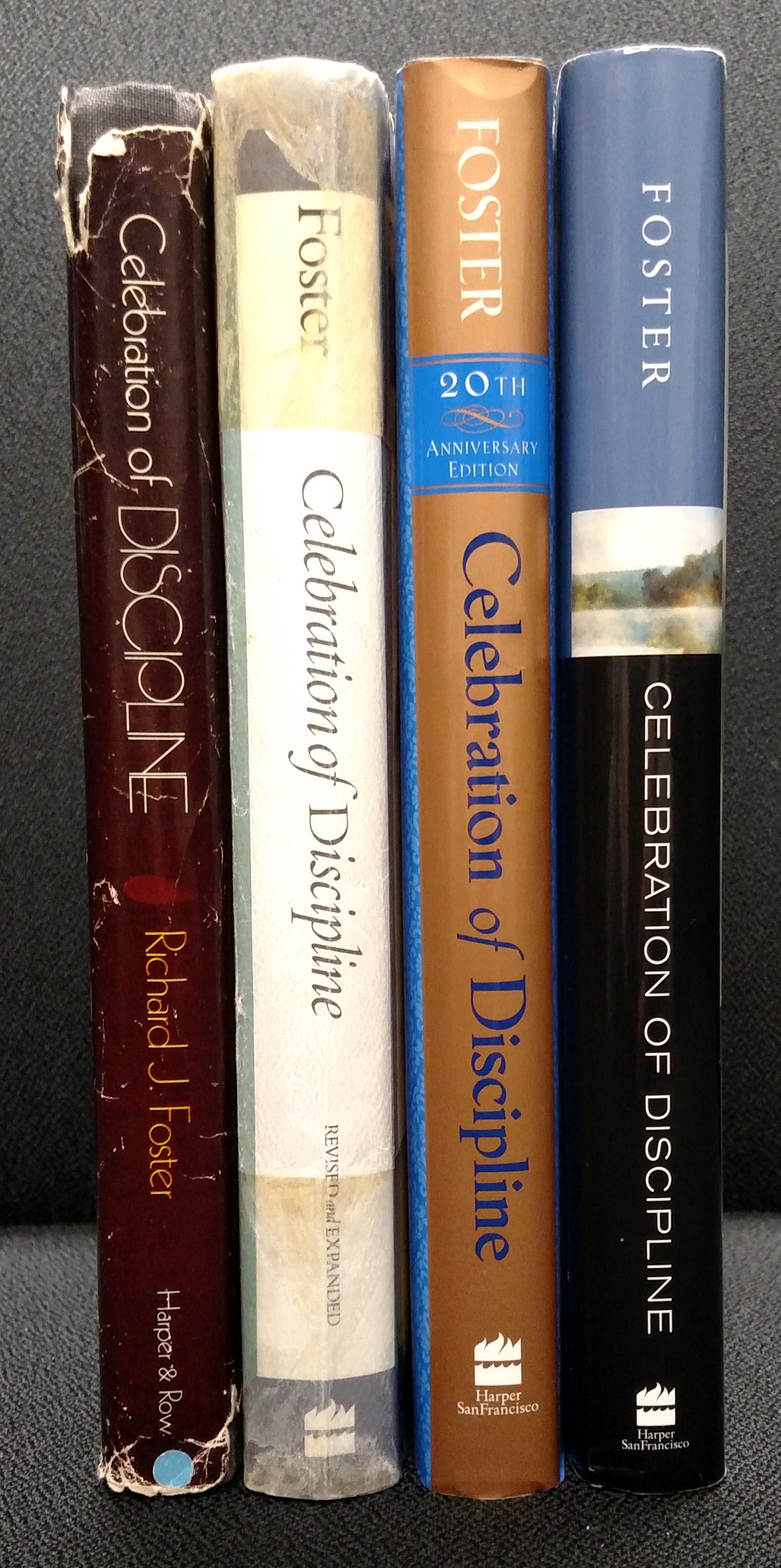
Four editions of “Celebration of Discipline”:1978 (original), 1988 (revised & expanded), 1998 (20th Anniversary edition) and 2002 (Deluxe edition)

I haven’t thought much about Celebration of Discipline for a number of years, though my library contains 4 copies of it. Mine were published in 1978 (1st edition), 1988 (Revised and Expanded), 1998 (20th Anniversary Edition), and 2002 (Deluxe Edition). I also have Richard J. Foster’s Study Guide for Celebration of Discipline. While I’ve never used the Study Guide for group study, the $6.10 price tag still on the back reminds me that I bought it at the Nazarene Bible College bookstore while attending NBC back in the ’90s.

What has recently brought this work by Richard J. Foster to my mind has been criticism of it by some people who attend my church…or rather, some people who used to attend my church. Evidently, after the pastor had recommended it, someone in the family found some obscure website which claimed Foster’s book was anything but Christian and reportedly began circulating a print-out about it among some of the other members. I’m not sure why I never received a copy of this “report” but since I didn’t, I can’t really speak to it intelligently. However, beside the fact that this “complaint” was not dealt with in either a biblical or Christian manner, I also struggle with the opposition to this book so thought that I would give it another look and share with you my discoveries.

The Book

Celebration of Discipline was written by Richard J. Foster in the late 1970s. It was originally promoted with a hopeful promise:

Each of these disciplines break us free of superficial habits that distance us from God. All have traditionally played a vital part in the Christian meditative life, and Celebration of Discipline recovers them for today (Foster 1978, front flap).

Writing in the Forward, D. Elton Trueblood, former chaplain of both Harvard and Stanford universities, continues:

There are many books concerned with the inner life, but there are not many that combine real originality with intellectual integrity. Yet it is exactly this combination which Richard Foster has been able to produce (Foster 1978, vii).

Dallas Willard, professor at the University of Southern California and a Southern Baptist minister, says Celebration of Discipline is “Scripturally based, practical advice on how the flesh can be brought into a working harmony with the spirit in the context of contemporary life” (Foster 1978, back cover).

Eugene H. Peterson, author of many books in my library including Leap Over a Wall and The Message says that this book and the disciplines it explores are, “the instruments of joy, the way into mature Christian spirituality and abundant life” (Foster 2002, back cover) while Ronald J. Sider, executive director of Evangelicals for Social Action, calls it “The best modern book on Christian spirituality”  (Foster 1998, back cover).

The Author

Richard J. FosterSo far, I’m not finding anything offensive to orthodox Christianity. Perhaps concern is in the author? “Richard J. Foster is the author of several best-selling books, including Prayer and Streams of Living Water. He is the founder of Renovare, an intrachurch movement committed to the renewal of the Church in all her multifaceted expressions, and a general editor of The Renovare Spiritual Formation Bible (Foster 2002, back flap). When he originally wrote Celebration of Discipline, Foster was “Special Lecturer and Writer in Residence at Friends University in Wichita, Kansas” (Foster 1978, back flap). Celebration of Discipline earned Foster the “Writer of the Year” award (Foster 1978, back flap). Other books he has written have won Christianity Today’s Book of the Year award and the Gold Medallion Award from the Evangelical Christian Publishers’ Association (Foster 1998, back flap). Evidently, the author has not been rejected by mainstream Christian publishing.

The Quakers

The back flap of the 1998 edition states that Foster is a “Quaker.” A relatively small group with its beginnings flowing from the English Civil War in the 17th century, Quakers (or “Friends”) is “an esteemed Protestant body” (Mead, 159). Believing that every living person has an “inner Light” (John 1:9), Quakers value the humanity of all people and work toward equality and service. Their worship services can be either “programmed or unprogrammed.” Quaker programmed worship services “more nearly resembles an ordinary Protestant service” while in their unprogrammed service “there is no choir, collection, singing, or pulpit; the service is devoted to quiet meditation, prayer, and communion with God. Any vocal contributions are prompted by the Spirit” (Mead, 163).

This inward listening to the Holy Spirit that is evident in Friends’ unprogrammed worship is also valued in day-to-day living. Followed by obedience, they seek “lives that begin to reflect the character of Jesus” (Mead, 159). Early in their history in the United States (1887) Quakers “opposed …a mysticism that seemed to disconnect the ‘inner Light’ from the cross of Christ” (Mead, 161). Additionally, this inner Light is foundational to Quakers’ life and theology. “Friends believe that grace, the power from God to help humankind pursue good and resist evil, is universal among all people. They seek not holiness but perfection–a higher, more spiritual standard of life for both society and the individual” (Mead, 162).

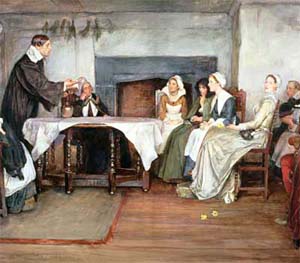
Quaker Family holding prayer service

19th Century painting of a Quaker family holding a prayer service

While there are minor differences in theology, worship and practice between Quakers and my particular denomination (as there are between most denominations within the Christian Church), they are still a Christian body probably closer to my own than many who deny the further work of the Holy Spirit in a believer’s life beyond salvation. I find in Foster’s denominational affiliation no cause to reject his writing.

.

The Disciplines

Let me return to the book and its contents to see what may lay between the covers which could be offensive to Christianity. Without doing a word-by-word evaluation, I think taking a look at each of the 12 disciplines Foster recommends, and comparing them to Scripture, would be beneficial. I’m not going to elaborate much on each of these, but list a few of the verses that speak to them specifically. Certainly there will be many other passages that speak to them indirectly, but time and space do not permit including those.

1. Meditation. The Old Testament is replete with admonitions to meditate on God’s Word: Joshua 1:8 says, “…you shall meditate on it day and night…” Psalm 1:2, “…and on his law he meditates day and night,” Psalm 19:14 declares, “Let the words of my mouth and the meditation of my heart be acceptable in your sight, O Lord, my rock and my redeemer.” The Psalmist again says in 119:15, “I will meditate on your precepts and fix my eyes on your ways,” then again in 104:34, “May my meditation be pleasing to him, for I rejoice in the Lord.” A quick search of your concordance will reveal many more Old Testament passages urging God’s people to meditate.

The New Testament continues this encouragement. In Philippians 4:8, Paul tells us to meditate (“think”) on those things that are true, honorable, just, pure, lovely, commendable, excellent and worthy of praise. He also admonishes Timothy to meditate “immerse” himself in those things which help him to grow as a Christian (1 Timothy 4:15). Again in his 2nd letter to Timothy, Paul tells him to meditate on (“consider”) what he says, “for the Lord will give you understanding in everything” (2 Timothy 2:7).

2. Prayer. Do I really need to defend prayer as a Christian practice?

3. Fasting. When Jesus speaks of fasting in Matthew 6:16-18, He says “And when you fast…” He just assumes that you will be fasting but urges you to do it in secret.  In Mark 9, after his disciples couldn’t drive out a demon, Jesus said “This kind can come out only by prayer and fasting” (Mark 9:10). Of course, this was after he had fasted for 40 days at the beginning of his ministry! The book of Acts also reveals that prayer and fasting was a common practice of the early Church (Acts 9:9, 13:1-3, 14:23). Paul also describes fasting in a positive light in 1 Corinthians 7:1-5.

5. Study. 2 Timothy 3:16-17 are perhaps the most popular verses about studying the Bible which is preceded by the encouragement to “study to show yourself approved unto God, a workman that needeth not to be ashamed, rightly dividing the word of truth” (2 Timothy 2:15). Again, the early Church is commended for studying the Bible in Acts 17:11, “Now these Jews were more noble than those in Thessalonica; they received the word with all eagerness, examining the Scriptures daily to see if these things were so.”  But it can’t be denied that studying other texts that expand on the Bible is also beneficial to our growth as Christians.

6. Simplicity. The Bible has a lot to say about riches and not trusting in them, this is at the foundation of simplicity. Beyond finances, however, a simple, uncluttered life is to be preferred over one so full of activity and possessions that the worship of God -and living for him daily- is hindered. As Paul says in 1 Corinthians 14:33, this confusion is not of God, rather God is peace. Paul also speaks to a simple life in 2 Corinthians 1:12 when he proclaims, “For our boast is this, the testimony of our conscience, that we behaved in the world with simplicity and godly sincerity, not by earthly wisdom but by the grace of God, and supremely so toward you.” But even if a “simple” life is not mandated or clearly displayed in Scripture, it certainly isn’t forbidden or contrary to the principles of Scripture.

7. Submission.  The term “submission” had gotten a bad wrap with some teachers’ view of female submission to their male spouse (Ephesians 5:22), but Scripture goes far beyond this concept to every Christian’s submission. The whole idea of being disciples of Christ is built upon submission, submitting to God and his will for our lives. Of course, James makes it clear when he tells us to “Submit yourselves therefore to God. Resist the devil, and he will flee from you” (James 4:7). Beyond our submission to God, there is our submission to governmental authority (Romans 13:1, 1 Peter 2:13-14) as well as to pastoral authority (Hebrews 13:17).

8. Service. Our service to others is another biblical discipline that we would do well to follow. In Matthew 25, Jesus makes the point that it is how we serve and care for others which will determine our eternal destiny (Matthew 25:31-46). James adds to the necessity of service when he declares, “…faith without works is dead” (James 2:26). Paul chimes in with his statement to the Ephesian Christians that “…we are his workmanship, created in Christ Jesus for good works, which God prepared beforehand, that we should walk in them” (Ephesians 2:10). While there are many other passages dealing with service, Jesus sums it up when he says, “Whoever wants to become great among you must be your servant, and whoever wants to be first must be your slave–just as the Son of Man did not come to be served, but to serve…” (Matthew 20:26-28).

9. Confession. Our Christian life begins with confession. 1 John 1:9 says, “If we confess our sins, he is faithful and just and will forgive us our sins and purify us from all unrighteousness.” If we don’t confess our sins, we can not enter into a relationship with God. But after that, our confession helps us to maintain that relationship and our faith. James is pretty clear when he tells us to “confess your sins to one another and pray for one another, that you may be healed” (James 5:16). The early Church led the way when “many that believed came, and confessed, and showed their deeds” (Acts 19:18).

10. Worship. Scripture is again clear that we are to be faithful to worship. Hebrews 12:28-29 tells us to “…be thankful, and so worship God acceptably with reverence and awe…” Jesus, in speaking to the Samaritan woman at the well, talks about our geography in worship but contends that “true worshipers will worship the Father in spirit and truth…” (John 4:21-24). But even beyond corporate and personal worship, the whole idea of offering ourselves to God, according to Romans 12:1-2, is our “spiritual act of worship.”

11. Guidance. Of course, the Old Testament again (as with all of the other disciplines) has many examples of godly men and woman seeking guidance both from those who we would today call “mentors” or “spiritual directors” and from God, himself. Also, again in Acts we see over and over the Church seeking and yielding to the guidance of the Holy Spirit. James goes on and urges us, “…if any of you lacks wisdom, let him ask of God, who gives to all generously and without reproach, and it will be given to him” (James 1:5).

12. Celebration. In the New Testament, celebration accompanied the coming of God into the world as the baby Jesus, as the angel declared, “I bring you good news of great joy which shall be for all the people…” (Luke 2:10). The Christian life is epitomized by joy as one of the fruit of the Spirit (Galatians 5:22). In fact, it is the joy of the Lord that is our strength! (Nehemiah 8:10). The psalmist goes on and on about rejoicing and praising -celebrating- God. And, it is in the Lord’s Supper that we celebrate the sacrificial death of Jesus on the cross. We could go on with the many instances in Scripture when we are told to rejoice, as a life lived for the Master exhibits that celebration every day.

All 12 of the Spiritual Disciplines that Foster writes about in Celebration of Discipline are biblical exercises that have been practiced in the Church for centuries and are beneficial for Christians today. None of them are contrary to Scripture and none of them are anti-Christian, “New Age” or un-godly. They are not exercises that should be feared, just because they may be unfamiliar to some, but rather should be practiced and formed into meaningful habits to maintain continued spiritual -Christian- growth.

Summary

While not being exhaustive, I have provided a brief overview of Richard J. Foster, Quakerism and the Spiritual Disciplines Foster writes about. Nowhere do I find reason to label Celebration of Discipline “heretical,” “un-Christian” or “un-Orthodox” (or even un-Nazarene!). While we can seldom whole-heartedly endorse everything an author writes, says or believes, this book offers precious little to disagree with. In fact, if one is seeking to grow deeper in their Christian faith and better know, understand and live God’s will on their spiritual journey, they would do well to apply the principles of the Spiritual Disciplines, as found in Celebration of Discipline, to their life.

As Foster states in the Introduction:

Our world is hungry for genuinely changed people. Leo Tolstoy observes, ‘Everybody thinks of changing humanity and nobody thinks of changing himself.’ Let us be among those who believe that the inner transformation of our lives is a goal worthy of our best effort (Foster 2002, 11).

.

.

.

.

.

Bibliography

Foster, Richard J. Celebration of Discipline. San Fransisco: Harper & Row, Publishers, 1978.

—– Celebration of Discipline. San Fransisco: HarperSanFransisco, 1988.

—– Celebration of Discipline. San Fransisco: HarperSanFransisco, 1998.

—– Celebration of Discipline. San Fransisco: HarperSanFransisco, 2002.

Mead, Frank S., Samuel S. Hill & Craig D. Atwood. Handbook of Denominations in the United States, 12th edition. Nashville: Abingdon Press, 2005.

.

.

Photo Credits: 4 Books-author; Richard J. Foster-http://richardjfoster.com/; Quaker prayer service-http://www.burlingtonquakers.org/quakers101.html

.

.

.

.

Leave a comment

Message of Hope for Christmas

Every Christmas season, we are reminded of that famous newspaper article of years past assuring little Virginia that there is a Santa Claus.  That was long ago, when Christmas brought with it many long-held traditions and getting through the season was simpler and not so hectic.

tacky_christmas_decorations_640_01Now, every year, it seems that the Christmas decorations go up earlier and earlier.  I remember when if they were up at Thanksgiving, they were up early – now we see some before Halloween!  And the decorating also seems to be centered more on Santa than on the Christ child!

The stress on families at Christmas seems to be increasing, as well, as they attempt to “keep up with the Joneses.”  Children insist on the latest styles and name brands, causing parents to extend themselves financially beyond their means, or to feel guilty or frustrated because they aren’t able to buy all that they would like.  All of this certainly takes the joy out of the Christmas season and causes us to wonder, like Virginia, if there is some wonderful person that cares for us.

A recent Time Magazine article reported how many of the stories and people of the Bible are being proven through archeological discoveries.  There is one story of interest to us at this time of year that every major character has been identified as having actually lived.  It is found in Luke, chapter 2. It is the story of the first Christmas; it tells of the coming of Jesus into the world.

In those days Caesar Augustus issued a decree that a census should be taken of the entire Roman world. (This was the first census that took place while Quirinius was governor of Syria.) And everyone went to their own town to register.

So Joseph also went up from the town of Nazareth in Galilee to Judea, to Bethlehem the town of David, because he belonged to the house and line of David. He went there to register with Mary, who was pledged to be married to him and was expecting a child. While they were there, the time came for the baby to be born, and she gave birth to her firstborn, a son. She wrapped him in cloths and placed him in a manger, because there was no guest room available for them.

And there were shepherds living out in the fields nearby, keeping watch over their flocks at night. An angel of the Lord appeared to them, and the glory of the Lord shone around them, and they were terrified. But the angel said to them, “Do not be afraid. I bring you good news that will cause great joy for all the people. Today in the town of David a Savior has been born to you; he is the Messiah, the Lord. This will be a sign to you: You will find a baby wrapped in cloths and lying in a manger.”

Suddenly a great company of the heavenly host appeared with the angel, praising God and saying,

“Glory to God in the highest heaven, and on earth peace to those on whom his favor rests.”

When the angels had left them and gone into heaven, the shepherds said to one another, “Let’s go to Bethlehem and see this thing that has happened, which the Lord has told us about.”

So they hurried off and found Mary and Joseph, and the baby, who was lying in the manger. When they had seen him, they spread the word concerning what had been told them about this child, and all who heard it were amazed at what the shepherds said to them. But Mary treasured up all these things and pondered them in her heart. The shepherds returned, glorifying and praising God for all the things they had heard and seen, which were just as they had been told.

nativity-scene1When you get tired of seeing the decorations, when you get caught in the busyness of the season, when you run out of money before you run out of gifts to buy, and when you find yourself wishing that there really was a Santa Claus who cares about you, remember that story in Luke.

Remember that God cares for you.  Remember that Christmas is about Jesus coming to earth to die for you.  Remember that there is a Savior.

I would like to improve on the words of the editor who wrote to Virginia and give to you a message of hope for this Christmas season:  Yes, America, there is a Savior!

.

.

.

(Originally written by Daryl Densford and published, exclusive of Scripture text and pictures, December 23, 1995 in the Daily Sentinel, Rome, NY. Photo credits: Decorated house from http://izismile.com/2010/12/23/tacky_christmas_decorations_42_pics.html; Nativity scene from http://fellowshipofminds.wordpress.com/tag/nativity-scene/)

.

.

10 Comments

The Chaplains’ Calling

CrusadersI’ve recently been engaged in several online discussions about American patriotism, allegiances, pacifism, Just War and military service. Those discussions have revealed that there are many deeply-held views on the use of violence in the pursuit of peace and justice. There are those from all along the theological spectrum who fervently argue either for the absolute rejection of violence in any form whether for the liberation of others or the defense of themselves or else the complete justification of violence and war as the only way to achieve international peace and safety. I do not doubt the spiritual commitment of most of those in the discussions I have been involved in and believe they only want to follow -and teach- what they believe to be God’s will for Christians today.

Prior to my entry into the Army as a chaplain back in 2004, I studied Just War doctrine wanting to be sure that I could faithfully support a military institution whose main purpose is warfighting without compromising my spiritual values, biblical teaching and God’s will for my life. I determined that not only was war when waged and prosecuted justly not prohibited by Scripture, it sometimes may be the only way to fulfill some of the mandates of Scripture. I know that while the majority of the Christian Church (in the United States at least) supports its nations military and war aims there is a significant minority of Christians who attempt to follow a non-violent path to peace and object to any support of their country’s use of force to accomplish its policies.

Even with the differences that exist within the Church as to its views of war, a world without violence exists only in the realm of the “not yet” of the Kingdom of God which is still to come. The reality of life is that evil is quite present in this world and in order to protect the defenseless (perhaps the widows and fatherless the Bible speaks of), liberate the oppressed (those in need who Jesus declared to be our “neighbor”), proclaim freedom to the prisoner, essentially to love as we are commanded to love sometimes it is necessary to go to war, war that is just; to fight in a just way to achieve freedom, liberation and safety for not only our own citizens but people around the world.

Army FormationRegardless of one’s views of violence, war and military service, there exists in the United States a very large military force of men and women who have accepted the call of their country (and sometimes their God) to serve as a Soldier, Sailor, Marine, Airman or Coast Guardsman. These men and women, unlike Service Members from wars past, have volunteered to serve in the Armed Forces of the United States. Most of these people have given much thought to their decision to enlist and are not as ignorant about war, peace, love, violence and the teachings of Jesus as some opponents of Christian military service imply. These brave men and woman aren’t mindless puppets being controlled and used by an evil government for selfish gain, but are -in most cases- educated, intelligent, thoughtful, people who accept the necessity of their nation’s causes along with the urgency of its call to arms. It is to these men and women who chaplains of all faith groups are called (by both their country and their God) to minister to while they serve their country in uniform.

In the midst of my involvement in the aforementioned discussions, the senior chaplain on the Army post where I currently serve as chaplain pointed out to me a thoughtful passage written by an Army chaplain from World War Two (interestingly from a book already in my library!). In it, this author gives the reader a peak into the mind of the chaplain to see his feelings, his motivations and his dedication to the God who has called him and the Soldiers he has been called to serve. I would like to share a portion of that passage with you as a testimony to the ministry of chaplains to the men and woman who also wear the military uniform.

Chaplain Corps Crest

The book from which this passage comes was written after the Allies defeated the Axis forces in World War Two but is astonishingly relevant still today. I have made no attempt to change or correct the writing which today’s standards would render “politically incorrect” or comments which refer to things particular to war of the day, such as the draft, the dominance of male soldiers or the duration of deployments though I have emphasized portions I found to be particularly powerful. Even with the changes in military service, the chaplaincy and religious observance which have occurred over the last 70 years, Chaplain Rogers has tremendous understanding and insight into the mind of the modern-day chaplain and what it means to serve in today’s armed forces. I hope that this passage will give you a better understanding of the struggles, joys and mission of the chaplains who God has placed in our Armed Forces for such a time as this.

.

 As the Chaplain Sees Things*

from “Doughboy Chaplain” by CAPT Edward K. Rogers

Doughboy Chaplain“A retired army chaplain told me when I entered the service that I would find that the chaplain is pretty much alone in the army. He is his own boss to a great extent, but he is sometimes forgotten because of that. However, the chaplain just keeps plugging along.

“He and his fellow padres have left parish life to serve the forces for the duration and he may long at times for the duties and joys of the church back home. There will be times when he feels that he could have done more good by staying at home where the congregations are consistently large and the program of the parish reaches through many channels into the homes, those bulwarks of faith and society. He may long at times for the normal life back there where opinion and family relationships keep men somewhat more on the better side of life.

“Still the chaplain goes along with his duties and he realizes that the men about him sometimes feel that they could be more useful back home too.  Many of them rightfully feel that way, for they have been most useful in their professions and trades. It isn’t pleasant for them, as it isn’t at times for the padre.

“However, there is joy for [the chaplain] in his duties. Usually he will have the maximum of services that the men will attend. The more that are necessary, the happier he is.

He wants, above all else, to make religion real and God close to the hundreds of men under his spiritual care, who have been uprooted from home in the crucial life shaping years of life and sent off to battlefields or distant posts. That is what he is in the service to do.

“When some come to him to inquire about their religious needs, which they have never cared for, he is happy to try and meet those needs–or show how God can meet them. He will sit down and reason with the soldier and he will spend hours instructing him in the teachings of his faith. In that task he finds his greatest joy…

“…the chaplain is there to help and many appreciate his being there. Others don’t care about him, for they have had no religious faith and contact with the church, or have lost faith and broken those contacts since getting into the army. Nevertheless, the chaplain wants to be where some may need him. If they avoid him and the message of God which he offers, that is their misfortune. They can’t say that the church forgot them when they were called into service and henceforth in their lives they will forget the church.

They may forget the church and God, but the church and God’s pastors or priests did not forget them.

“The psalmist once wrote, ‘If I make my bed in hell, behold, thou are there.’ The chaplain, I guess, leaves his parish so that when the soldier gets into the hell of war it will be true that God is there, through his ordained ones, to help, encourage, forgive and bless.

“I believe that the chaplains do more serious thinking about the war than any other group. Many men are in the service and don’t seem to know or care why. Their chief interest is getting home. Maybe that even surpasses their desire for victory in many cases. The principles at stake do not bother them much. It is not so with the chaplain.

“He knows more about the principles of right and wrong which enter into the struggle. He wants to see the wrong uprooted and the right prevail. He is thinking about the unfortunate victims of conquest who long for their freedom. The different philosophies of life which [bring] on … conflict are apparent to the chaplain. When there are inconsistencies, he is aware of them, but he believes in his cause. Because of that belief he wants the war to get on and he doesn’t have to fire his boilers of action with hate either.

He wants to see people free to live as they choose, if they have proper consideration for the rights of others and the common good. He may not agree with them in their thoughts and ways, but he would like to see them free to live their lives.

“His thoughts go beyond the hour of conflict to the day of peace. What will it bring? Will men have the principles and wisdom to uproot the evil without pulling out the good? Will reason or passion prevail then? It will be hard to have the former on top, but that is what he hopes and prays will be the case. He looks at his men and scans the news of home and of the Allies for assurance that the war will be really won and that the peace will be stern, but just.”

.

.

.

*Rogers, Edward K. Doughboy Chaplain. Boston: Meador Pub., 1946, 222-224.

.

.

.

Leave a comment

All You Need is Love

All_You_Need_Is_Love_(Beatles_single_-_cover_art)The Beatles had a hit song in the 60s titled “All You Need is Love” (written by John Lennon and Paul McCartney). The essential message of the song is that you cannot accomplish the impossible, described with phrases like “there’s nothing you can do that can’t be done” and “there’s nothing you can see that isn’t shown.”

The song goes on to encourage listeners with the fact that it is okay for the impossible to remain out of reach because it does not matter as long as you have love. They do not define the love they are singing about but we can make assumptions based on the popular culture of the 60s and 70s which leads us to wonder if we love as they suggest, if any of those things which they state as impossible — or life itself—become any more palatable by following their advice.

Jesus, however, offers a different kind of love when he declares as the greatest commandments: “Love the Lord your God with all your heart and with all your soul and with all your mind… (and) love your neighbor as yourself” (Matthew 22:37-39, NIV). When we love God as Jesus commands, it flows from a heart and life committed to him. When we love our neighbor as ourselves, this love flows from our love for God (and our commitment to Him) and better yet—from his love for us. When we love our neighbor in a way that exemplifies another instruction of Jesus to “do to others as you would like them to do to you” (Luke 6:31, NLT), our love goes beyond that encouraged by the Beatles to a love that can actually accomplish the impossible.

Have you ever had a hard-to-get-along-with co-worker? Loving that co-worker with a divinely inspired love could soften them and make your working relationship much more pleasant.

How about that short-tempered neighbor? Yelling back seldom promotes community, but the love that Jesus encourages could.

Disharmony at home? Try love — real love —which can soften hearts and bring Families together.

It takes more than just love, but when we love as Jesus commands with a love that flows from the heart of God, it provides the necessary foundation for a happy life.

.

.

.

Originally published 23 October 2014 in The Fort Leonard Wood Guidon. Digital version can be found here. All of my Guidon articles can be found here if you’re interested!

.

Picture “All You Need Is Love (Beatles single – cover art)” by Scan. Licensed under Fair use via Wikipedia – http://en.wikipedia.org/wiki/File:All_You_Need_Is_Love_(Beatles_single_-_cover_art).jpg#mediaviewer/File:All_You_Need_Is_Love_(Beatles_single_-_cover_art).jpg

.

.

Leave a comment

What do “I” have to do with “them”?: Iraq, ISIS & Me (and you)

ISIS militants in Iraq

ISIS militants in Iraq

You can’t hardly turn on the news or pick up a newspaper without hearing or seeing some new atrocity perpetrated by the “Islamic State of Iraq and Syria” (ISIS), sometimes called the “Islamic State of Iraq and the Levant” (ISIL)1. Like most Americans (and probably most people in the West) I look with horror at the reports and pictures of the persecution and gruesome deaths of Christians living in Iraq. For many of us, though, it’s too easy to just put down the paper or turn off the T.V. and allow the plight of Iraqi Christians to flee from our mind. When I do permit myself to think about the Iraq situation, I usually respond as an American and as a Soldier who has served in Iraq, viewing the military threat from a strategic vantage point seeking tactical solutions to combat yet another wave of terrorism and Islamic extremism. I find myself distanced from the people of Iraq as I consider the political and military situation there. I haven’t really been thinking about the dreadful situation in Iraq as a Christian, but as a politician, a warrior or a distant observer.

Sister Diana Momeka

Sister Diana Momeka

All of that changed for me this morning, however. While I usually listen to a book on my 45-minute drive to work, I had finished one up yesterday and hadn’t yet checked-out another one so was listening to the radio. I happened upon the Focus on the Family radio program.  Their topic this morning was “Praying for Our Christian Family in Iraq.”I stayed tuned in, thinking I’d get more information for my strategic and tactical arm-chair war-fighting as they spoke to guests on the phone from Iraq. One of these was Sister Diana Momeka, a member of the Dominican Sisters of St. Catherine of Siena, of Mosul, Iraq who is currently a refugee in Erbil, Iraq. One of her statements stood out to me.  She pleaded, “There are people suffering, not only Christian and other minorities, they are under horrible conditions…So please, please, if you can help-through any way, please do, just let your passion move, please.”2

Another of the guests was Rev. Canon Andrew White, the chaplain of St. George’s Church in Baghdad, Iraq.  St. George’s is the only Anglican Church in Iraq and has been damaged by five bombs in the past three years.3 Rev. White helped to make real the suffering of Iraqi Christians.  He told of Christians who confessed to him, “We can’t continue like this, we wish we were dead.  We can’t take anymore, we’ve taken more than we can take.”2 Only brief encouragement was gained form a young Christian girl in Iraq who said, “When you’ve lost everything, Jesus is all you have left.”2 Rev. White went on to affirm Romans 8:17b as a passage which gives them a degree of hope: “unless you share in the suffering of Christ, you cannot share in the glory of Christ. This present suffering is nothing compared to the glory that is to come.”2

 What most impacted me…changed me… was what Rev. White said next: “We’re not far away, we’re your brothers and your sisters. It’s happening to us not them, us. We are suffering together. We need your prayer, we need your love and we need your support. Without your support we can’t feed our people, we can’t meet their needs.”2

It’s happening to us not them

Rev. Canon Andrew White

Rev. Canon Andrew White

All this time I had been viewing the death and persecution of Christians in Iraq as something that was happening to them. I’ve been watching from afar, not really feeling their pain and suffering, but watching. I didn’t consider Paul’s statement in 1 Corinthians 12:26 as applying to me, “If one part [of the Body of Christ] suffers, every part suffers with it…” I don’t think that Paul was making a statement of fact because as the Christians in Iraq have been suffering, I have not been.  I think Paul was giving us instruction, a command, that if there are Christians suffering, if another part of the Body of Christ -our Body- is suffering, we need to be suffering too. That means I can’t just set the paper down or turn off the T.V. anymore. The body is suffering and it hurts!  As Rev. White entreated, “Will you continue to help us? Because we are yours and you are ours, and we need each other.”

But I don’t think just hurting is enough. My pain, insignificant as it is compared to that of those in Iraq, does nothing to alleviate the pain of those who are really suffering. So, what can we do?

First (and probably foremost), we need to pray. When Rev. White was asked how we in the United States can pray for them he replied:

What I say we need is prayer for three P’s. We need protection, that the Lord will supernaturally protect us from the enemy. That we will receive provision, so that we can provide for our people. And finally, that we may persevere.

Rev. White has given us three very specific ways we can pray for the Christian people of Iraq: for their protection, for provisions to care for those in need and that they will persevere in the face of danger and possible death. Those are the easy prayers but we must not forget, as hard as it may be to do, to pray for those involved in the killing and bloodshed.  It was Jesus who said, “…love your enemies, bless them that curse you, do good to them that hate you, and pray for them which despitefully use you, and persecute you” (Matthew 5:44, NIV). Remember, as ISIS is cursing, hating, using and persecuting the Christians of Iraq, as part of our Body, they are doing those things to us so we also must love them, bless them, do good to them and as it most applies here, pray for them.

Second, we can give. Praying for provision will help (I believe in the power of prayer!) but for many of us it is not enough.  We can give. Focus on the Family offers one place to give where it can go directly into the area affected through Christians already at work there.  Additionally, Rev. White is involved in a ministry of relief and reconciliation in Iraq which could use our financial gifts. Your denomination may also have compassionate ministries active in the area.  Find a ministry that you trust and join me in giving to help provide for part of our Body that is in need.

Third, we can go. This may not be an option for everyone, but for some it is. People are needed to sort, pack, transport and distribute the provisions that our prayer and giving provides. People are needed to help those who, because of their persecution, can no longer help themselves. People are needed to take the life-changing good news of the Gospel of Jesus Christ to those who haven’t heard or have rejected God’s grace.

For some, going may mean military service. As much as we would all like to see this ended without any further violence, more likely than not it is going to take military intervention to protect the Iraqi people and push back those who are seeking to destroy peace. As an Army chaplain, I am willing and prepared to go in support of our military forces, should we be called upon to deploy to defend and protect the freedom and rights of the people of Iraq, including those Christians with whom we suffer.

Will you join me in suffering with our brothers and sisters in Iraq?  Will you pray with me for their protection, provision and perseverance as well as for their enemies? Will you go if, when and where God leads you?

On the radio program this morning, Congressman Frank Wolf  cautioned us with something Martin Luther King, Jr. said: “In the end, we will remember not the words of our enemies, but the silence of our friends.”4

Don’t be silent! Pray. Give. Go.

.

.

__________

Endnotes

1 For a good explanation of the name and its differences, read Iraq crisis: ISIS or ISIL – what’s in a transliterated name?

2 I highly recommend you listen to the Focus on the Family program, “Praying for Our Christian Family in Iraq” and take advantage of the helpful materials they offer on this topic.

3 St. George’s Church website

4  http://mlk.wsu.edu/about-dr-king/quotes/

Read more about Rev. Canon Andrew White on his information page.

Discover what Rev. White and others are doing through The Foundation for Relief and Reconciliation in the Middle East.

Photo credits

ISIS militants in Iraq: http://www.ibtimes.co.in/iraq-crisis-thousands-christians-flee-fearing-rape-murder-isis-begin-ethnic-cleansing-603329

Sister Diana Momeka: http://danvillesanramon.com/news/photos/2009/march/5/1750_full.jpg

Rev. Canon Andrew White: http://frrme.org/what-we-do/canon-andrew-white/

ISIS militants in Iraq: http://www.ibtimes.co.in/iraq-crisis-thousands-christians-flee-fearing-rape-murder-isis-begin-ethnic-cleansing-603329


.

.