Leave a comment

To Those Who Are Afraid After the Election…

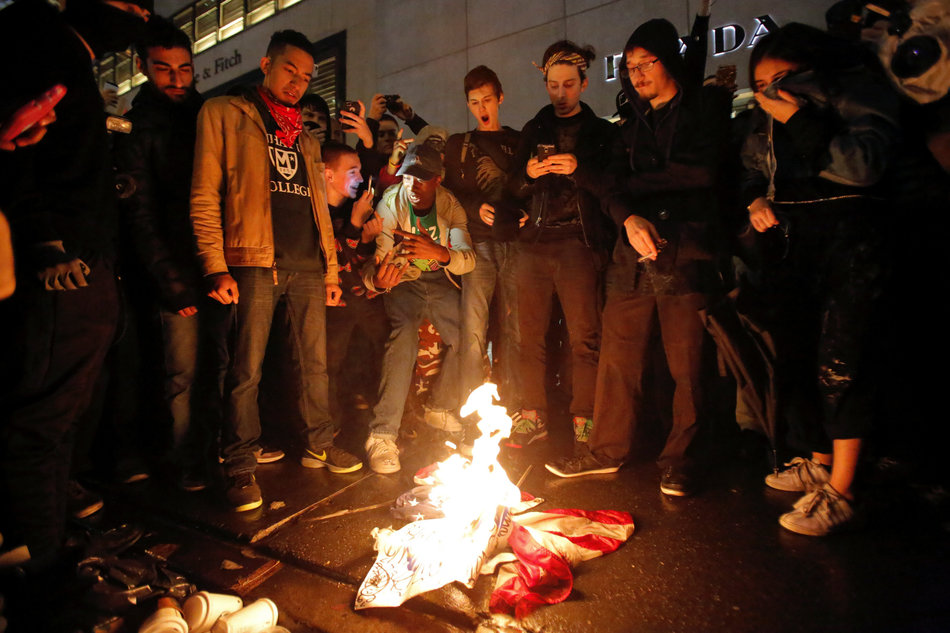
Demonstrators burn the U.S. flag outside Trump Tower during a march against President-elect Donald Trump in Manhattan, New York, U.S. November 9, 2016. REUTERS/Andrew Kelly

Demonstrators burn the U.S. flag outside Trump Tower during a march against President-elect Donald Trump in Manhattan, New York, U.S. November 9, 2016. REUTERS/Andrew Kelly (from HuffingtonPost.com)

I’ve noticed that posts and comments since election day have been only mildly less vitriol than before the election. The difference now, however, is that instead of warnings about the damage so-and-so would cause the country if he or she is elected, they now revolve around what seems to be a personal fear about what will happen January 20th, as though that is the date set for the end of the world. There seems to be so much fear that in some quarters, it has translated into a hatred that is driving people to the streets in protest.

At first, I assumed these posts were just more of the fear-mongering that the left perpetrated throughout the election (and I believe some still are) but as I listened better, I realized that there are some genuine fears out there. I think that much of what people are reacting to is what has been instilled by the political campaign rhetoric that has tainted this presidential election. Opponents of both candidates have warned about the calamity that would come if the other candidate is elected and now we see that being translated into real concern that all of the warnings they have heard  from their side will come to pass in the worst way possible. I have to admit, if I believed all of the political sound bites, I’d be scared too.

What I would imagine frustrates those who are experiencing real fear (and those trying to support them) is the fact that people on the other “side” seem to discount their fears while they admonish them to just accept the will of the people and unite behind the new president. In defense of the other side, I don’t think that most of them don’t care  about those who are afraid, but rather they just don’t understand why anyone would be afraid, seeing things through the filter of the “right.” On the flip side, I think those who are struggling with the outcome of the election are also viewing things through their own filter, preventing them from seeing what the right sees as reality. What I want to try to do now is remove, or at least reduce, that filter in hopes that I can relieve some of the fear some of my friends may be experiencing by explaining what those on the right are actually thinking. Of course, I can only speak from my own knowledge and experience.

Immigration. One of the fears that I have heard from friends and television commentators is that immigrants are going to be immediately separated from their families and deported while others will be restricted from entry into the U.S. Compounding those fears, by some reports, are Trump supporters who have been emboldened by an election win, “terrorizing” anyone who even looks like an illegal immigrant, urging them to pack their bags and leave the country. There’s no making excuses for people’s prejudice and their showing disrespect to anyone, but what everyone needs to realize is that they don’t represent the entire Republican party or anyone else who may have conservative views on immigration.

The truth is, regardless of one’s views on immigration, there’s little chance that anyone would support the tearing apart of families when some of them my be legally in the U.S. While deportation may be stricter on those who aren’t here with family or who have committed serious crimes, more likely than not, any new immigration legislation would provide a route to becoming a legal resident to avoid the splitting up of families and the expense of mass deportations. So who should be afraid of Trumps immigration policies? I think only those who have committed violent crimes or present a serious risk to law and order. Besides all of that, as Trumps campaign advanced, he backed off of full-blown deportations.

LGBT Rights. Another big fear is one that has been very much in the news for the last several years, the rights of the LGBT community in the United States. Some are afraid that their marriage certificates will become worthless and they’ll lose the legal rights given to them through marriage. They fear that President Trump will, with the stroke of a pen, nullify all of the rights the courts have given them over the past few years. While many on the right do view homosexual acts as sinful and thus homosexual marriage as morally wrong, the expectation that current rights will be taken away is a stretch. There is little to no evidence that any new legislation or any court decisions having been overturned ever resulted in a retroactive removal of previous granted rights. That is to say that if a couple is legally married today, the overturning of any court decision that made that marriage legal would not make their marriage illegal, but only future marriages. So while LGBT rights advocates may have reason to fear the future of some so-called rights, they shouldn’t fear the removal of rights already granted through legally obtained marriages.

A surprising fear that I have heard related to the LGBT community is that “conversion therapy” will be mainstreamed, subjecting gays to inhumane treatment in an effort to “fix” their homosexuality. This caught me by surprise because I thought the success of conversion therapy had long-since been debunked. Additionally, the idea of forcing any kind of treatment on an unwilling subject is the stuff of Nazi Germany, not 21st century United States. One of the selling points of the Trump Train was individual rights. It’s not likely that a foundational right like would be violated with forced medical or psychological treatment would ever come to fruition.

Obamacare. Otherwise known as the Affordable Care Act, the “repeal” of Obamacare creates another fear in some people, afraid that they will lose their insurance or coverage while they suffer with illness or injury. The idea of repeal without replacement could be worrisome, but while most of the time when President-elect Trump talked about Obamacare he only talked about its repeal (as have most other Republican candidates this election season) at least once he said that with the repeal will come a replacement plan that will take better care of American citizens than Obamacare did…and cheaper. Additionally, Paul Ryan, Speaker of the House, has talked about a replacement plan that the Republicans have ready to go to improve on what Obamacare tried to accomplish. And just like any other insurance plans, if one is replaced by another, preexisting conditions would be covered since the insured didn’t have a choice in the change in plans.

Abortion. One of the most defining issues among people on the right also brings fear to those on the left. The fear comes from the idea that the government will remove their right to make decisions about their own bodies, which is a foundational right (as mentioned above in the discussion about conversion therapy) and if threatened, Americans should be afraid of their loss of rights. However, this fear is more based on differing political views than on personal rights. People who oppose abortion do not view it as a choice about the mother’s body, but the baby’s, thus making abortion illegal protects the rights of the baby not remove the rights of the mother. But I think the left already knows how the right thinks about that.

Still, Republicans and Trump are very vocal about overturning Roe v. Wade which would remove what the left views as a right; but after 43 years, the likelihood of that happening is slim to none. What I think the Republicans will try to accomplish is the limiting of abortions to only earlier in the pregnancy, mandating the notification of parents of underage children seeking an abortion and removing federal funding of most abortions. Abortions needed to preserve the life or health of the mother or in the case of rape or incest will likely continue to be widely accepted and funded. The left does have a valid argument that it seems like the abortion rate goes down with Democrats in office, primarily because more funding goes to prevention among those more dependent. Republicans need to take this into consideration and be more involved in underprivileged health care and pregnancy prevention. But, to be afraid that suddenly women will not be able to make decisions about their own bodies will not happen, and even about early-term abortions is unlikely.

Climate Change. This may be the fear that I most don’t understand. Maybe it’s not so much a fear as a frustration, but still a hot topic for those lamenting today. It seems like people on the left believe those on the right just don’t care about the planet while people on the right believe that those on the left have bought into irrational fears of global destruction. I can’t speak for everyone on the right, but I don’t think that the majority completely deny global warming. They may question the extent, but global statistics through the years do indicate a change in climate. I think that most (at least some) believe that global warming is not man-made. Geological and archeological scholarship shows that the natural ebb and flow of the earth’s climate brings about a cooling and warming of the planet. For example, when I was in Iraq, I saw satellite images that revealed an additional two rivers (which, by the way, are mentioned in the Bible as flowing into the Garden of Eden along with the Tigris and Euphrates) clearly visible in the Persian Gulf which at one time were flowing through dry land. I also visited the ancient city of Ur, near Basrah, which in its heyday was a port city. Now it’s many miles from the coast. These show a natural movement of waters as a result of global warming and cooling. A natural, repeating occurrence in Earth’s history.

Regardless of how we view climate change, how we treat the planet continues to be contentious. Reconciling the issues of planet-care is not likely because how we view the use and mining of fuel is so different. One group sees retrieving and using fossil fuels as detrimental to the planet while others view the impact to the planet as less detrimental compared to the expense of alternatives and the harm to developing countries who can’t afford the development and use of alternative fuels.  Bottom line, there will never be agreement on our approach to fueling American’s thirst for a lifestyle that requires massive amounts of fuel but it shouldn’t cause a debilitating fear for either side, only impetus to communicate with each other and work together toward acceptable compromise.

Hate & Bigotry. There is no denying that some of the things that President-elect Trump said during the campaign can be viewed as hateful or bigoted. Especially early on, it seems like he often spoke off the cuff without putting much thought to his words. As the campaign progressed, however, he did begin to show better restraint and sensitivity to others and some of his comments that the left uses as examples of his hate and bigotry are simply taken out of context or magnified beyond the original significance. At any rate, Trumps words  do not justify any hate or bigotry that may continue to be spewed by others. Additionally, people make their own decisions and are responsible for their own words and actions just as Trump is responsible for his. Should people be fearful? I don’t think so. The introduction of a more uncouth President does not increase the number of hateful and bigoted people in our country, they’ve always been there. The likelihood of any supposed hate or bigotry residing within the new president influencing domestic or foreign policy is also very low. While the president has a lot of power, he does not govern alone and the Constitution is still the basis of law. What is needed instead of a return of hateful words is a commitment from both sides to not accept words and actions of hate but speak out against them and behave in ways that make attitudes of hate unwelcome.

I’m not sure if anything that I’ve written has reduced any of the fears some people are feeling but hopefully at least we will better understand where each other are coming from and realize that most people are not against those on the other side. And we care.

.

.where

.

Leave a comment

And the Best Candidate is . . .

Hillary Clinton

Hillary Clinton (Democrat)

Based on many of the Facebook posts that I see, it appears that many people are either choosing their candidates solely on the basis of their party or else because they despise the opposing candidate so much. Others have latched onto one issue and are choosing the candidate they’re going to vote for based on it while some are choosing to avoid the two main parties all together and vote for a third party candidate. I think that especially in this election, when both of the main-party candidates are so disliked by the other side and carry so much baggage, our evaluation of the candidates and why we may vote for one of them over the others needs to involve more.

As I look at the issues and the candidates who support them, I find that each candidate values certain issues that I also value and each one supports ways of dealing with the issues that I also support. The problem is, there isn’t one candidate whose important issues and ways of dealing with them completely line up with the issues I feel are important and how I would deal with them. Most of the candidates (considering more than just the main two parties) also support policies that I am against. So how do I decide who to vote for?

I’ve always been against voting for third-party candidates, especially if they are nearer to my party’s candidate in values, fearing the loss of votes for my party. Many say a vote for a third-party candidate is a wasted vote while others forcefully contend that it isn’t. Other than to make a point or to be true to your conscience, until our system drastically changes, a third-party vote is essentially a waste and is sometimes detrimental to the similar candidate from one of the two major parties. Will it change the course of an election? That is very unlikely, unless the state you vote in is a close race similar to the Florida contest when Bush beat Gore by just a few hundred votes. With that said, looking at the candidates we have representing the two major parties this year, which pollsters tell us are the most disliked presidential candidates in the history of the United States, I am more inclined to vote for a third-party candidate if I can find one whose values align with mine.

In deciding who to vote for, it’s important not to learn about the candidates from Facebook posts. Many times people continue to “share” memes or statements about candidates that turn out not to be true or are greatly exaggerated. I also have trouble fully trusting news outlets, since all of them are biased in some way. I like the website Pro-Con which seems to be politically neutral and offers the views of the presidential candidates on 75 issues, though some candidates haven’t expressed their views on all of the issues.

republican-elephant-democratic-donkey-e_c13-0-673-385_s400x233Missouri (where I currently live and vote) has five presidential candidates on the ballot: Clinton (Democrat), Trump (Republican), Johnson (Libertarian), Castle (Constitutional) and Stein (Green) . I could go down the list of 75 issues and compare my views to each of the candidates on the ballot, but while I wouldn’t call my self a “one-issue” voter, I just can’t bring myself to vote for a pro-choice candidate (Clinton, Johnson and Stein), especially one who supports late-term abortions (Clinton), quickly narrowing the candidates I need to consider down to two (Trump and Castle). Do I think that Roe v. Wade will ever be overturned? No, I don’t. In over 40 years of a Republican-appointed majority on the SCOTUS, Roe v. Wade hasn’t budged, but the expansion of abortion “rights,” including partial-birth abortion can be limited with the appointment of the right justice.

On the other hand, a liberal candidate appointing liberal Supreme Court justices could extend the availability and extent of abortions, increasing the number of lives lost and suffering caused to unborn and partially born children. Additionally, the government should not fund abortions with the possible exception of the health of the mother being at risk or if the pregnancy is the result of rape or incest, so the continued funding of Planned Parenthood (Clinton and Johnson) and other providers who focus primarily on abortion should cease and not be expanded. Also, if abortion remains legal, minors should not be permitted to get an abortion without the consent of their parents (which Clinton is against). Related to my “pro-life” stance, I would also find it difficult to support candidates who support legalizing euthanasia and physician-assisted suicide (Clinton and Johnson). (For a 20-minute explanation of why I elevate being anti-abortion above the other issues, watch this video.)

Darrell Castle

Darrell Castle (Constitution Party)

There are a number of other issues, of the 75 on Pro-Con, that I have an opinion about which would guide my choice of which candidate to vote for of the two remaining pro-life candidates, Trump and Castle (Constitution Party). Castle isn’t on the Pro-Con site but other sites declare him to be 100% pro-life and he promises to veto any measure that would fund abortions, which keeps him in the race for me. However, Castle wants to repeal the Federal Reserve Act and end the U.S.’s membership in the United Nations, two actions I’m not convinced would be best for the United States. Castle is on the extreme right and while he does value the original intent of the Constitution I think that he may have a few too many ideas which I can’t fully support, though none that would necessarily prevent me from voting for him if there were no other pro-life candidates.

Trump, however, comes with a number of other concerns even before getting to the issues. His much publicized disrespectful statements about women, flippant comments about individuals and whole ethnic groups and complete lack of government experience should certainly give us pause. Many people are voting for Trump as a vote against Clinton but I don’t think that is a good enough reason to vote for someone. Others are voting for Trump based on his assurance to appoint conservative Supreme Court justices which could help reduce the number and extent of abortions, prevent federal funding of abortion, as well as protect and promote many other “conservative” ideals extending his contribution long after his time in the White House. That could be the best reason to vote for Trump, realizing that Clinton will appoint liberal justices who will seek to accomplish the opposite. The Witherspoon Institute article, “2016 and the Future of the Supreme Court” gives a good explanation of how the appointment of the wrong justice could do grave harm to conservative causes. I encourage you to take time to read it.

Donald Trump

Donald Trump (Republican)

To vote for Trump would be elevating his conservative, pro-life position above his potential shortcomings, including his character, which raises the question, does a vote for a candidate register approval for everything wrong that they have done? In this age of instant news and Wikileaks, we know more about the candidates today than voters knew of any other candidates in our history. It’s very likely, and in fact proven in many cases, that residents of the White House have engaged in activities that if fully known could have ruined their runs for president. That doesn’t justify anybody’s wrongdoing but goes back to what I alluded to briefly in my last post, We Don’t Need to Fight, namely that we’re not electing a spiritual leader but rather a president.

Clearly, a person with a strong Christian faith would be the best leader in any office, at least with everything else being equal, but should the faith of a candidate take precedence over the less important (or even most important) issues? In other words, would Castle be a better choice than Trump since he is conservative, pro-life and an unquestioned Christian? And then, is Trump a bad enough choice that Castle is the more moral choice, even though Castle does not have a chance of winning the national election? Is voting my conscience more important than voting for the 2nd best with a better chance of winning, thus producing the greater likelihood of the issues that are important to me being addressed? And finally, should it impact my decision that polling in Missouri shows a solid lead for Trump, rendering my vote technically moot unless a large number of similar voters choose the same third-party candidate?

Hopefully, as I have hashed out my process in making a decision on who to vote for, I have given you something to think about and have encouraged you to not make a rash or hasty decision on November 8th. Ironically, as I finish editing this post, I still have not been able to arrive at a decision but since I am away from home and voting by absentee ballot which I have to mail, I’ll have to decide soon. . .

.

.

.

Photo credits:

Hillary Clinton from the Hillary Clinton website

Darrell Castle from the Castle 2016 website

Donald Trump from the Trump-Pence website

Elephant & Donkey buttons from The Washington Times website

.

.

1 Comment

We Don’t Need To Fight

I have said very little this election season unlike the last two presidential elections. Mainstream as well as social media have already been inundated with toxic posts that seem more like personal attacks than arguments about the issues. Comments on many of these posts are similarly nasty as supporters of the various candidates are attacked or dismissed while facts about the issues are ignored. Perhaps what frustrates me most (as a Christian) is how the Bible or a self-granted sense of spiritual discernment has been used to denounce one candidate or the other, or to elevate one issue above another, declaring through their posts that everybody else is wrong. Up to now I have not wanted to wade into this muck. But now, partly because I think through things better as I write about them and partly with a hope of helping others think through all of this too, I have been drawn back to my laptop in an attempt to make sense of, and find direction in, this election.

us-elections-759Let me first say that I assume the best of people, both the candidates and their supporters. My baseline belief is that all of the candidates are running because of their sense of duty and service and want the best for the United States, though what that best is, is viewed differently and how to get there has many different paths. I have the same hope for the supporters of the candidates and issues: that they want what is best for the United States but just differ in what that best is and how to get there.

The problem with this election season, more than others that I remember, is how mean people have been toward each other. This can be seen from the top of the tickets down to the grassroots supporters. People seem to be taking this election very personally and are fighting back in hurtful ways which just increases the political divide in our nation, and for me, is also ruining the reputations of those involved. I recently commented on Facebook that based on some posts people (even pastors) are making, I would not want to attend their churches, which is sad. My understanding of Scripture and the Christlike life teaches me that what we say and do should draw people to Christ and His Church, not repel people because of our Facebook posts. Obviously, we are to speak the truth, but the Bible says we are to speak the truth in love.

Second, it is important to remember that while our faith should influence and speak into our political discussions and decisions, they are not the same. Our government system is not the Church and we are not electing religious leaders. With that said I would quickly add that I believe it comes out in Scripture that being a good Christian means being a good citizen which means being involved in the political process by supporting issues and candidates and especially voting (and maybe even running for office). There are many posts out there that suggest that since we are citizens of Heaven and not of this world that we shouldn’t even be involved in the politics of this world, that our concern should not be in the temporal, earthly governments. That is a lofty thought but not practical or biblical. Being concerned about our government and the political process is not a denial of the sovereignty of  God or our faith in His will. To work toward positive political ends does not deny or stifle the work of God, but is doing our part in accomplishing God’s plan, as much as it can be discerned and accomplished on earth.

Yes, as Christians, we are citizens of the Kingdom of God, but while the Kingdom is here, it is also not yet. We still are born, live and die in this world and as such have a dual citizenship, both of which we are responsible to. Our primary allegiance must be to the Kingdom of God, but a secondary allegiance to our country -properly practiced- is not a denial of our faith but an outgrowth of it. We should not neglect the governmental processes because they are “dirty” but should be a part of them, bringing into them the salt and light that Christians bring. I won’t belabor that point in this post, but you can read more about my thoughts on it here.

Related to my second point, thirdly, we need to remember that as the government is not the Church, we shouldn’t expect it to believe or act like the Church or even on behalf of it, or to hold the same values as the Church. I’ve read many posts in support of various issues that seem to be delegating to the government many of the responsibilities of Christians and the Church or holding the government to a standard that Christians are held to, but we need to be careful with our expectations. An example of a current political hot topic where this has produced conflict is in the area of immigration, particularly with the enormous amount of refugees as a result of the unrest in the Middle East. The Bible is clear that Christians are to welcome the foreigner and care for the stranger and homeless but the government is not “a Christian” and has other responsibilities to consider. The United States has been known for their care of the underprivileged around the world. USAID, for example, has a multi-billion dollar budget to care for those in need, but one of the primary responsibilities of government is to protect its citizens which introduces a plethora of other issues beyond just being compassionate to immigrants. It impacts background checks, open borders, potential terrorists embedded with Middle Eastern refugees, defense spending, military operations, and care for our own homeless and underprivileged.

When supporters of tighter immigration laws confront those wanting them less restrictive, there are often heated comments like, “to not freely accept all immigrants without question is denying our Christian faith,” but they forget that the government is not a Christian. Few Christians would deny their responsibility to care for the foreigner or stranger, but how that is accomplished is often different. We need to remember that we are on the same team and instead of fighting about how our ultimate goals are accomplished, we need to work together to accomplish those goals and not assume that because we may differ on how things are accomplished that we automatically differ on the ultimate goal-in this example to care for immigrants and refugees.

However, even though we should not expect the government to believe and act like a Christian, it is proper and part of the Christians responsibility to be salt and light in our world, to use all legal means to reduce the moral decline in our country. Supporting laws and judicial decisions that maintain or return a high moral standard is a preservative for our society that Christians (and others) should pursue. Using legal means to promote moral behavior is not denying God’s ability to accomplish change or his sovereignty. Scripture teaches that we are to be active in our world, in doing good and promoting good. “Legislating morality” isn’t about forcing our beliefs on others but rather preserving our culture and improving our society for the benefit of all of its members. Now, discerning the universal values that should be legislated is the difficult aspect of this idea, which, unfortunately, is outside of the scope of this particular post.

In my next post, “And the Best Candidate is…” I’ll look more at the individual candidates and hash out how I’ll decide who to vote for.

.

.

Photo of the candidates from The Indian Express

.

Leave a comment

My Other Brother . . .

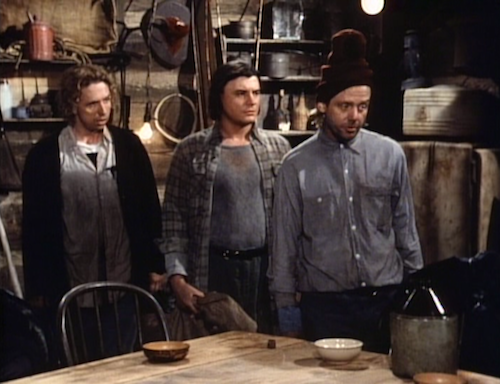
Larry, Darryl & Darryl

Larry, Darryl and Darryl from “The Newhart Show”

“My other brother Darryl.”

Back in the eighties there were three characters on The Newhart Show who were brothers. Larry was the oldest and the only one who ever spoke. Whenever they would enter a scene, Larry would say, “Hi, I’m Larry. This is my brother Darryl and this is my other brother Darryl.” I used to hear that a lot when people met me. Often in the form of, “where’s your other brother Daryl?” Well tonight, I met him…or one of them.

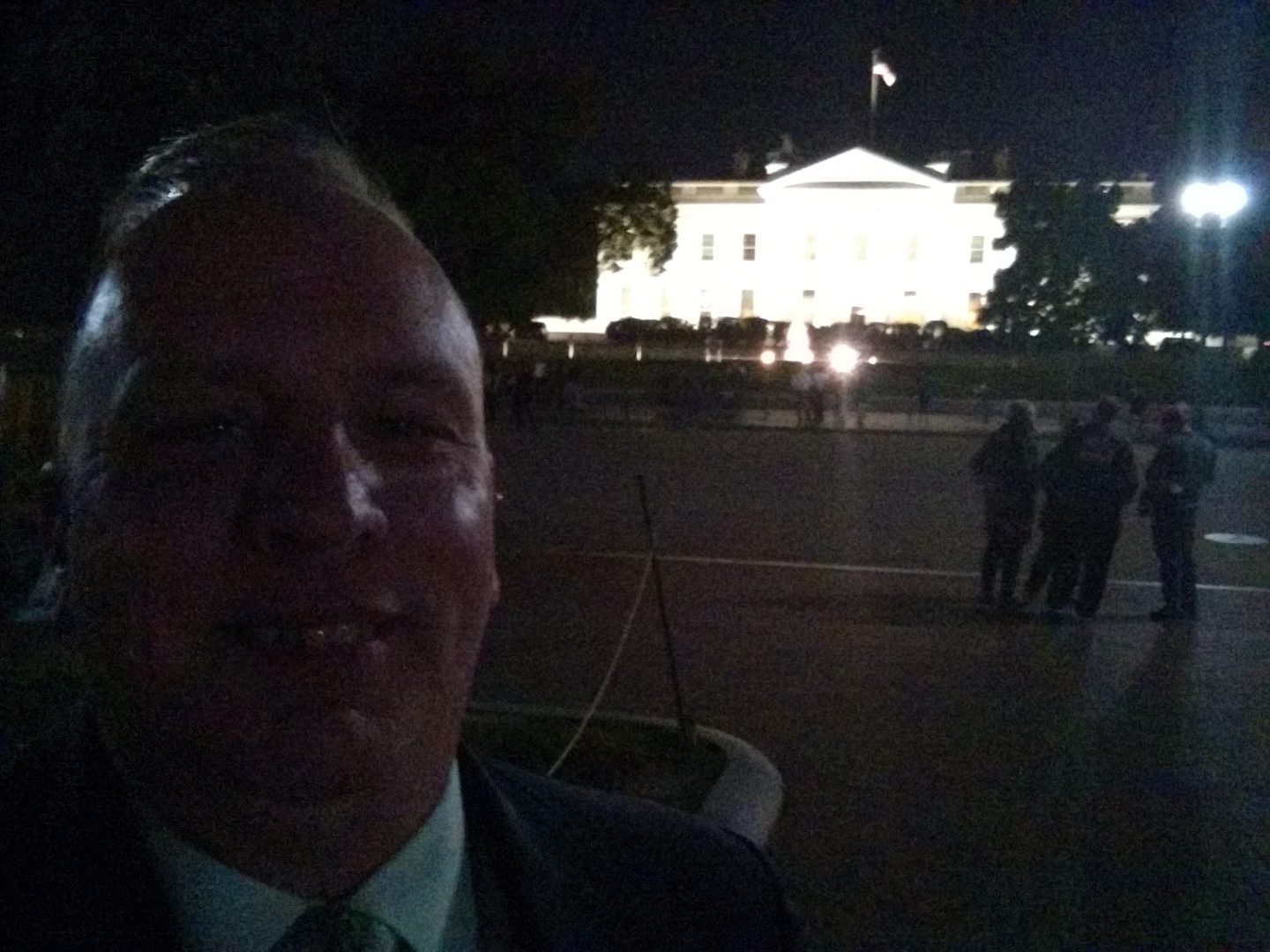
The White HouseI was in town for a lecture then walked a few blocks to get dinner. As I was walking around D.C., I noticed up one of the roads I was crossing a bright light and quickly realized that it was the White House. Since I was so close, I walked down to get a closer look, having not seen it up-close at night.

When I got to Pennsylvania Avenue, I used what I thought was an unaccompanied protest sign to stabilize my phone while I took a picture in the dark of the White House. It turns out the sign wasn’t unaccompanied after all, so I found myself in a conversation with Darrel. We laughed a bit, more of a collective cringe, as we both recalled being involved in the “other brother Darryl” joke.

My other brother DarrelDarrel mans this multi-issue protest site across Pennsylvania Avenue from the White house a couple of times a week. We had a good conversation about our military backgrounds, his opposition to the military use of depleted uranium and our individual spiritual journeys. In my short time in Washington D.C., I’ve discovered there’s no shortage of interesting people on the streets of D.C., and I have to wonder, how many of them are my brother?

Not too long before I met Darrel in front of the White House I came across another potential brother. I don’t remember his name, but do remember the encounter.

I was walking in downtown D.C. and paused at a bus stop (where there was a half-wall for me to lean on) to check the navigator on my phone for directions to my next stop. I wasn’t there a minute before an older black man came up to me and started telling me his “sob” story. He mentioned that he was a veteran, which always piques my interest, so I gave him $5 even though I wasn’t sure if his story was true or not.

This time, however, instead of quickly walking off, I stayed with him about 10 more minutes just talking & listening. I heard about his time in the military. I saw the pride in his eyes as he told me about his children and grandchildren, then how he’s helping them financially.  I listened as he told me about his troubles and about the house he owned in another state that he was trying to sell which would get him out of the financial troubles he’s having now. I realized that we had a lot more in common than I would have believed just 10 minutes before.

These are just two of the encounters that I have had while living near Washington D.C. Both of them have helped me to look at people differently and not accept the first impression I might normally have of them. They’ve helped me to see that more times than not, we have more in common with the homeless guy or the protester than we might at first think. They made me realize that I may have many more brothers out there.

.

.

.

5 Comments

The Sin of Patriotism?

Happy-4th-Of-July-imagesIt’s the 4th of July, Independence Day for the United States of America. Here in Korea (where I currently live), you wouldn’t know it from any other day (unless, of course, you’re on a U.S. military installation). But with the benefit of the Internet, there’s no escaping it…though personally I wouldn’t want to. I celebrate with millions of other Americans our hard-won independence from Great Britain 240 years ago.

Much of what I’m seeing in my Facebook feed, however, is not a positive response to it being the 4th of July. I’m not judging, at least I’m not judging the individuals but am passing judgment on their comments. For many people who have strong patriotic feelings, some of the posts they read come across as if the authors are speaking from a holier-than-thou ivory tower to us lowly patriotic souls who are in need of their superior spiritual insight and understanding of the mind of God. In the interest of full disclosure, I may, at times, appear to also be perched in one of those “ivory towers” but usually on the other side of this issue.

Let me explain why I get so frustrated at what I perceive as “anti-patriotic” rhetoric:

First, they condemn our fight for independence as contrary to the scriptural mandate to be obedient to the powers in place over us as being instituted by God. They view the situation on the American continent of the 18th century through 21st century glasses, presuming to understand the situation our political forefathers and mothers experienced better than those who were living it. They apply a modern interpretation of scripture and political correctness to individuals who lived under a different understanding of Christian ethics, condemning them for not acting 240 years older. The overwhelming abundance of sermons and other written material by clergy of the time reveal that there are other ways to understand scripture in relation to the political situation of the colonies in the days leading up to July 4, 1776. To presume to know better than those living, studying, praying and worshiping in the mid-18th century is pretentious at best.

american-and-christian-flags1Second, they equate Christians who are also patriotic with those who put their political allegiance over and above their allegiance to Christ, like an idol. No doubt, some American Christians may do that, but they are no different (or any more plentiful) than any other less-dedicated Christians who also put their careers, possessions, or any number of other things ahead of Christ. But these are not the genuine Christians of the Church. The naysayers of Christian patriotism appear to assume that anyone who is patriotic can’t possibly be a proper Christian. They seem to not understand that it is possible to love one’s country, without putting that love or allegiance above their love for God and the Church. If put into a position of choosing between doing what is right according to Scripture or doing what the government asks of them, I believe the large majority of Christians would default to their first allegiance and do what is right in God’s eyes. Contrary to the belief of those who assert otherwise, being a patriot does not mean blindly following your country in the committing of sin.

Third, they assume that if we celebrate the 4th of July, as an expression of our patriotism, that we fully support all of the laws and policies not only in place, but of candidates running for office. They assume that if we support our country that we also support ancient sins of our country, like slavery. From their perceived anti-American soap boxes, they proclaim that if we patriotically love our country, we necessarily lack love for people of other nationalities. They insist that if we celebrate the freedoms we enjoy as Americans, then we view all other world citizens as second class or inferior. They pontificate on issues of immigration and compassion as though those who love their country can’t care for others under the law. They assume that if we love our country, that we harbor “hate for those who disagree with us and fear of those different from us,”1  equating Christian patriots with others who may not even be Christians, who spew hate and fear. They fail to recognize those who love their country but still give their time, treasure and even lives in the service of others as part of their Christian devotion.

4hFourth, They maintain that any reference to our national heritage, our love of country or our celebration of independence during a service of worship is anathema. It is true that some churches go overboard with infusing civil holidays in their worship services. It is also true that our time of worship should focus on who we worship, that is God and Him alone. But it’s important to remember that part of worship and prayer includes thanksgiving for God’s blessings. The freedoms and prosperity that we enjoy as Americans (which, by the way, has enabled us to take the Gospel around the world as well as provide for others in need over the years) is ours because of God’s grace and goodness to us.

Whether you acknowledge the act of God in the creation of the United States or not, His help given to us through the centuries is something we should thank Him for which enhances our worship of God rather than detracting from it. What better time to honor God for blessing us than when Americans are celebrating one of those blessings? Recognizing that anything that we have is a result of either God providing or allowing it is not contrary to biblical teaching, but in line with it. Additionally, recognizing the events of life outside of the Church during the worship of the Church acknowledges where the congregants are. Ignoring what is happening in the lives of the people will just give the impression that we’re not relevant; not that we should tailor our worship to tickle the ears of the shallow, but we should recognize that life outside of the Church, is the life those in the Church are living.

Clearly, I am very patriotic. I love the United States of America and am grateful for the sacrifices of patriots over the years who have made the freedoms I enjoy possible. More than that though, I am a Christian and my first allegiance is to God and His Kingdom. But my love of country and love of God do not have to be in conflict. As a Christian and as an American, I seek to be faithful. Faithful to God’s demands on my life and faithful to my country’s call to serve. It is possible.

Pro Deo et Patria!

.

.

.

1 https://thewannabesaint.com/

Photo credits:

“God Bless America!/Happy 4th of July”: memorialdayparades.com

American and Christian Flags: The Cloud Animal

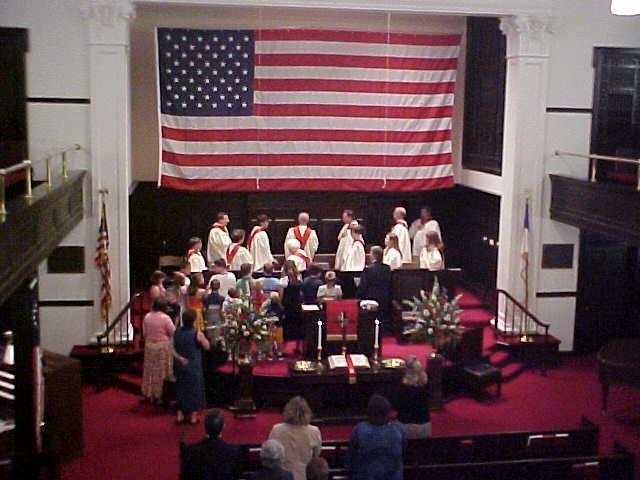
Sanctuary with flag: Thideology

.

.

1 Comment

To My Progressive Friends

Here’s a good “open letter” to “progressives” in the Church of the Nazarene, but applies to “progressive” Christians of any brand. It’s an honest but humble appeal.

letter

To My Progressive Friends

A few days ago I received Rob Renfroe’s article “Three Requests of My Centrist Friends: An Open Letter.” Rev. Renfroe is the Pastor of Discipleship at The Woodlands United Methodist Church in Texas. His letter so resonated with my spirit that I felt led to share his sentiments. The UMC is dealing with a lot of tension as it pertains to sexuality and marriage, as are we all. I had a difficult time with some of his terminology as he related to the various voices within the UMC. What he identified as “centrists” I recognize as “progressives.” What centrists in the UMC call the “far right,” progressives in the CotN call “ultra-conservative-fundamentalists.” Nonetheless, the heart of his message reverberated deeply with me. I actually wept as I read his words. I have used his letter as a direct source for the following thoughts as they pertain to the Church of the Nazarene (a link to his letter is attached below).

Over the past couple of years I have been dialoguing with pastors in the Church of the Nazarene who identify themselves as “progressives.” I have grown to appreciate many of these leaders. I believe they genuinely love Jesus and desire to impact the world with the gospel. They are extremely compassionate and care deeply about the future of the church.

As much as I love these folks, I am also aware of how differently we view some very important issues. At the center of the conversation is sexuality. It is improbable that we will ever agree on what the church should teach regarding sexuality. I find their arguments for changing the church’s position on this issue out of harmony with everything we use to measure truth. Biblically, theologically, and scientifically their arguments for same-sex monogamous relationships simply don’t work.

I hate the idea . . . (Continue reading at BrianLPowell)

.

.

.


Leave a comment

Political Defeat as an Opportunity

the-cnn-presidential-debate-descended-into-an-epic-no-holds-barred-brawlI think I’ve done pretty good not commenting on politics this election season (either original posts or on others’ posts) like I have in past presidential elections. But while I’ve been relatively silent, I’ve been amazed at the wide range of feelings I’ve seen in my FB feed from both sides of the political and religious spectrum. Some I agree with (from both sides) and some I have to wonder what box of crazy they’ve been eating from (again, from both sides).
 
I think this is an important presidential election, though. Either the momentum toward what many Conservatives view as a slide deeper into government-sanctioned immorality and what Progressives view as expanded rights and freedoms will continue (with all its many facets) or what history has shown -and biblical prophecy foretells- is inevitable will be slowed for at least 4 more years.
 
Ballot boxPart of the problem is that so much of the eventual outcome depends on the candidate the Republicans ultimately present. So what is the GOP to do? Hijack the populist vote from the primaries and have a brokered or open convention? What will that say to the voters? Won’t that ultimately short-circuit any possibility of a fair vote in the nation-wide election by ignoring the apparent will of the people and tainting the power of the ballot box? Doesn’t that just go against what the GOP says they stand for in an attempt to accomplish what the GOP says they’re needed for?
 
I have no plans to leave the U.S. regardless of who is elected president (though I do reserve the right to several days of mourning). Our system is still among the best in the world and I remain proud to be an American even with the scars and warts that people complain about. If the candidate that I think is best for our country isn’t elected, that’s just the way it is, and the nature of our political system. The same system that enables my opponent to get elected is the same system that makes it possible for my candidate to get elected. The election results may mean a few more years of internal turmoil, but it also means continued opportunity to focus on what is really important at the level we can have an impact: Individual lives. People in need. Souls searching for redemption. Our local community.
 
Helping-the-homeless1If we can’t rely on our elected officials or government to do what we think needs to get done (because our candidate didn’t get elected), then we’re forced to do it ourselves- where we are. That, I believe, is where the rubber meets the road: not depending on others (whether a candidate, the government or any other institution) to do what is right, but to do it ourselves, where we can make a difference, where it really matters.
 
Just a thought.
.
.
.
3 Comments

I Cry

At the risk of being perceived as less-than-masculine or even a wimp, I have a confession to make: I cry.

That’s right, I admit it, I cry.

Gold Star bannerSure, I cry at times when you would expect me to, like when a family member dies or when the Holy Spirit moves in a worship service. But I also cry at times when you may not expect (or even notice), like facing the flag while the National Anthem is being played or during war movies when Soldiers are getting shot and killed.

I cry when I visit veteran’s cemeteries and when I see a flag flying at half-staff.

I cry when I see a notification officer and chaplain getting into a government vehicle, aware of where they are going; and I cry when I see a gold star pennant hanging in the window of a home.

I cry when I see battle-weary Soldiers returning from war, and Soldiers returning with wounds seen and unseen.

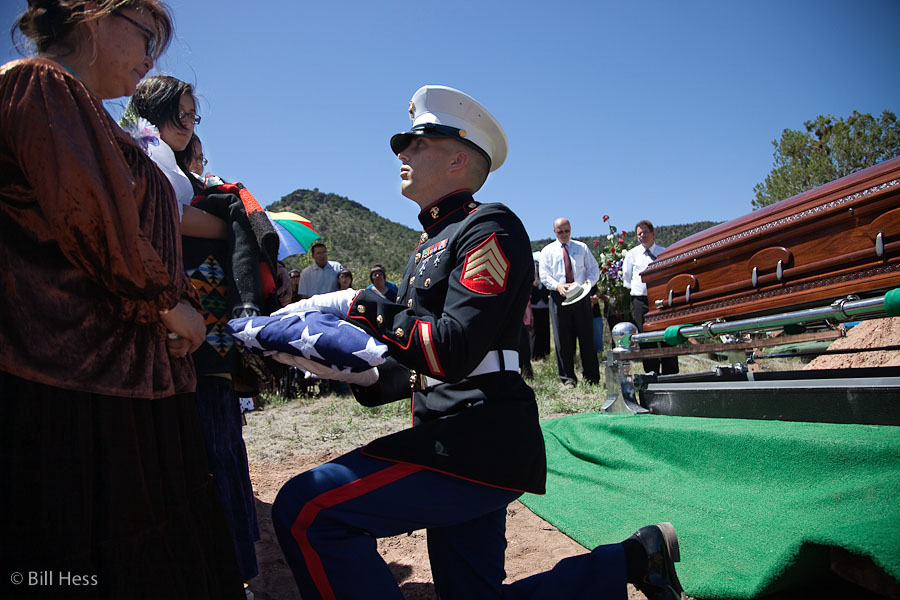
graveside flag presentationI cry when I see an NCO, down on one knee, presenting the flag from a Service Member’s casket to the widow of that Service Member.

I cry when I see families saying goodbye to their Soldiers when they deploy and I cry when I see Soldiers greeted with open arms when they return.

I cry when I see monuments to the victors and to the fallen.

I cry when I hear about a veteran robbed at gunpoint or denied service and I cry when I read in the news about a homeless vet who died of exposure on a cold night.

I cry when I see new recruits, volunteers to serve and –if need be- die for their country.

I cry when I see units preparing for a mission, realizing that some of them may not come back alive.

Why do I cry for these things? Because I am an American. I am a patriot. I am a Christian.

Don’t think that the State has become my religion or that the emotions that well up inside of me are a substitute for my relationship with God. Don’t accuse me of “Americanizing” my Christianity and fusing my patriotism with my faith. That is not what I am doing.

American and Christian flags flyingI am a Christian first, with my primary allegiance to God and his Kingdom. Any other allegiances or commitments are second to my commitment to my Creator and Savior. However, even though secondary, I have still pledged my allegiance to my country, and I confess that this allegiance is born from my allegiance to God.

Many people reading this will not understand. Some will think I’m ignorant of what God really thinks. Others will think I’m ignoring the “clear” teaching of Scripture.

But some of you will understand. Some of you have been where I have been.

It is this secondary allegiance, to my country, that has taken me to places where most people do not (or will not) go, places where it seems evil is unstoppable and life is disposable. It is this allegiance to my country that has taken me to the brink of eternity, where the warning signals blare through the speakers providing just seconds before hearing the explosions as they land closer and closer to our position, wondering if they’ll eventually hit their target, while seeing the fear in the eyes of hardened Soldiers.

It is my allegiance to my God and my country that compels me to leave my family to minister to those Soldiers –who are also leaving their families- who go into harm’s way to defend our freedom and the freedom of people they’ve never even met.

Because I have gone; because I have left home, family and friends; because I have seen death and faced the possibility of my own death; because I have returned to the welcomes, knowing others haven’t returned; because I have gone to homes as they’ve been told their loved one has died; I cry.

Maybe you cry too.

.

.

.

.

.

Photo credits:

Gold Star banner in window from Nebraska.org

Kneeling Marine presenting flag from Wasilla, Alaska, by300

American & Christian flags flying from The Cloud Animal

.

.

4 Comments

Christian Pacifism or Convenient Pacifism?

Peace not War

It seems that recently I have seen more posts either for or against the use of violence than I have in a long time. The activity of ISIS and other terrorists around the world as well as ethnic violence right here in the United States both contribute to such debates. However, more than the debates themselves, what troubles me is the dogmatic tone that is often taken mainly (from my perspective) by those who oppose any violence based on the teachings of Jesus. It is this group who seems more adamant that theirs is the only correct (and Christian) position to take. Ironically (again, from my perspective) it is those who support the use of violence when necessary who are more open to allowing others to hold opposing views. I’m not going to define and explain Just War Doctrine here, that can be found elsewhere. I am going to consider the practice of those who hold to Just War as opposed to those who hold to Pacifism, especially as the Bible is used in support.

Christian Pacifists are often in the camp of “Red-letter Christians” or other groups who seem to hold the actual words of Jesus higher than the other words of Scripture, and often to their neglect. Few would deny the authority of the rest of the biblical canon as we have it today, but in their emphasis on the teachings of Jesus, the rest of holy writ is devalued to the point of uselessness. This is convenient for those who hold to Christian Pacifism, since there is so little in Scripture that denounces necessary violence or even promotes non-violence exclusively.

David & GoliathSpace here does not allow for a full exposition of Scripture in regard to Pacifism vs. Just Violence (if I can use that term) but a brief survey of the Bible will be helpful. We can look at the Old Testament and see how God led his chosen people, the Israelites, to war; sometimes to eliminate evil, sometimes just to occupy promised land. We also see in the Old Testament how God used other nations to go against the Israelites with violence for punishment and moral development. It cannot be said that the God of the Old Testament was a Pacifist or that he promoted a non-violent approach to dealing with evil. But we obviously do not live in Old Testament times and God’s interaction with his chosen people, his adopted people, and the rest of the world appears to be different both in the New Testament and in the 21st Century. But we can’t set aside other Scripture that teaches that God is the same yesterday, today and forever; that the God of the New Testament is not a new God for Christians but the same God as the God of the Old Testament. We can’t deny that Jesus (who speaks in red letters) is, in fact, the God of the New Testament as well as the God of the Old Testament.

As the world was introduced to God incarnate we were introduced to a different side of God. A God who would rather have men and women come to him because they want to instead of because he forces them to. We see a God who is willing to allow humankind to exercise their free will, even if that means rejecting him. We see a God who would rather solve the worlds problems through a loving, peaceful response rather than through might. But while we get to know this new side of God, we can’t dismiss the other side. He is still the God of the Old Testament. The God we serve today is the same God who was not opposed to violence when used properly and for his will.

Maybe since God is working different angles to reach humankind, he’s changed his mind on violence and has closed the door to that chapter of his existence. Perhaps, but since there is no declaration in Scripture of that nature, we can’t simply make that assumption. Yes, if we focus on the limited words of Jesus to the exclusion of the remainder of Scripture the beginnings of a case for Pacifism could be made, but then we have to deal with Jesus’ affirmation of the centurion -a Soldier- for his goodness. Jesus didn’t tell him to leave the profession of arms but rather used him as an example for others. Ah, but Jesus said that those who live by the sword will die by the sword. That’s true, he said that, but contrary to the use of that statement by Christian Pacifists as a condemnation of warfare, it can be viewed merely as a statement of fact. A fact that warriors know all too well. In context, I can see Jesus urging his first disciples not to take up the sword, not to use warfare to promote the Gospel of peace, but to be ministers of peace and love. That was their calling, to pursue victory through peace instead of through war. That was their calling, but not a universal calling for all of humankind, or even for all who would be Jesus’ disciples. John the Baptist even had an opportunity to denounce warfare when, following his call to repentance, Soldiers asked him what they should do. John didn’t tell them to change professions, to take up peaceful, non-violent living, but rather to be the best Soldiers they could be.

In considering God’s view on violence and warfare, we must not neglect the inspired writings of John in the Revelation. In chapter 19, Jesus doesn’t come preaching love and peace, but rather riding a white horse leading the Armies of Heaven into battle to defeat the nations, to finally vanquish evil for all time. The battles fought by just nations today will never bring a permanent peace, or inner peace, but rather alleviate suffering for a time, helping those who are in need now. But when Jesus comes in all of his glory, the peace he wins in battle will be a lasting peace, the peace and all-enveloping love that he looked forward to while walking this earth.

good samaritanHowever, Jesus said much about helping those who are in need but it seems that in an effort to live lives of non-violence, Christian Pacifists elevate their own chosen way-of-life over the actual lives of the most needy. In fact, the thing that bothers me most about Christian Pacifism, is that Christian Pacifists seem to choose to love my enemies more than me. Or worse yet, (at least in practice and/or appearance) they choose to love their enemies more than the poor, weak and oppressed who need us to love them too (Mark 12), who need us to look after them in their distress (James 1), who need us to be their neighbors (Luke 10), who need us to be like the sheep to them (Matthew 25), who need us to accept the ministry and Spirit of Jesus to set the oppressed free (Luke 4). Christian Pacifists seem to place their desire to live in non-violent peace above the lives of those who are being oppressed, imprisoned and killed without an opportunity to enjoy that same peace. Yes, we can “spiritualize” freedom and peace, but to those Christians (and even others) whose heads are on the chopping block, the idea of “love” means more than just hoping for peace around the world, it means bringing peace to them; it means protecting them from harm; it means defeating the enemy, even if it’s on the battlefield.

While few Christian Pacifists actually take their argument to this level (at least in public) the one who staunchly proclaims non-violence and pacifism as God’s declared way, as the only way, is devaluing and in fact, denying the heart-felt call of God on those who serve in professions who justly use violence when necessary and those who are called to support them. In effect, they are saying,

You have misunderstood God’s call on your life.

In making that accusation, they are setting themselves up in a place of judgment of other’s interactions with God. Certainly if Scripture is clear on a subject, it is easier to be dogmatic on another’s misunderstanding of God’s call; for example, the one who feels God has called them to hasten the Church’s entry into Heaven by murdering whole congregations at a time, or the one who feels God has called them to reach out to those trapped in pornography by offering magazines with evangelistic Christian articles and just a little pornography. Scripture is clear on murder and lust, so the faithful Christian can counsel those who have clearly misunderstood God’s call in these cases. But with peace and non-violence not being as clearly defined in Scripture, Christian Pacifists cannot, with any degree of authority, proclaim a Policeman’s, Soldier’s or Chaplain’s call invalid.

But let me ask this question:

Could it be that there are some who are called to peace and non-violence while there are others just as legitimately called to wield the sword in the defense and promotion of peace?

Through the centuries there have been men and women called of God to different vocations, professions and lives of service. There have been priests called to chastity and purity. There have been monks called to poverty and isolation. There have been God’s servants called to singleness. There have been couples called to give up the conveniences of home to go to far-off lands to proclaim the Gospel. There have also been faithful Christians called to bear arms, to serve God by faithfully promoting justice and defeating evil, using just violence if necessary. There have been faithful Christians called to serve in uniform to bring freedom to the oppressed and protection to the weak.

As Christians seeking to be faithful to Scripture, the Church and each other, let’s seek after peace with all that is within us, but let us not deny those who God has called to preserve that peace when others seek to take it away.

.

.

Photos: “Peace not War” from Students for Liberty website. “David & Goliath from Psephizo. The Good Samaritan from SkyWriting.net.

.

If you liked this post, you may enjoy “The Chaplain’s Calling.”

.

4 Comments

Indiana’s RFRA & the Response: Hate or Freedom?

Indiana RFRA Protesters

Protesters demonstrate against Indiana’s RFRA in Indianapolis in March

There’s much of what looks an awful lot like “hate” being thrown around over recent events in our country. Some say “hate” is evident in laws passed by some states, laws (they say) which are fueled by the “hate” of supporters of these laws. “Hate” is also seen in the response to these laws by those who claim discrimination. From my vantage point (and I realize it is limited) the hate I see seems to be mostly coming from those in opposition to these laws. Not that they’re necessarily opposed to religious freedom per se, but rather (they say) their fear of religious freedom being a license to discriminate against them. Those in support of these laws strongly suggest that their opponents aren’t as much afraid of discrimination as they are insistent that everyone be forced to accept the LGBT lifestyle in all of its forms and wholeheartedly support them, even through participation in same-sex wedding ceremonies and celebrations, going against their religious convictions.

What has been the result? Passage of the law (and nearly identical laws in a number of other states as well as the Federal government) has not produced any identifiable discrimination toward those who claim that’s what these laws are all about (here, I am defining “discrimination” in the historical sense of refusing to serve individuals in your place of business as opposed to participating in a ceremony or celebration tangibly by catering, photographing, hosting, etc.) On the other hand, reaction to only “anticipated” discrimination from these laws has caused individuals, business and even governments to lash out against economic foundations which serves to only hurt small business owners and hard workers who have done nothing discriminatory or hateful.

I ask you, where is the “hate” in this issue? Where is the source of the problem? In laws that support religious freedom but have not proven to cause discrimination or in those who seek to do financial harm based on a “what if” or a “maybe”?

Indiana Pizza Restaraunt

Indiana restaurant worker who admits they wouldn’t cater a same-sex wedding ceremony

I dare say, however,  that the majority of Americans (on both sides of this issue) are not hateful people and so are not well-represented by those front-and-center in the current debate. With that said, most still have deeply held opinions, convictions and beliefs and would likely take a stand if -and when- it comes down to either compromise or submission. But I believe that for the majority of Christian Americans, their “stand” would not be the hate-filled vitriol we’ve seen so far from opponents of the Religious Freedom Restoration Acts but rather a disciplined reach for a balance of love, understanding and compassion with the necessity of maintaining a moral stance supported by a freedom to live out their religious convictions without compromise.

Unfortunately, based on recent history at least, it is likely that the gay-rights “activists” (not necessarily our gay friends and neighbors) who have insisted that they are being discriminated against at every turn will only respond to these efforts, regardless of how love-filled they may be, with more hate, rejection and legal challenges leaving people of faith with one of only a few options: compromise their religious convictions, which isn’t an acceptable option for most Christians; go out of business or change the nature of their business, which isn’t financially feasible for most small-business owners in today’s economy; or call upon the government and courts for protection of their Constitutional right of the free exercise of religion…which will put us right back where we are today.

.

.

.

.

Photo credits:

Protesters: http://www.newsweek.com/what-indianas-law-everyones-talking-about-318494

Pizza restaurant clerk: http://video.foxnews.com/v/4149090757001/mainstream-media-attack-indiana-pizza-shop/?#sp=show-clips

.

.