1 Comment

Honoring Fallen Soldiers

Memorial Grove

Military Police Memorial Grove at Ft. Leonard Wood, Missouri

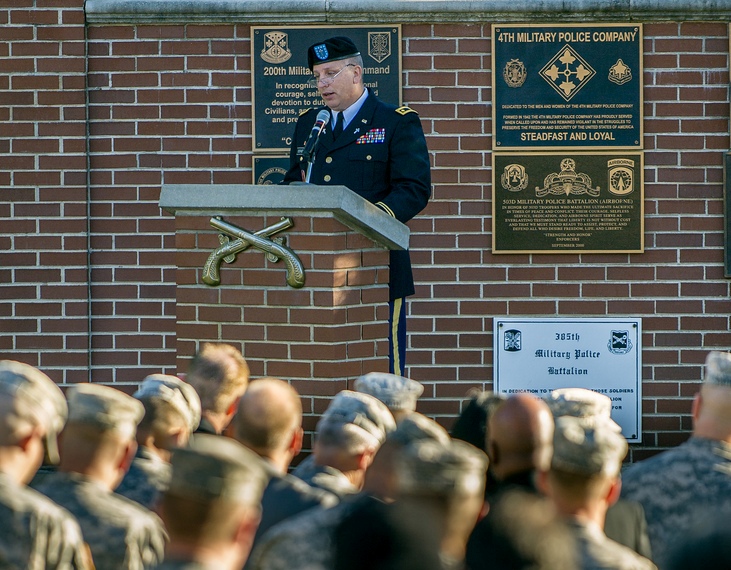
Today (23 September 2013)  I had the honor of being part of the Memorial Tribute Ceremony hosted by the U.S. Army Military Police Corps Regiment and supported by the Military Police Regimental Association, at Fort Leonard Wood Missouri as part of the MP Regimental Anniversary Week events. Among those attending the ceremony held at the MP Memorial Grove were family members and friends of the MP Soldiers who have been killed in combat over the past year.

As the chaplain, my part in the ceremony included the Invocation and Benediction (as always!) and also the Memorial Message.  If you’re interested in viewing the entire ceremony, it can be found here, but I wanted to post the text of my message as a way to continue to honor the fallen MPs and also as a possible source of hope and encouragement to anyone who may stumble across this post who is feeling weak or weary and in need of an infusion of strength and power.

.

Help for the Weak and Weary

Isaiah 40:27-31

Last week I walked around the Memorial Grove, taking note of the many plaques and benches which honor the fallen MPs from Military Police units around the world.  Especially significant to me were the many bricks representing specific MP Soldiers who have died in combat.

We often, and rightfully, remember the fallen as a whole, but while we do that, we also need to remember that each Soldier who has given his or her life is an individual. This is a fact that the loved ones of those individual Soldiers know all too well. We also need to remember that behind each of these fallen Soldiers are numerous additional individuals who have supported them and who now miss them.

The Scripture passage which I read from Isaiah seems to speak to the individual. While it begins with an address to a larger nation, it moves into offering what God makes available to the individual– to you and to me, and even to those MPs who have fallen.

God offers strength to the weary and increases the power of the weak. Whether in combat or surviving a loss from combat, Soldiers and loved ones need this strength and power to endure, to continue the fight, to survive … sometimes alone.

I think that the strength that God gives, helps us to do what we must do.  For the MP Soldier, that means having the strength for multiple deployments.  Having the strength to successfully and effectively do his or her job.  It means having the strength to get up each day, put on the uniform and a smile and come to work, patrol the post, guard detainees, defend the FOB, protect the force, and sometimes, face death.

American Military CemetaryFor those left at home, that strength is what is needed to carry on from day-to-day.  It’s the strength to deal with car problems and the kids’ discipline problems.  It is strength to be the father and the mother, or the parent whose child is far away- in harm’s way. The strength that God gives us is also the strength to face life after our loved one has made the ultimate sacrifice, the strength to go on tomorrow and the next day.

Beyond strength, Isaiah tells us that God can also give us power. While strength is given to the weary, power is given to the weak. This may be the same person.  I know many times in my life I have felt both weary and weak and was standing in need of God’s strength and power.

I believe this power goes beyond the strength that God provides. While strength is something we possess, power comes from a source outside of us. Power hints at being victorious over what we face. It suggests being able to overcome obstacles and hurdles which mere strength alone cannot overcome.

Have you ever been there, completely weary and weak? Unable to stand, much less move forward? This need for something beyond us, something outside of us, is nothing to be ashamed of.  Remember, Isaiah told us that “even youths grow tired and weary, and young men stumble and fall.” When we have trouble facing the trials of today and the sorrows of tomorrow, we are not the first and we are not alone.  It is the plight of humankind to grow weary, even in our well-doing.  We are, after all, only human so our power many times is drained by the daily grind and especially the exceptional circumstance.

Thankfully, we have a greater hope than just what we can muster within ourselves.  We don’t have to rely solely on our own strength to face whatever may come. We do not have to somehow dig deeper for power that we just can’t find inside of us, for those moments that no one should have to face alone . . . or at all.

When we put our hope in the Lord, we have in our reach renewed strength, to be able to not grow weary or faint.  When we put our hope in the Lord, we can tap into the strength and power of “the everlasting God, the Creator of the ends of the earth.”

God knows us, He knows our weakness and our powerlessness.  He knows what we face and what we can handle. He knows, He cares and He provides.

Flying EagleThis is a promise for we who remain. When we grow weary, when we lack power, when it seems we can’t go on, our strength can be renewed, we can be given power.  When we face tasks that seem to be beyond us, we can face them knowing that we receive strength and power from above.  For you who  continue to mourn, this strength and power can help you in the days, even in the years, ahead.

This is also a promise to those who have fallen, those who have left this temporary existence of life. Their hope and ours is that they no longer have to experience weakness.  No longer do they need to lack power. But finally shedding this earthly shell they can truly, fully and eternally experience what Isaiah speaks of:

…those who hope in the Lord will renew their strength. They will soar on wings like eagles; they will run and not grow weary, they will walk and not be faint.

.

Closing Prayer & Benediction

.

Our most Gracious God and Father,

We thank you for your presence and love which helps us to endure through difficult times. We thank you for moments like these when we don’t have to be alone but can gather among others who know, at least to an extent, what we face. We thank you for the peace that you give us, your peace—that can exist within us even when all around us there is no peace.

As much as you comfort us who have gathered here today, we pray that in an even greater measure you will comfort the families and loved ones of those who have fallen. Be for them all that they need you to be just now and continue to provide for them in every way in the days, weeks, months and years ahead as they face life without their wife, husband, father, mother or child.

Finally Lord, we pray that you will bring real peace to our land, so that we can rest in safety and comfort and not have to send our sons and daughters into harm’s way. Bring to us, we humbly ask you, the time when parents don’t have to grieve the loss of their children killed in war; hasten the day when spouses don’t have to say goodbye to their loved ones because they serve their country; provide for us, dear Father, a world whose children do not have to grow up without a father or a mother because of the evil that envelopes us.

Go with us now, Lord we pray, as we reluctantly return to the world out there. Please don’t let us soon forget our comrades, friends and family who have fallen, but help us to honor their sacrifice through our lives lived for your glory.


The Lord bless you and keep you;

the Lord make his face shine upon you and be gracious to you;

the Lord turn his face toward you and give you peace. (Numbers 6:22)

.

Photo credits: Memorial Grove- Mr. Michael Curtis (Leonard Wood) from www.army.mil; American Military Cemetery-Bjarki Sigursveinsson, public domain; Flying Eagle- Ryan McFarland from www.commons.wikimedia.org.

.

.
4 Comments

September 11, 2001: A Personal Reflection

September 11, 2001 began like any other day for me. It was a Tuesday, so I was meeting with men from the church for breakfast at the Corner Cafe just a few miles down State Highway 96 from my church in Clifton Springs, New York.

The breakfast for us was uneventful.  As I recall, there were just a few who showed up this particular week, but we enjoyed a great breakfast and good conversation as we always did. Eventually it was down to just Cliff and I finishing our coffee before we left, when another patron mentioned that a plane had run into the World Trade Center. I found that a bit hard to believe and Cliff and I exchanged looks of disbelief. I finished my coffee and headed home, only mildly curious what may have happened that caused that other customer to think a plane had hit such a large building in broad daylight.

When I got home, I knew it was more than a misunderstood news story. I saw it in my wife’s eyes.

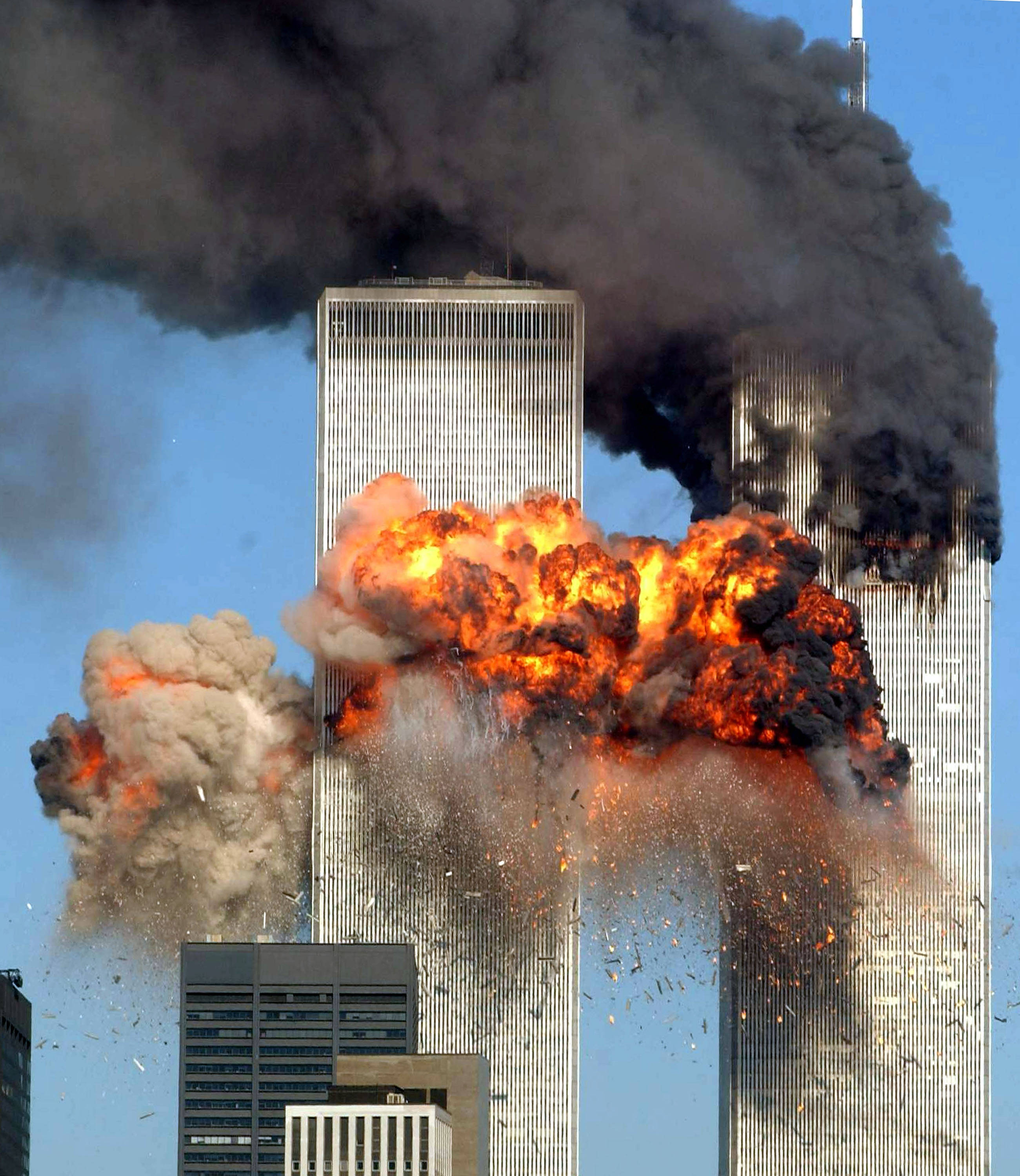
9-11 WTC

(Photo by Spencer Platt/Getty Images)

A friend of my wife had called and told her to turn on the TV so it was already on as I took my place with millions of other people around the world to watch what was going on in New York City, just 300 miles away from me.  It wasn’t long before I saw the 2nd plane hit the 2nd tower and the news anchors begin to speculate that perhaps this wasn’t some sort of freak accident.

Over the next several minutes, or maybe it was hours, I watched many other images that have become iconic in our country’s collective memory: flames and smoke bellowing out of the twin towers; men and women jumping to certain death to escape what must have been unbearable heat; rescue workers rushing to the scene, many of whom would not survive that day; first one, then the other tower of the World Trade Center cascading down to a mound of rubble.

Then came news of the plane that hit the Pentagon and later the downed plane in Shanksville, Pennsylvania. Our country seemed so vulnerable.  We were under attack and it appeared as though it couldn’t be stopped.

About then my “pastor sense” kicked in and I knew that I needed to do something, anything.  If I was torn up inside watching what was going on, I knew that many in my community would be too.  I immediately went over to the church, unlocked the doors and turned on the lights.  I started soft music playing in the sanctuary and put a message on the church marquee which simply said, “Open for Prayer.” As it turned out, churches across the country had been doing the same thing.  In a time when people felt alone, vulnerable and helpless, being able to pray gave them a way to do something to help. It gave us something to do.

Mother Hen and chicks

(Photo by Spectrum Photofile)

My kids had a 4-H meeting that night, but with all that was going on, my wife needed to keep them close. She couldn’t let them out of her sight. When I think back on it, it reminds me of the passage, “He will cover you with his feathers, and under his wings you will find refuge; his faithfulness will be your shield and rampart” (Psalm 91:4). I think my wife wanted to keep the children close for her peace of mind, but also not knowing how widespread this situation may be and where the next attack may take place, she was doing what she could to protect them.

I knew that in just a few days it would be Sunday and I would be facing my congregation so needed a word from the Lord. My mind went to Luke 13:1-9:

Now there were some present at that time who told Jesus about the Galileans whose blood Pilate had mixed with their sacrifices. Jesus answered, “Do you think that these Galileans were worse sinners than all the other Galileans because they suffered this way? I tell you, no! But unless you repent, you too will all perish. Or those eighteen who died when the tower in Siloam fell on them—do you think they were more guilty than all the others living in Jerusalem? I tell you, no! But unless you repent, you too will all perish.”

Then he told this parable: “A man had a fig tree growing in his vineyard, and he went to look for fruit on it but did not find any. So he said to the man who took care of the vineyard, ‘For three years now I’ve been coming to look for fruit on this fig tree and haven’t found any. Cut it down! Why should it use up the soil?’

‘Sir,’ the man replied, ‘leave it alone for one more year, and I’ll dig around it and fertilize it. If it bears fruit next year, fine! If not, then cut it down.’”

I did not claim that the attack was a result of the sins of the United States.  Neither did I claim that those who died, died because they needed to repent.  Instead, I expressed what seemed to be the thrust of the passage, that those who die by tragedy are no worse sinners than we are, but if we need to repent and don’t, judgment may truly befall us-both physical and spiritual-both individually and corporately.  As I recall, it was well received as the tragedy of 9/11 caused many Americans to really reflect on what was important in life and if our relationship to God was all it could be.

I had already been talking to a chaplain recruiter for over a year about going back into the Army as a chaplain, and had been attending Northeastern Seminary since the Fall of 2000 working toward meeting the Army chaplaincy’s educational requirement. This new attack on my country, however, caused me to redouble my efforts with a greater urgency.  I knew that the world we lived in would be changed forever, especially for our military members, so I wanted to do my part. Many in the United States had the same desire as enlistments spiked a bit after 9/11 not leveling out until 2005.

Chaplain Densford

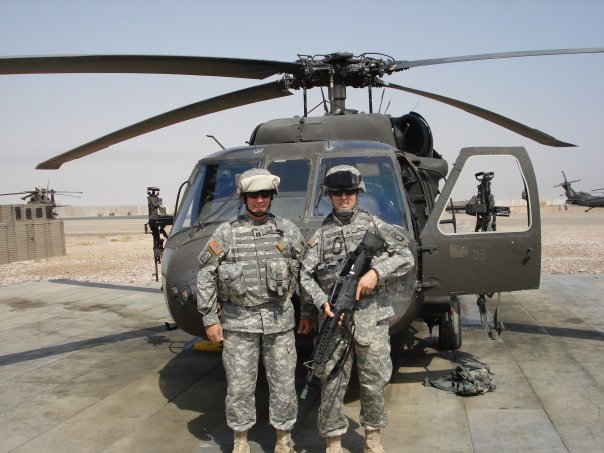
Me (left) with my assistant SGT Miles preparing to fly out to visit Soldiers at a remote FOB near the Iraq-Iran border

The attacks of 9/11 did cause me to review my reasons for joining the Army, however.  Before 9/11, it was essentially a garrison Army training for war. Now, there was little doubt that anybody who joined would deploy to a combat zone in some far away land (for me and many others, it was both Afghanistan and Iraq). But I recognized that this is the time when service members would most need spiritual guidance, encouragement and support. As a non-combatant by virtue of my position as a minister, this is what I could offer them.  I could go with them, even into harm’s way, and “bring God to Soldiers and Soldiers to God.” Finally receiving my commission and reporting for duty in January 2004, this has been my life ever since.

.

.
.

.
1 Comment

Is Russia Becoming the “Protector of the Faith”?

I find it interesting that our Cold War opponent is getting closer to defending the faith while the United States is seeking to distance itself from it.  I came across this post by Bryana Johnson at The High Tide and the Turn, where she contends that the former Soviet Union, having lived through their period of anti-God, is now coming to realize that Christianity can actually help their culture and society to not only survive but to thrive. At the same time, the United States is revolting from any resemblance of a Christian moral ethic.   I urge you to read her post, below . . .

.

Russian President calls on world leaders to end persecution of Christians

.

Putin calls on world leaders to unite to end persecution of Christians, while President Obama condemns Russian defense of traditional marriage, cancels summit with Putin

(Posted by Bryana Johnson on August 10, 2013)

.

Vladimir PutinThe evangelical Christian community that still identifies Russia with communism, Cold War tensions and the chilling brutality of Stalinism, is in for a big, painful shock this week. The world has changed, and not only is the USA no longer the cheery western beacon of homely virtues, but one of her traditional enemies is standing in to defend the sacredness of the ideals she no longer cherishes.

While attending a meeting with Orthodox Christian leaders in Moscow last week, Russian President Vladimir Putin vaulted into headlines by making comments urging the international community to take steps towards preserving the rights of Christian people worldwide and preventing the violence that they suffer routinely in dozens of nations around the globe. Putin said he observed “with alarm” that “in many of the world’s regions, especially in the Middle East and in North Africa, inter-confessional tensions are mounting, and the rights of religious minorities are infringed, including Christians and Orthodox Christians.”

Continue reading this article at the original site . . .

.

1 Comment

Homosexuality and the New Testament

In my last post, I explored the Old Testament view of homosexuality showing how both God’s original intent and continuing desire was for marital and sexual relationships to be confined to couples of the opposite sex. The New Testament continues this view as it hearkens back to Old Testament teaching to continue the prohibition against same-sex relationships and affirmation of an opposite-sex sexuality.  If you haven’t read Homosexuality and the Old Testament yet, this post will make more sense if you do.  Click here to read that post, then follow the link at its end to return to Homosexuality in the New Testament.

In the New Testament, we again see that any discussion of marriage is between a man and a woman, confirming this model as the norm.  When homosexuality is mentioned, it is listed with sins of sexual immorality as opposed to normal or healthy alternatives to the norm.  Proponents of “Christian homosexuality” are quick to explain away the New Testament texts which deal with homosexuality so a closer look at these texts is worthy of our time.

Fresco from the Tomb of the Diver c475 BC Paestum Italy

Greek same-sex love. Fresco from the Tomb of the Diver. 475 BCE located in the Paestum Museum, Italy.

Romans 1:18-32 reveals how Paul was fully aware of the decadence of the society in which he lived.[1]  In Romans 1:27, Paul describes homosexual activity when he writes, “In the same way the men also abandoned natural relations with women and were inflamed with lust for one another.  Men committed indecent acts with other men, and received in themselves the due penalty for their perversion” (NIV).  This fulfilling of one’s lust contrary to “natural relations” (v. 26) is descriptive of how “God gave them over in the sinful desires of their hearts to sexual impurity for the degrading of their bodies with one another” (v. 24).

According to this passage, the homosexual activity described in verse 27 is opposite of natural sexual activity, is the outflow of sinful desire, is an impure expression of the gift of sex and degrades the bodies of those engaging in it.  This passage clearly teaches that homosexual acts are contrary to the will of God and are, therefore, sinful and immoral.

Those who would declare that homosexuality is not at odds with Scripture are quick to explain away this passage three ways as described by Rae:  First, that it is referring to the male prostitutes which were part of the pagan temples, therefore it was the idolatry of having sexual relationships with these men that Paul condemns.  Second, that this passage refers to men who are normally heterosexual engaging in homosexual activity, therefore engaging in unnatural sexual relations.  Third, in this passage Paul is not opposed to homosexual activity per se, which may be practiced between loving homosexual couples, but rather he is against the perversion of homosexual activity in a lustful—non-committed—way which could also be practiced in heterosexual activity.[2]  None of these explanations fit the context and flow of this passage, however, so the reader who gives due authority to God’s Word must accept this passage as a prohibition of homosexual behavior.

Paul states again in his letter to the Corinthians his view of homosexuality.  Along with other sins that are included in a list of those who are “wicked [and] will not inherit the kingdom of God” (I Corinthians 6:9, NIV) is “homosexual offenders” (v. 9, NIV).  The Greek word translated “homosexual offenders” here and in a similar form in 1 Timothy 1:10 is arsenokoitais.  We have more trouble with this passage because the translation over the centuries has been more ambiguous.  In Corinthians the NIV translates it “homosexual offenders” and in Timothy, “perverts.”  The KJV translates it both in Corinthians and Timothy as “abusers of themselves with mankind.”  The New King James version translates it as “Sodomites.”

Those who contend that homosexuality is not thought to be sin by the Scripture writers often site Paul R. Johnson’s definition of arsenokoitais in support of their position.  In an article Johnson wrote for Second Stone magazine in January/February 1994, he writes:

The Greek compound term arseno-koitais literally means ‘the male who has many beds’. The word arsen means ‘male’, the adjective o means ‘the’, and the term koitais is defined as ‘many beds’. Thus, the entire phrase means a male with multiple bed-partners; a promiscuous man. Everywhere that the word koitais is used in the plural in the Bible denotes promiscuity. However, when the same word is used in the singular form, the Bible gives approval because the singular denotes monogamy.[3]

However, Donald S. Metz defines this same Greek word translated “abusers of themselves with mankind” as sodomy.[4]  While the modern use of sodomy could be a practice between members of the opposite sex, the same sex or even animals; used in the context of Scripture it seems to indicate homosexual activity, being an obvious reference to the sin of Sodom in Genesis.  One must have come to terms with the destruction of Sodom and Gomorrah being at least partly for their homosexuality to accept this premise.  To support this translation, the word translated “male prostitute” in the NIV and “effeminate” in the KJV just prior to the word under discussion is defined by Arndt and Gingrich as “men and boys who allow themselves to be misused homosexually”[5] which apparently identifies both partners in the condemned sin of homosexual acts.

Stott provides further explanation of these two terms which is worthy of our consideration:

The two Greek words malakoi and arsenokoitai should not be combined, however, since they ‘have precise meanings.  The first is literally “soft to the touch” and metaphorically, among the Greeks, meant males (not necessarily boys) who played the passive role in homosexual intercourse.  The second means literally “male in a bed,” and the Greeks used this expression to describe the one who took the active role.’[6]

Some suggest that since Jesus did not prohibit or speak against homosexuality, he then condoned the practice. This is a weak argument, however it still deserves an answer.  Erwin Lutzer suggests four reasons why this argument should be rejected:

Sermon on the Mount by Carl Bloch

“Sermon on the Mount” by Carl Bloch

1. Jesus upheld the Old Testament [law and prophets in all of His teachings and stated emphatically, “I have not come to abolish them but to fulfill them” (Matthew 5:17)]

2. Jesus said that even looking lustfully was a commission of adultery, so would he really condone a sexual sin so strongly condemned in the Old Testament?

3. Jesus indirectly commented on homosexuality in his conversation about divorce (Matthew 19:5), affirming the man and woman of marriage (returning to the creator’s original intent).

4. By application, if Jesus condoned homosexuality by not mentioning it, does he also condone ‘bestiality, necrophilia, and incest’ since he didn’t mention them? [7]

While many today place homosexual rights on the level of slavery and women’s rights, stating that the Bible was wrong on all of these issues suggesting that just as the Church has adjusted its position on slavery and women it should also do the same with homosexuality.  As this argument is considered, Webb’s examination of Scripture’s treatment of homosexuality, slavery and the oppression of women is worthy of further discussion. In his text, Webb affirms Scriptural precedence for slavery and female oppression, as well as homosexuality but as he projects these three trajectories from the ancient cultures of the Biblical texts to those of today, Scripture catapults homosexuality in a different direction than the other two, affirming the universal application of the prohibition of homosexuality in contrast to that of the oppression of women and the practice of slavery.  According to Webb, the Church was right to reform its positions on women and slavery but is also correct in maintaining its position on the prohibition of homosexual activity.[9]

Paul Mickey, in his book Of Sacred Worth, sees beyond the apparent prohibition of homosexuality in the Biblical texts to a greater or higher picture of the ideal intimacy and love which is always described in heterosexual ways. He denies that sexual encounters are primarily for the purpose of procreation but rather to develop intimacy with one another and with God. Mickey further explains:

…the consistent witness of Scripture attests to a paradigm of heterosexuality clearly evident in the creation narratives of Adam and Eve in Genesis as well as in numerous other passages that endeavor to express the intimacy of God’s people.  The positive images about human relations—husband and wife, male and female, parent and child—and the metaphors used to draw attention to the nurturing power of God and the Holy Spirit within the life of the church employ heterosexual language.  Wherever sexual intimacy is discussed or analogies or metaphors are employed, the paradigms and safeguards assume heterosexuality as normative.[10]

Mickey echoes what has been previously observed, that there are few passages in the Bible which directly deal with homosexual behavior, but insists that the ones that do, “… are clear in their theological assumption that heterosexuality is the foundation of sexuality.”[11]

While there are many in and outside of the Christian Church who take an affirming position of homosexual activity, there is sufficient evidence from Scripture that God considers homosexual acts to be sinful and against His will.  While Scripture alone cannot be used as a mandate to outlaw homosexuality in this country or any other, it does serve as a foundation for the Christian who seeks to know God’s will on the matter-and wants to live according to that will.

.


[1]  John Stott, Same-Sex Partnerships? (Grand Rapids: Fleming H. Revell, 1998), 21.

[2] Scott B. Rae, Moral Choices (Grand Rapids:  Zondervan, 2009), 282-283.

[3] GayChurch.org, “Arsenokoitais,” http://www.gaychurch.org/gay_and_christian_ yes/calling_ the_rainbow_ nation_ home/7c_gac_clobber_passages_arsenokoitais.htm (Accessed June 22, 2012).

[4] William M. Greathouse et al., Beacon Bible Commentary, Vol. VIII (KC, MO:  Beacon Hill Press of Kansas City, 1968), 364.

[5] Ibid., 363.

[6] Stott, 27.

[7] Erwin Lutzer, The Truth About Same-Sex Marriage (Chicago: Moody Publishers, 2010), 95-96.

[8] Timothy J. Dailey, The Bible, the Church & Homosexuality (Washington D.C.: Family Research Council, 2004), 24.

[9] William J. Webb, Slaves, Women & Homosexuals (Downers Grove, IL: InterVarsity Press, 2001), 251.

[10] Paul A. Mickey, Of Sacred Worth. (Nashville: Abingdon Press, 1991), 47.

[11] Ibid.

.

.

Photo credits:

Greek Same-Sex Love: Public domain, downloaded from http://en.wikipedia.org

Jesus teaching: Public domain, downloaded from http://commons.wikimedia.org

.

If you have found this article helpful, I encourage you to share it using one of the buttons below:

6 Comments

Homosexuality and the Old Testament

same-sex-kiss

NATIONAL SAME SEX KISS DAY at Chick-fil-A at 825 Ellsworth Drive in Silver Spring, Maryland on Friday afternoon, 3 August 2012 by Elvert Barnes Protest Photography

Homosexuality is all over the news these days.  The U.S. military was forced to lead the way in accepting this perversion of God’s ideal sexuality. Not long after the repeal of “Don’t Ask, Don’t Tell” in the military, the Supreme Court of the United States struck down certain provisions of the Defense of Marriage Act, effectively legalizing (forcing) federal recognition of same-sex marriage.  Other local and state court decisions have expanded “rights” to homosexuals while taking them away from Christians and others who believe homosexuality is immoral; essentially forcing businesses and organizations to accept and approve of homosexuality or face the consequences of legal and/or civil litigation.

We live in a different world than did our parents and grandparents.  The default view of morality is no longer biblical, but could be drawn from any “sacred” source, religious or secular or it could even be dependent only on one’s own personal view.  Therefore, it is incumbent on Christians to know and understand what Scripture says about marriage and sexuality to avoid being sucked into our culture’s acceptance of an “anything goes” lifestyle, whether it’s monogamous homosexual relationships or promiscuous heterosexual encounters. Additionally, as more and more pressure is being applied to the Church to accept homosexual relationships as moral, members of the Church need to be prepared to have an answer as to why the Church should maintain its centuries-long condemnation of homosexual activity.

Looking at Scripture’s discussion of marriage, most passages do not declare that marriage is to be between a man and a woman but it is clearly implied.  By implication it seems that it is a reasonable assumption that heterosexual marriage is the norm.  In the creation narrative, God does not ponder whether to create another man or a woman to be a mate for Adam, but simply and authoritatively creates woman to be Adam’s mate.

Throughout the Old Testament, any discussion or narrative of a marriage relationship is revealed as between a man and a woman.  Grant it, there are examples of multiple wives and the use of concubines, but even in these examples (that are not necessarily prescriptive) they are heterosexual relationships and not homosexual.

Sodom and Gomorrah

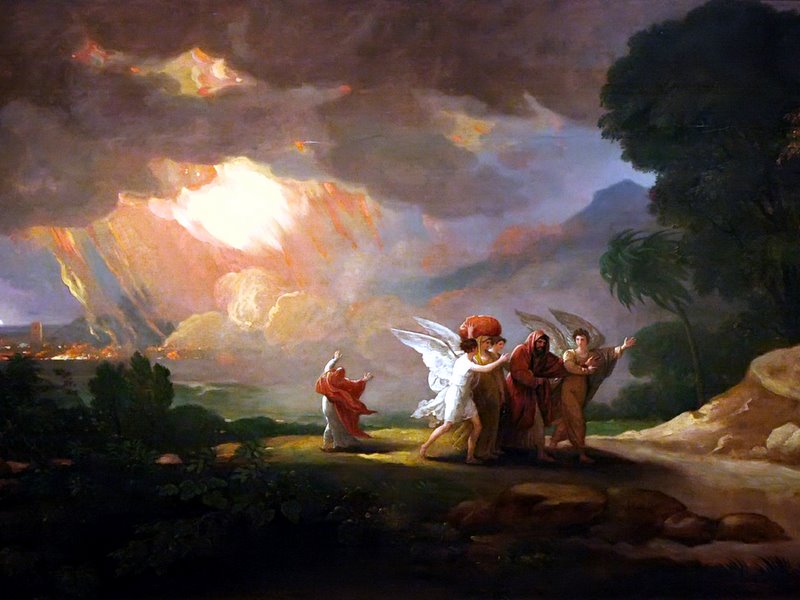
Lot and his family fleeing Sodom and Gomorrah

Later in Genesis in the narrative of the cities of Sodom and Gomorrah (Genesis 19-20),  with which we can relate the similar story found in Judges 19, homosexual activity (along with other sexual perversions) appears to be the reason that Sodom and Gomorrah were so completely destroyed by God.  Some argue that it was the desired forced sexual relationship of those seeking to have sexual relations with the visiting angels and guests or even a lack of hospitality, but reading the text in context, it is the homosexual activity which is condemned.  Such words as wicked (Genesis 19:7), vile and disgraceful (Judges 19:23) lend themselves to acts more severe than not showing hospitality, getting to know, or wanting merely to be introduced to travelers.

Derrick Bailey and others suggest that the use of the Hebrew word yadha, defined as know, which can mean sexual intercourse, should not be understood as implying homosexual sexual activity in the context of this passage.  Bailey states, “Linguistic considerations alone, therefore, lend support to Dr. G. A. Barton’s view that ‘there is no actual necessity’ to interpret ‘know’ in Gen. xix. 5 as equivalent to ‘have coitus with’, and that it may mean no more than ‘get acquainted with’.”[1] However, John Stott successfully challenges this position when he points out that “Although the verb yadha is used in the Old Testament only ten times of sexual intercourse, Bailey omits to mention that six of these occurrences are in Genesis and one in the Sodom story itself about Lot’s daughters, who had not ‘known’ a man (v.8)”[2] indicating that the probability is high that yadha should be understood as meaning sexual relations in these passages.

The New Testament clarification of the Sodom and Gomorrah incident seems to clearly indicate that it was unnatural sexual relations which were the primary sin.[3] For example, Jude 7 states “…Sodom and Gomorrah and the surrounding towns gave themselves up to sexual immorality and perversion.  They serve as an example of those who suffer the punishment of eternal fire” (NIV).  According to Stott, for those “… who take the New Testament documents seriously, Jude’s unequivocal reference to the ‘sexual immorality and perversion’ of Sodom and Gomorrah … cannot be dismissed as merely an error copied from Jewish pseudepigrapha.”[4]         

The two times that homosexual activity is specifically mentioned in the Old Testament, it is strictly forbidden, adding that it is “detestable” and that the consequence is death (Leviticus 18:22 and 20:13).  These passages use the Hebrew word Sakab which can mean to lay down on a bed, to recline, to sleep, to lodge, to humble oneself, to die or to have sexual relations.  Considering it in context, this passage clearly uses Sakab as “to engage in sexual relations.”[5]

Proponents of homosexuality argue that these Levitical texts refer to ritualistic or idolatrous sexual behavior, so therefore do not apply to committed, monogamous homosexual relationships.  However, Flavius Josephus, writing in the first century, supports the belief that this prohibition goes beyond mere ritual or casual homosexual activity when he writes, “But, then, what are our laws about marriage?  That law owns no other mixture of sexes but that which nature hath appointed, of a man with his wife, and that this be used only for the procreation of children.  But it abhors the mixture of a male with a male; and if any one do that, death is his punishment.”[6]

Hebrew Text of ScriptureDerrick Bailey adds, “It is hardly open to doubt that both the laws in Leviticus relate to ordinary homosexual acts between men, and not to ritual or other acts performed in the name of religion.”[7] William J. Webb continues, “A comparison of homosexuality with other sexual-intercourse prohibitions in Scripture reveals that the lack of covenant or the lack of equal-partner status is simply not a substantive issue.”[8] Webb goes on to explain how the Levitical texts on homosexuality as well as those on incest and bestiality are to establish appropriate “sexual boundaries—between humans and animals, between parents and children, as well as between same-sex participants.”[9]

There is little doubt that these verses forbid the practice of homosexuality for the Jewish people.  Conflict arises, however, as to whether this prohibition applies to non-Jews, or even to Christians, today.  As for enforcing Levitical law on non-Jews and non-Christians, the use of Scripture would be rejected in most cultures.  However, it is no secret that the basis of civil law in the West is Judeo-Christian law so it should be seen as foundational to identifying what is right and wrong.  Nevertheless, the move of cultural values in many Western societies is away from those espoused by Judeo-Christians so the search for a foundation for moral living in civil society needs to go beyond that of Scripture to natural law and other authoritative sources.

As for Christians applying these Levitical texts to themselves, even if Old Testament law is dismissed by the Christian claiming to be under grace, still the principle can be applied that in God’s eyes, homosexual activity has been established as being “detestable” which in itself should lead one to denounce it as an unacceptable practice.  According to William J. Webb:

The cultural environment and Israel’s theocratic setting may have influenced the severity of the Old Testament penal code, which called for the death penalty for homosexual behavior.  Yet, the inherent negative assessment of homosexual activity itself retains a transcultural dimension.  Thus, at least this prohibitive aspect of the homosexuality texts should be viewed as transcultural and applied as such within the Christian community today.[10]

The sexuality norms of the Jewish culture which either influenced, or were influenced by, the Old Testament texts remained a part of the Jewish and early Christian culture of the first century. In the next section, it will be shown how the New Testament writers and the teachings of Jesus build upon the events and prohibitions of the Old Testament as they relate to sexuality.

.

.

____________________________________________________.


[1] Derrick Sherwin Bailey, Homosexuality and the Western Christian Tradition (Hamden, CT: Archon Book, 1975), 3.

[2] John Stott, Same-Sex Partnerships? (Grand Rapids: Fleming H. Revell, 1998), 22.

[3] Scott B. Rae, Moral Choices (Grand Rapids:  Zondervan, 2009), 275.

[4] Stott, 22.

[5] W.E. Vine et al., Vine’s Complete Expository Dictionary of Old and New Testament Words (Nashville:  Thomas Nelson Publishers, 1985), 135.

[6] Flavius Josephus, “Against Apion, Book II,” in The Works of Josephus, trans. William Whiston (Peabody, MA: Hendrickson Publishers, 1987), 632.

[7] Bailey, 30.

[8] William J. Webb, Slaves, Women & Homosexuals (Downers Grove, IL: InterVarsity Press, 2001), 250.

[9] Ibid., 251.

[10] Ibid.

.

.

Photo credits:

Same-sex kiss:  http://www.flickr.com/photos/perspective/7707762058/

Sodom & Gomorrah: http://jimlwright.files.wordpress.com

Hebrew text: http://www.ynet.co.il

.

If you have found this article helpful, I encourage you to share it using one of the buttons below:

10 Comments

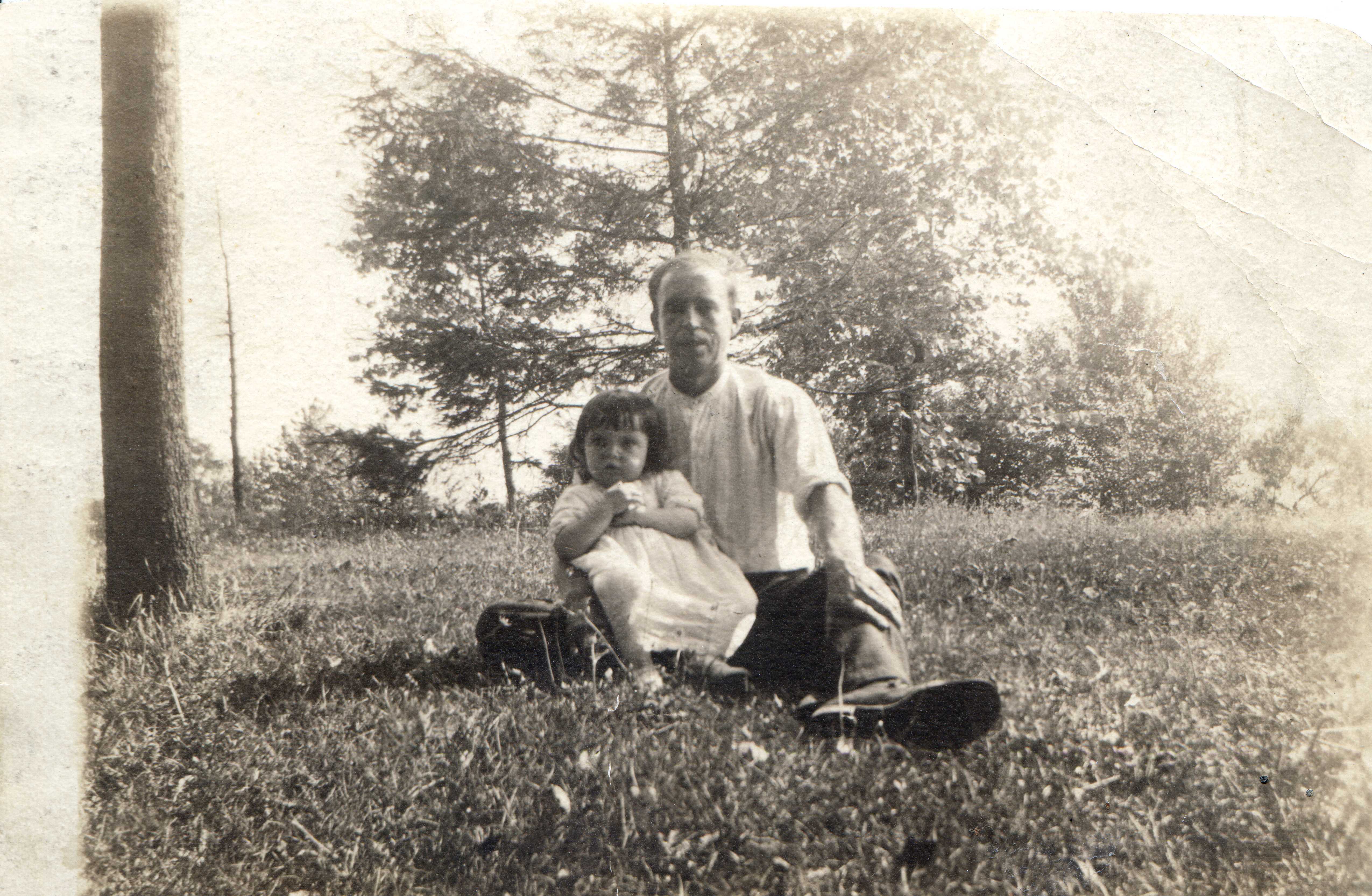
MORE Newkirk, Ihrig, Foster Family Pics for id . . .

Getting more scanned and would appreciate your help if you know any of the people in these pictures (or can eliminate my attempts at identification).  Thanks for your help!

Pic 1:  Left-Georgia Ihrig, right-Josie or Lucy?

Pic 1: Left-Georgia Ihrig, right-Josie or Lucy?

Pic 2: Hubert Newkirk ??

Pic 2: Hubert Newkirk ??

Pic 3:

Pic 3: Perry Edwin Ihrig’s wife, Estella or Stella Clary (?)

Pic 4: Perhaps Charles Amiss Newkirk's 2nd wife?

Pic 4: Charles Amiss Newkirk’s 2nd wife, Anna Lyda Calvert Newkirk

Pic 5: Alberta Jean Newkirk?

Pic 5: Alberta Jean Newkirk

Hubert Newkirk, Robert Ihrig (?), ?

Pic 6: Hubert Newkirk, Robert Ihrig, James Henry Foster (Tilden’s brother)

Pic 7: Alice Lancaster Ihrig

Pic 7: Alice Lancaster Ihrig

Pic 8: Alice Lancaster Ihrig

Pic 8: Alice Lancaster Ihrig

img406

Pic 9: Top right, Wesley Everett Newkirk as the teacher.

Newkirk_Reunion-WENs_home-06Sep195

Pic 10: Newkirk Reunion on 06 Sept 1915. I see Joseph Barker Newkirk, Charles Amiss Newkirk, Joseph Newkirk, and another guy in a lot of pics. Wesley Everett Newkirk holding Hubert Newkirk in center left. Perhaps identifying the rest would be too big a task!?

Pic 11:  Just for fun, wallpaper from the house in Ivor.  The "flowers" are from upstairs, the other from downstairs. The bottom is the newspaper on the back.

Pic 11: Just for fun, wallpaper from the house in Ivor. The “flowers” are from upstairs, the other from downstairs. The bottom is the newspaper on the back.

16 Comments

Newkirk, Ihrig & Foster Family Pictures: Looking for id!

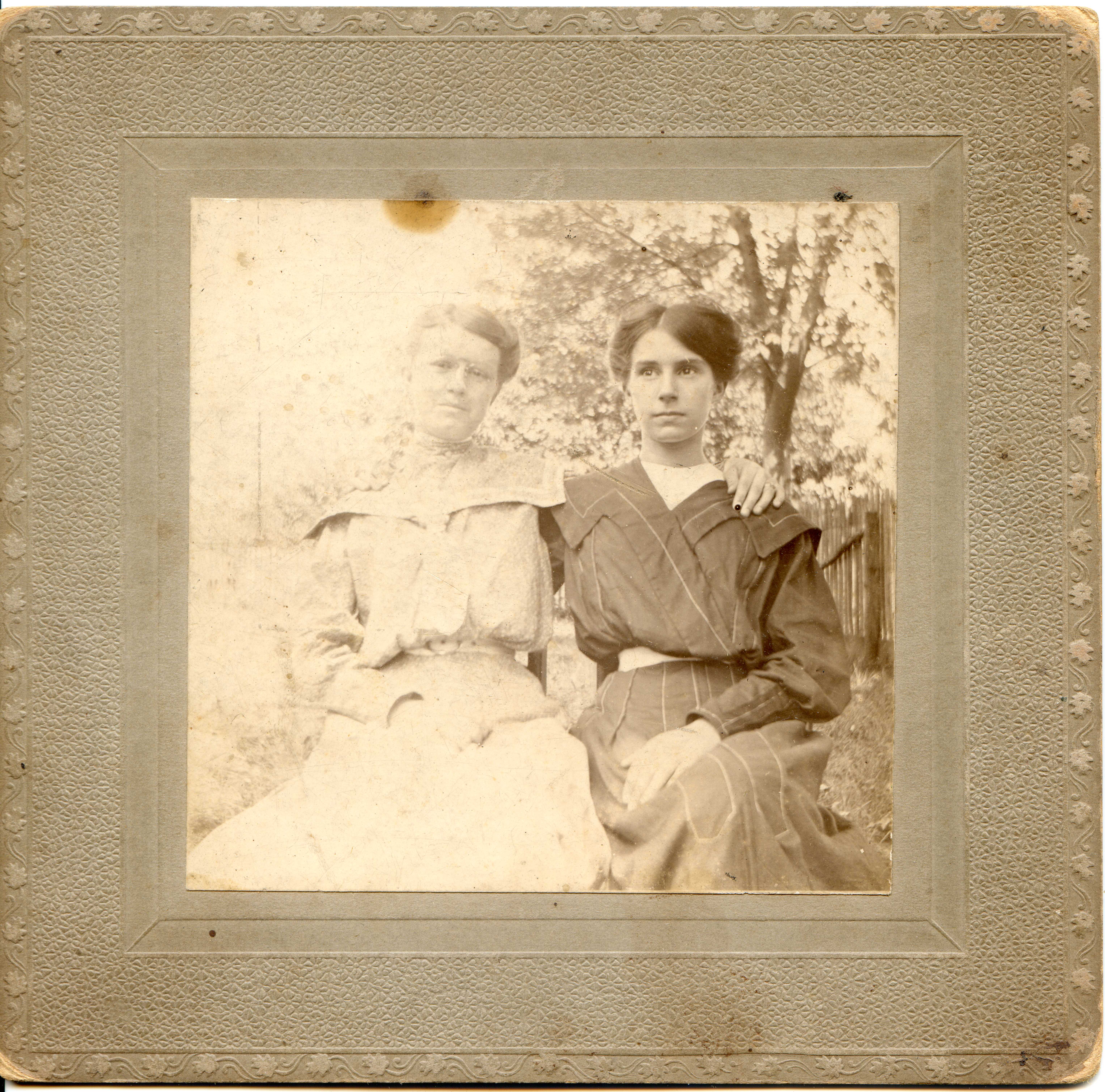
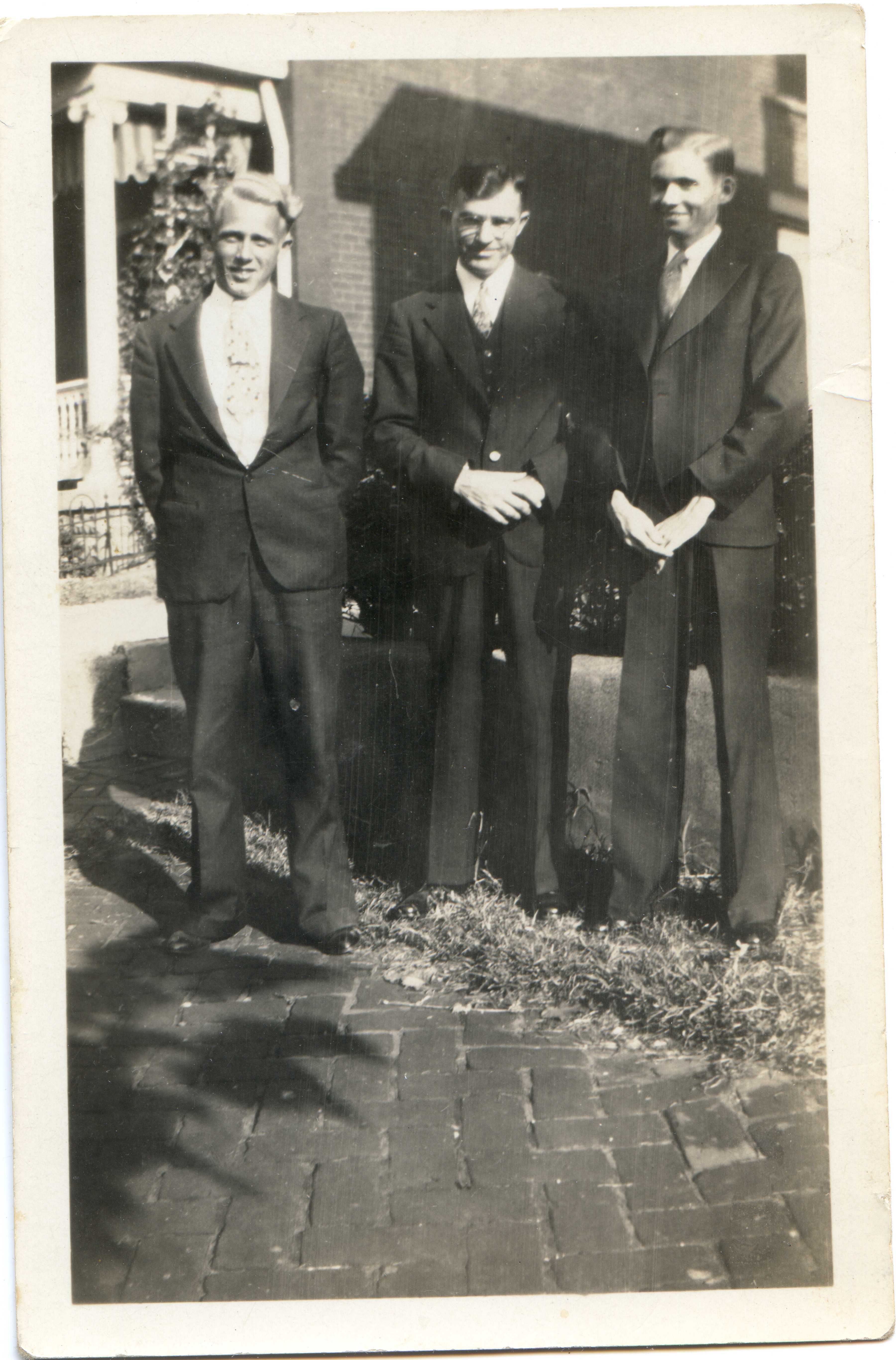
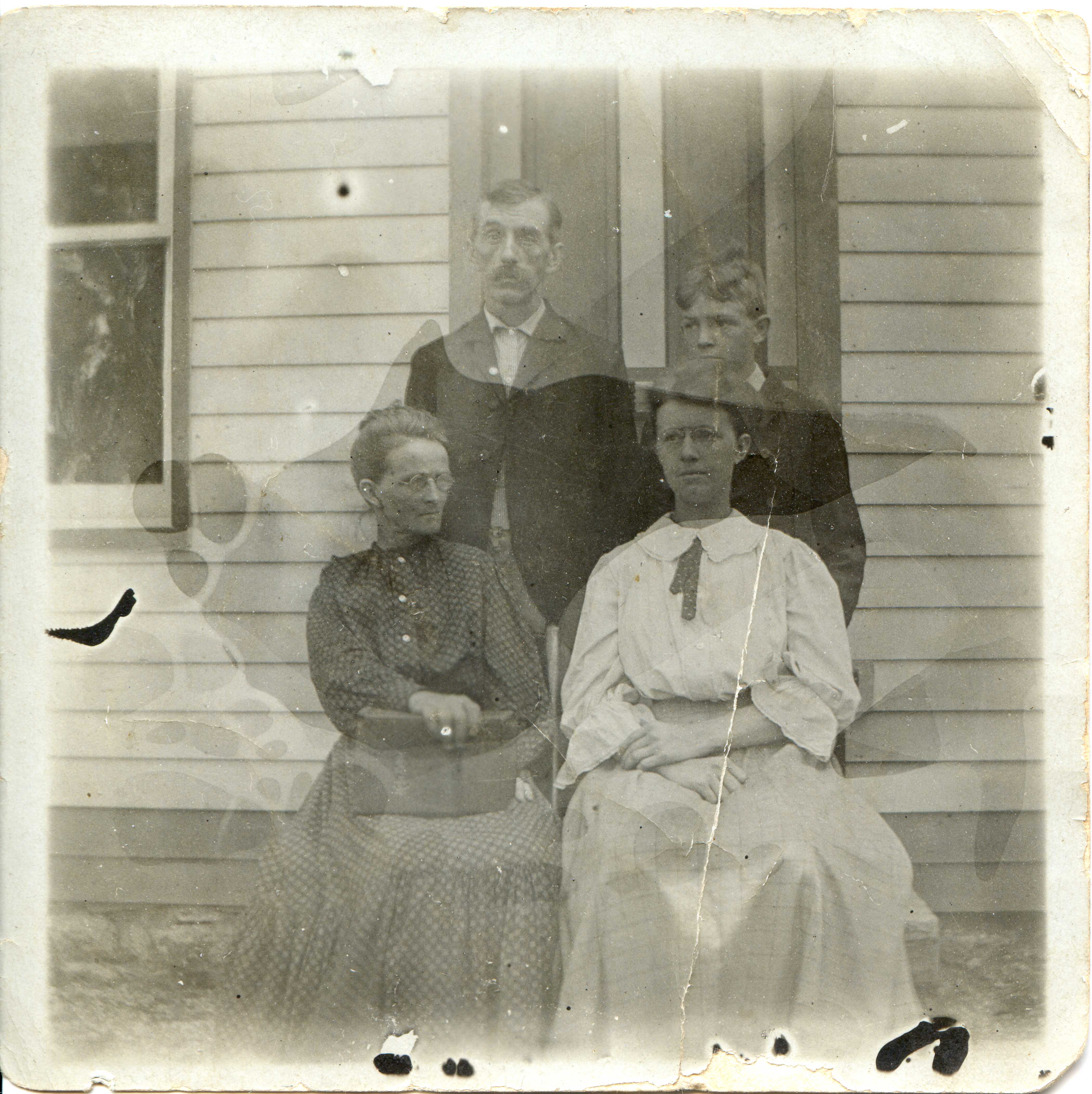
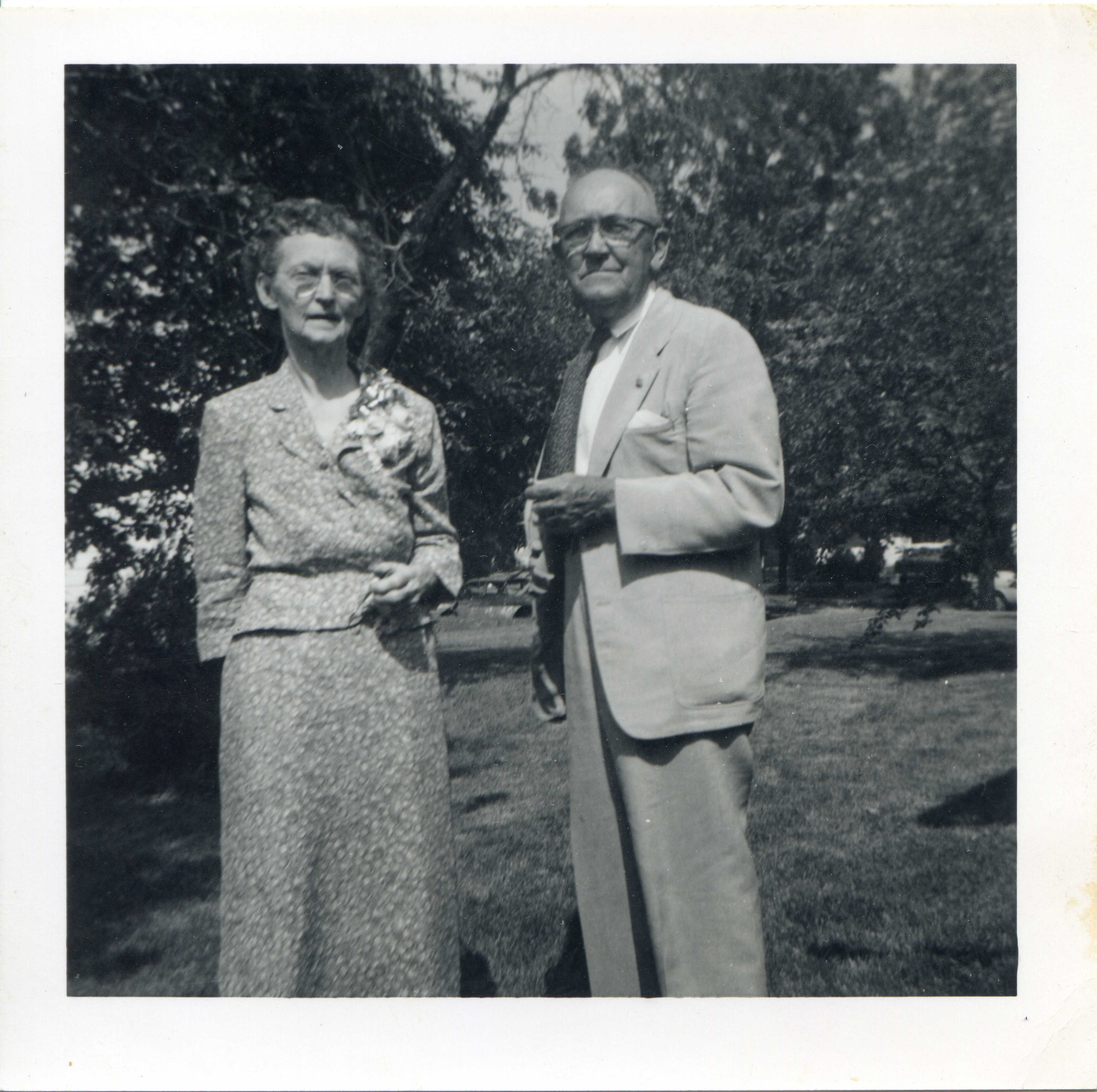
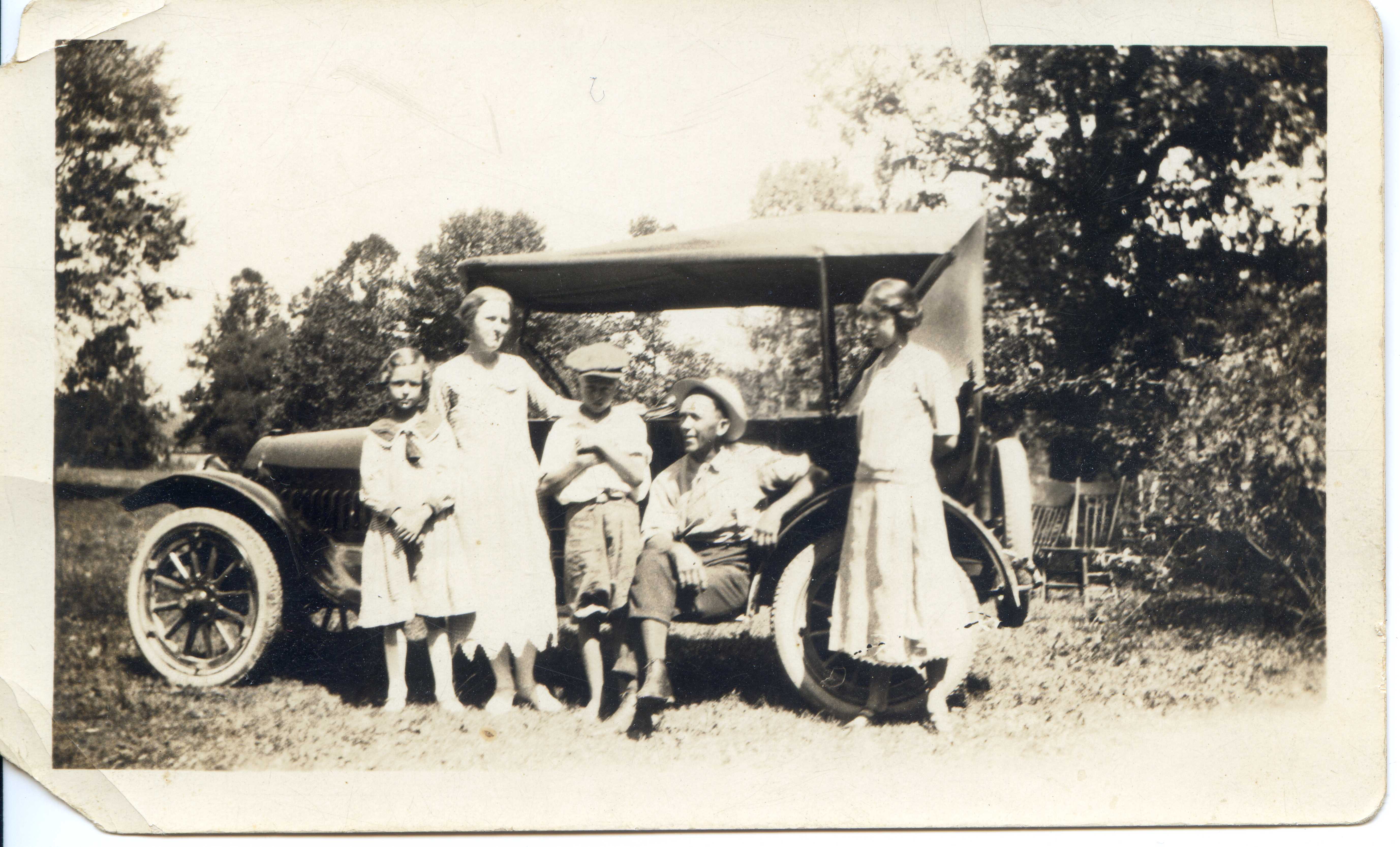
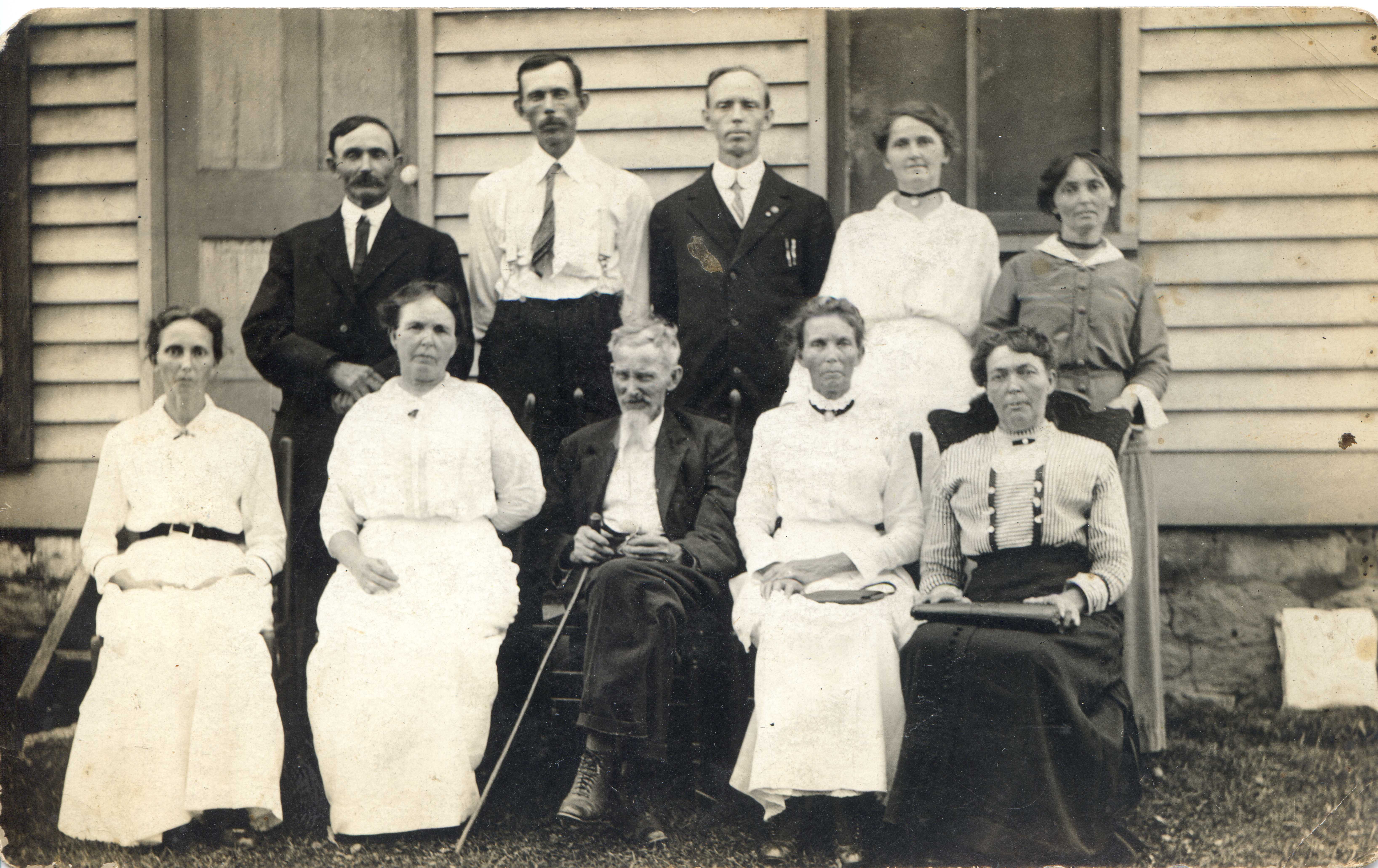
I recently came across a few pictures of some of my ancestors and are looking to identify the ones I don’t know.  I’ve posted them below, with the names that I may or may not have right.  If you know any of them, please leave a “comment” below, referencing the picture number and number in the row your id-ing (for example: 3rd from left, back row).  Thanks for your help!

Ihrig-unk-unk-unk-Georgia

Pic 1: Alice Lancaster Ihrig, Georgia Ihrig, Eginhart Ihrig, Robert Ihrig

img091

Pic 2: Still unknown, maybe a Densford

img101

Pic 3: Ollie Newkirk Britton, Wesley Everett Newkirk

img104

Pic 4: Donna Newkirk Stamm, Wesley Everett Newkirk, Jean Newkirk Densford. Horses: they’re riding “Old Jim,” Fred is in the background.

img105

Pic 5: Grace Foster Finn, Tilden Foster

img108

Pic 6: Berniece Ihrig, Georgia Newkirk, Hubert Newkirk, Everett Newkirk, Ruth Newkirk Williamson

Pic 7

Pic 7: Georgia Newkirk, Robert Ihrig, Bessie Ihrig(Georgia and Roberts sister)

img119

Pic 8: From l to r) Charles Britton (?) Everett and Hubert Newkirk, girl standing-Bernice Ihrig, the others are unknown but likely the sisters of Charles Britton, children of Ollie Newkirk Britton and Howard Britton.

Pic 9: Front row, center- Alice Lancaster?

Pic 9: Eginhart and Alice Ihrig in the center. On the right, Louis and Arlura Ihrig (Arlura & Alice are sisters)

img192

Pic 10: Wesley Everett Newkirk

Pic 11: Back row, left-Charles Newkirk? Front row, 3rd from left-Joseph Barker Newkirk?

Pic 11: Back row, from left-Charles Amos Newkirk, Joseph Newkirk. Front row, 3rd from left-Joseph Barker Newkirk. Rest unkown, probably children of Joseph Barker Newkirk

Newkirk-1923-08

Pic 12: Alice Lancaster Ihrig, Hubert Newkirk, Georgia Ihrig Newkirk, Berniece Ihrig

Pic 13: On back is dated

Pic 13: Georgia Ihrig Newkirk. On back is dated 30 July 1959

1924

Pic 14: Berniece Ihrig and Hubert Newkirk. Berniece is Robert Ihrig’s daughter by his first wife Stella Morris Ihrig. Dated 1924

1 Comment

Are You a Good Neighbor?

The gospel reading for this past Sunday [July 14, 2013] was Luke 10:25-37 where a lawyer inquires of Jesus what he must do to inherit eternal life.

Jesus answered him, “You shall love the Lord your God with all your heart, and with all your soul, and with all your strength, and with all your mind; and your neighbor as yourself.” I could use many pages to talk about eternal life, but today I just want to pick up on what Jesus went on to teach the lawyer when, “wanting to justify himself, he asked Jesus, ‘And who is my neighbor?’”

This parable is likely familiar to you. While traveling, a man was beaten, robbed, and left for dead on a secluded road between Jerusalem and Jericho. Twice his hope for help was dashed when two religious leaders passed him by. Finally, a Samaritan (whom the Jews despised) … was moved with pity. “He went to him and bandaged his wounds, having poured oil and wine on them. Then he put him on his own animal, brought him to an inn, and took care of him.”

The lawyer understood what Jesus tried to teach him, evidenced by his answer to Jesus’ question that the man who showed mercy was the neighbor to the man in need. I wonder how many of us recognize this profound truth today. This parable is more than just a nice story to tell children. This story should make all of us ponder whether we are good neighbors.

To whom should we be a neighbor? It could be your geographic neighbor in the apartment building or subdivision where you live. Your neighbor could be the Soldier you work with in the motor pool or office. It could even be an oppressed people group in an unknown part of the world, like Iraq or Afghanistan.

I encourage you to consider the needs of those around you. Don’t allow yourself to turn a blind eye to their suffering, or think that someone else will care for them. Reach out to them.  Help them. Be a good neighbor. Then you may be closer to discovering the eternal life, which Jesus offers us all.

.

This article first appeared in the Fort Leonard Wood Guidon, 18 July 2013.

.

2 Comments

Service Member Honored by Act of Compassion at Nazarene General Assembly

OK, I’m not certain that this was a service member, but based on the picture and the fact that he said he has PTSD, it is a reasonable assumption.

As an Army Chaplain, my heart goes out to those who are surviving and recovering from over a decade of persistant conflict.  Most people who are not in the military or do not have family members in the military don’t have a clue about what these service members have experienced or are going through now.  Many, however, want to help in some way . . . in any way that they can, so they try.  Somethimes it is a kind “thank you for your service!” accompanyined by a firm handshake or a loving hug.  Other times it is a meal paid for by an unknown but appreciative observer.  Many times, it is a kind “hello” with the further message in their eyes that says, “I can’t imagine what you have gone through, and don’t know what to say to you, but thanks for what you have done.” As one who has deployed to both Iraq and Afghanistan, I can say that all of these gestures, however small they may seem, are appreciated.

The following article shows how one worker at the Church of the Nazarene’s recent General Assembly in Indianapolis displayed conern, and did all she could to help.  I applaud this woman’s compassion and willingness to go out of her way to help someone in need- even if she didn’t understand what he was going through.

.

Empty Room Fills With Special Story at GA

.
Tuesday, July 16, 2013
Indianapolis, Indiana
By NCN News Staff
.
The Sunday morning service at General Assembly is an exciting time for many Nazarenes. Typically the most anticipated and highly attended portion of the quadrennial event, thousands from around the world gather for a time of worship, fellowship, and Communion.But such a large service can also be overwhelming.

Susan Fischer, an account manager for the event planning company Experient — a Maritz Travel Company, noticed a man and his service dog prior to the Sunday morning service at this year’s General Assembly in Indianapolis. She asked if he needed assistance with registration, and took a special interest in his story because of her previous work with service dogs.

PTSD suffere and his dog

One of three overflow spaces for the General Assembly Sunday morning service, Hall G, housed just one man and his service dog. (Photo from GMC News website)

“He told me he had post-traumatic stress disorder (PTSD),” Fischer said. “I kind of took him under my wing. We chit-chatted for a bit and I helped him register.”

The man explained that he was unsure if he and his dog were ready to attend the event, but his trainer encouraged them.

Fischer directed the pair to an overflow space in Halls ABC instead of the main sanctuary. A little while later, she noticed him walking around in the hallway outside.

“There were some other people there and it was still kind of loud,” she said. “It just didn’t fit.”

Next they went to Hall G. The room was set up with more than 2,500 chairs for emergency overflow, but it was empty.

“Even though we spent all this money and almost no one is sitting there, it was worth it because it was just for him,” Fischer said.

A General Assembly volunteer later took the a photo of the man and his dog. The story and photo became a favorite among the event staff.

“Looking at that picture brings tears to my eyes,” Fischer said. “He got to worship and meet his goal of attending the service.”

.

.

This article was orginially published by Nazarene Communications Network and can be found here.

.

Leave a comment

3 Common Traits of Youth Who Don’t Leave the Church

We all know the statistics that caution us we need to win our children for Christ while they are still young since the odds against their making a decision for Christ grows as they get older.  We all know someone (probably many someones) who verify this statistic.

Fortunately, most of us also know at least one young person who has remained in the Church and has, in fact, thrived as a Christian in a world where Christian young people aren’t valued, esteemed or supported.

At ChurchLeaders.com, John Nielson, the College Pastor at College Church in Wheaton, Illinois, reflects on three of the traits common to these young people who we still find in the Church:

.

3 Common Traits of Youth Who Don’t Leave the Church

by John Nielson

John Nielson

John Nielson (photo from http://www.college-church.org/)

“What do we do about our kids?” The group of parents sat together in my office, wiping their eyes. I’m a high school pastor, but for once, they weren’t talking about 16-year-olds drinking and partying. Each had a story to tell about a “good Christian” child, raised in their home and in our church, who had walked away from the faith during the college years. These children had come through our church’s youth program, gone on short-term mission trips, and served in several different ministries during their teenage years. Now they didn’t want anything to do with it anymore. And, somehow, these mothers’ ideas for our church to send college students “care packages” during their freshman year to help them feel connected to the church didn’t strike me as a solution with quite enough depth.

The daunting statistics about churchgoing youth keep rolling in. Panic ensues. What are we doing wrong in our churches? In our youth ministries?

It’s hard to sort through the various reports and find the real story. And there is no one easy solution for bringing all of those “lost” kids back into the church, other than continuing to pray for them and speaking the gospel into their lives. However, we can all look at the 20-somethings in our churches who are engaged and involved in ministry. What is it that sets apart the kids whostay in the church? Here are just a few observations I have made about such kids, with a few applications for those of us serving in youth ministry.

1. They are converted.

The Apostle Paul, interestingly enough, doesn’t use phrases like “nominal Christian” or “pretty good kid.” The Bible doesn’t seem to mess around with platitudes like: “Yeah, it’s a shame he did that, but he’s got a good heart.” When we listen to the witness of Scripture, particularly on the topic of conversion, we find that there is very little wiggle room. Listen to these words: “Therefore, if anyone is in Christ, he is a new creation. The old has passed away; behold, the new has come.” (2 Cor. 5:17) We youth pastors need to get back to understanding salvation as what it really is: a miracle that comes from the glorious power of God through the working of the Holy Spirit.

We need to stop talking about “good kids.” We need to stop being pleased with attendance at youth group and fun retreats. We need to start getting on our knees and praying that the Holy Spirit will do miraculous saving work in the hearts of our students as the Word of God speaks to them. In short, we need to get back to a focus on conversion. How many of us are preaching to “unconverted evangelicals”? Youth pastors, we need to preach, teach, and talk—all the while praying fervently for the miraculous work of regeneration to occur in the hearts and souls of our students by the power of the Holy Spirit! When that happens—when the “old goes” and the “new comes”—it will not be iffy. We will not be dealing with a group of “nominal Christians.” We will be ready to teach, disciple, and equip a generation of future church leaders—“new creations”!—who are hungry to know and speak God’s Word. It is converted students who go on to love Jesus and serve the church.

2. They have been equipped, not entertained.

Recently, we had “man day” with some of the guys in our youth group. We began with an hour of basketball at the local park, moved to an intense game of 16” (“Chicago Style”) softball, and finished the afternoon by gorging ourselves on meaty pizzas and 2-liters of soda. I am not against fun (or gross, depending on your opinion of the afternoon I just described) things in youth ministry. But youth pastors especially need to keep repeating the words of Ephesians 4:11-12 to themselves: “[Christ] gave…the teachers to equip the saints for the work of the ministry, for building up the body of Christ.” Christ gives us—teachers—to the church, not for entertainment, encouragement, examples, or even friendship primarily. He gives us to the church to “equip” the saints to do gospel ministry in order that the church of Christ may be built up.

If I have not equipped the students in my ministry to share the gospel, disciple a younger believer, and lead a Bible study, then I have not fulfilled my calling to them, no matter how good my sermons have been. We pray for conversion; that is all we can do, for it is entirely a gracious gift of God. But after conversion, it is our Christ-given duty to help fan into flame a faith that serves, leads, teaches, and grows. If our students leave high school without Bible-reading habits, Bible-study skills, and strong examples of discipleship and prayer, we have lost them. We have entertained, not equipped them…and it may indeed be time to panic!

Forget your youth programs for a second. Are we sending out from our ministries the kind of students who will show up to college in a different state, join a church, and begin doing the work of gospel ministry there without ever being asked? Are we equipping them to that end, or are we merely giving them a good time while they’re with us? We don’t need youth group junkies; we need to be growing churchmen and churchwomen who are equipped to teach, lead, and serve. Put your youth ministry strategies aside as you look at that 16-year-old young man and ask: “How can I spend four years with this kid, helping him become the best church deacon and sixth-grade Sunday school class teacher he can be, ten years down the road?”

3. Their parents preached the gospel to them.

As a youth pastor, I can’t do all this. All this equipping that I’m talking about is utterly beyond my limited capabilities. It is impossible for me to bring conversion, of course, but it is also impossible for me to have an equipping ministry that sends out vibrant churchmen and churchwomen if my ministry is not being reinforced tenfold in the students’ homes. The common thread that binds together almost every ministry-minded 20-something that I know is abundantly clear: a home where the gospel was not peripheral but absolutely central. The 20-somethings who are serving, leading, and driving the ministries at our church were kids whose parents made them go to church. They are kids whose parents punished them and held them accountable when they were rebellious. They are kids whose parents read the Bible around the dinner table every night. And they are kids whose parents were tough but who ultimately operated from a framework of grace that held up the cross of Jesus as the basis for peace with God and forgiveness toward one another.

This is not a formula! Kids from wonderful gospel-centered homes leave the church; people from messed-up family backgrounds find eternal life in Jesus and have beautiful marriages and families. But it’s also not a crapshoot. In general, children who are led in their faith during their growing-up years by parents who love Jesus vibrantly, serve their church actively, and saturate their home with the gospel completely, grow up to love Jesus and the church. The words of Proverbs 22:6 do not constitute a formula that is true 100 percent of the time, but they do provide us with a principle that comes from the gracious plan of God, the God who delights to see his gracious Word passed from generation to generation: “Train up a child in the way he should go; even when he is old he will not depart from it.”

Youth pastors, pray with all your might for true conversion; that is God’s work. Equip the saints for the work of the ministry; that is your work. Parents, preach the gospel and live the gospel for your children; our work depends on you.

.

.

Jon Nielson is the college pastor at College Church in Wheaton, Illinois. He blogs at Something More Sure.  More from Jon Nielson at ChurchLeaders.com.

.

This article is reposted here for educational purposes from ChurchLeaders.com.